Tag: books

  • Books 5

    Another plate of books served at the great banquet of reading books:

    Eight Detectives – Alex Pavesi

    Vaguely po-mo succession of detective yarns with a framing story about a reclusive writer of the stories in question. Always a risk with the high concept that the high concept part will fail to be as compelling as the low concept muck that it’s supposed to be above, and that’s the case here – the book is by far at its weakest at the end when it’s all supposed to be coming together. That said, the short stories themselves are compelling and memorable, with great atmosphere.

    A Memory Called Empire – Arkady Martine

    Curiously close in concept to The Traitor Baru Cormorant, even if all the specifics are different. Really enjoyable intrigue and fairly unique depiction of being an enthusiast for a culture that is trying to consume your own. I don’t know if the chauvinism of the Imperial subjects is ever totally convincing – everyone’s very buddy-buddy even when the heat is on. But it’s fun regardless. I haven’t picked the sequel up yet because I’m too worried it will be totally different, which is a slightly ridiculous concern.

    The Letter of Marque – Patrick O’Brien

    The Thirteen-gun Salute – Patrick O’Brien

    The Nutmeg of Consolation – Patrick O’Brien

    These really do form one continual narrative at this point, despite O’Brien paying lip service to catching new readers up at the start of each one, so I’m not going to bother trying to divvy them up for review. That said, it’s a great narrative, with Aubrey and Maturin setting off in a tacitly approved privateer after Aubrey was unfairly struck from the Naval lists. The ensuing string of missions are as good as anything else in the series, with Maturin’s visit to a sadly fictional crater ecosystem a real highlight. Also, O’Brien really hates Australia.

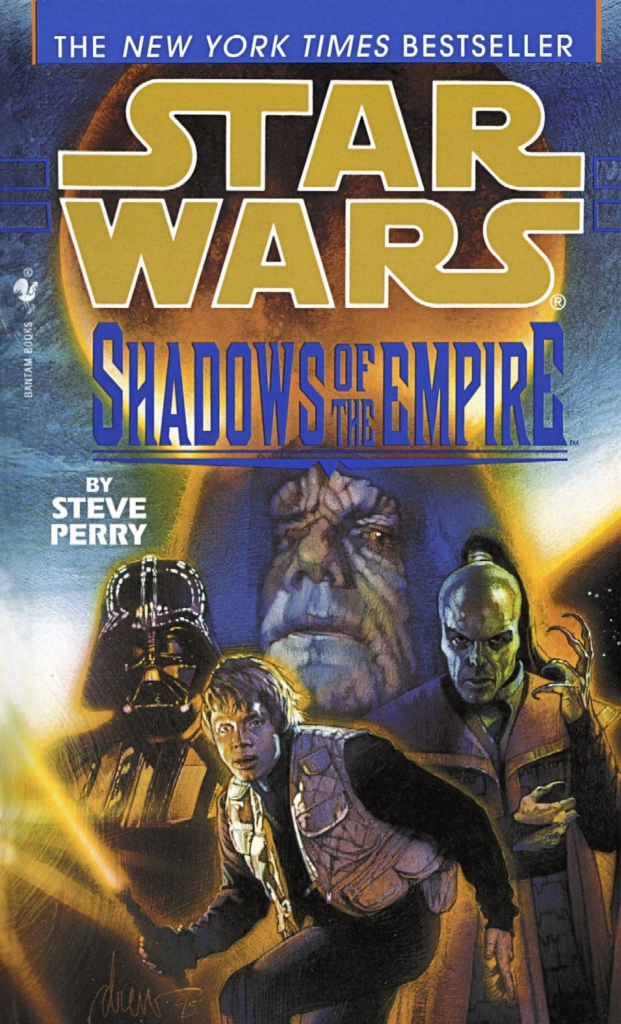
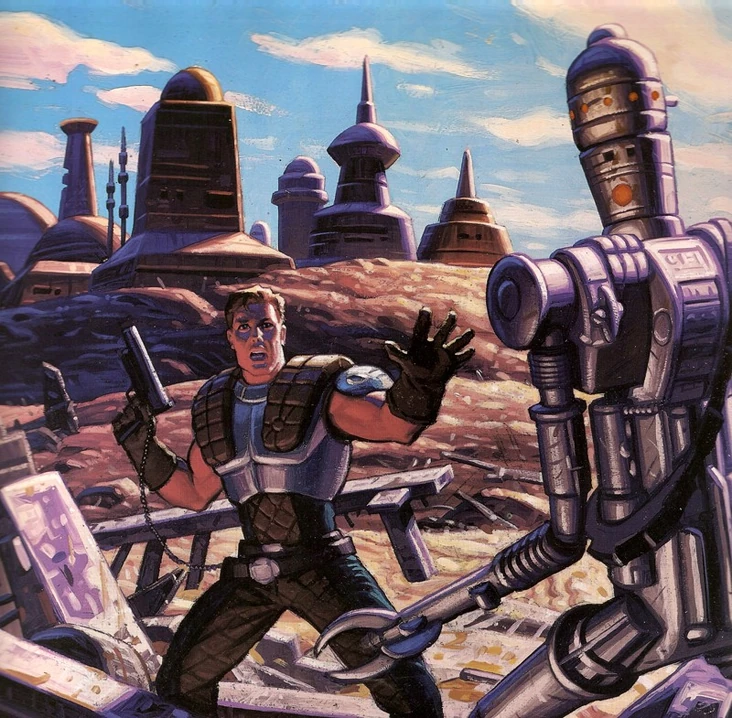
    The Truce at Bakura – Kathy Tyers

    Another entry in my big journal of Star Wars sequels and prequels, this is the book that infamously starts the moment Return of the Jedi ends, by having fan-favourite X-Wing pilot Wedge Antilles trip over his shoelaces and hit his head on an exploding Imperial Droid. Hijinks ensure.

    Tyers has a much looser grip on the Star Wars atmosphere than Zahn did, and the mid-nineties sci-fi pulp mood that you might also see in Doctor Who novels of that era is very much in evidence: Skywalker et al must contend with the threat of a vast empire of oddly sexy dinosaur-men. That’s not very Star Wars, but the constant diplomatic back-and-forth with the newly-minted Imperial remnant, who aren’t entirely convinced that the Emperor is dead, certainly is, and Tyers does a decent job of depicting power struggles in a very febrile situation. Takes a while to hit its stride, but an enjoyable read once it does.

    Samurai Detectives Vol 2 – Shotaro Ikenami

    More of the Samurai Detectives. Sadly less of the austere son character Akiyama Daijiro in this one, with the focus almost entirely on Akiyama Kohei and his Sherlock Holmes-esque network of spies and investigators. It’s still fun, and you can tell the author is loving being fully immersed in the Shogunate era in much the same way O’Brien is for the Napoleonic, but the always-on-top escapades of Kohei start to blur into one another a little bit. I want to see him (or his son) on the ropes a little bit here. Even Holmes has stories like Adventure of the Copper Beeches where he just fucks everything up a bit.

    After Hours At Dooryard Books – Cat Sebastian

    Has the unusual quality of being a story where most if not all of the major events occur off-page before the book has begun – perhaps this is what earns it the epithet ‘cozy’, though there’s rather more referencing of CIA misadventures during the Vietnam War in this one than I was anticipating given the remit. I don’t know how cozy I felt coming away from it, although the characters are very well realised, to the point where when things get a little steamy it almost seems prurient – leave these poor guys alone to it, they deserve some privacy after all that.

    The Great When – Alan Moore

    I do struggle with Moore as a prose writer, the great swamps of description that make him well-suited to comic book writing were very much an obstacle to enjoying Jerusalem a few years back. The Great When is both easier to digest and shorter than that tome, and selfishly I’m more familiar with the streets of London as a setting for psycho-geographic fantasy than I am those of Northampton. Much rueful musing on the nature of Britain’s relationship to the Second World War and the Blitz. Four sequels still to come, apparently, which will hopefully mitigate the feeling you get of seeing an extremely small slice of the larger world Moore is dreaming of here.

    Death Comes for the Archbishop – Willa Cather

    God, this was stunning. Crisp, simple prose belies a sketch of two muddling Priests in nascent New Mexico that is overflowing with compassion, exhilaration at the beauty of the natural world, and yet at the same time a level view of America and the construction thereof, winners and losers and all. A fascinating companion to something like Wolf Hall, historical fiction that is dreaming the characters of these real people, or Wittgenstein’s Nephew, artful and audacious meddling with minor characters of recent history. In the public domain, too.

  • Books 4

    The joke is on you, the reader! I have only read more books since coming off parental leave!

    The Ionian Mission – Patrick O’Brien

    The Master & Commander books are well into a single continuous, roiling narrative at this point. A couple of classic-faire, tense boat-to-boat action scenes where O’Brien excels, and plenty of opportunities for the smiling boat-men of the Royal Navy to do boat-things described at length. There’s a particularly fun sequence where a large rope is tied up so a cannon can be lifted up a hill, which you wouldn’t believe is something that could be described as ‘particularly fun’. The handling of Ottoman politics and the depiction of the Ottomans we meet can be fairly easily described as ‘orientalist’ though, I fear.

    Heir to the Empire – Timothy Zahn

    [Kirk Voice] Zahn!!!

    After my experience with Splinter of the Mind’s Eye last time I was baited into reading the ‘Thrawn Trilogy’, which seem really to be the foundational texts of the Star Wars Expanded Universe. As a one-time reader of 90s Doctor Who novels which were very much happening in the margins of this sort of thing there was a warm familiarity to the slightly askew style of 90s sci-fi writing and Thrawn – the titular Heir – is but one of several fun additions to the Star Wars cast alongside the pleasantly distinct rogue-with-a-heart-of-gold Talon Karde and his first officer Mara Jade, who manages to escape the gravity well of her ridiculous backstory.

    Treason’s Harbour – Patrick O’Brien

    “It’s treason then.” Wait, wrong series. We’re back with the boats, and despite – as the review quoted on Wikipedia says – this being a book where nothing really happens, it remains a fun read. Maturin is engaged in carting a diving bell around, after his success in the previous book Aubrey is assigned more wildly unsuited political work, and surely one of fiction’s all-time least fired Chekov’s guns takes place as the interpreter assigned to the ship by the secret French agent takes a short bath in the Red Sea.

    Dark Force Rising – Timothy Zahn

    We can’t rule anything out when this book has a Grand Admiral in it. Well, maybe we can. Zahn (who by all accounts was hammering these out at the time) totally misfires and ends up writing the same book again but worse. The parts which do distinguish this one (Leia’s adventure on the planet of honourable assassins) are tedious in the extreme. Even the title gets in on being misconceived, with the ‘Dark Force’ in question being no relation to the mystic, luminous force the setting is primarily concerned with, but instead referring to the nickname for some missing robot starships.

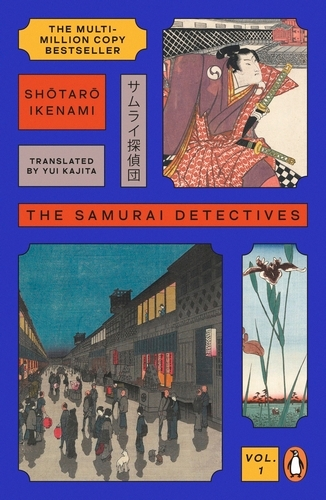
    Samurai Detectives Volume 1 – Shotaro Ikenami

    Bought this primarily on the strength of the cover, as with most books I buy. That’s my motto: strength of the cover. Despite being referred to as a ‘volume’ and being made up of nominal short stories there’s one continuous narrative that shifts back and forth between retired Samurai master Akiyama Kohei and his voluntarily celibate son Akiyama Daijiro. Set in the Edo period, there’s a fantastic realisation of what it would mean to travel and investigate in such a place. If only so much emphasis were not placed on Kohei’s, uh, passionate relationship with a woman forty years his younger.

    The Last Command – Timothy Zahn

    Zahn just about brings it home – not at all sure about the late-in-the-game decision to rework insane clone Jedi Master C’Boath into an Emperor-type (an heir… to the empire?!) just so the climax can be the throne room scene from Return of the Jedi, again, but this time Lando is also there for some reason. One of the problems Zahn has writing these is that his original characters end up being breaths of fresh air in the narrative because they’re not constantly thinking about or referring to the events of the movie trilogy. This means that Mara Jade’s bits are generally the best parts of the books and it’s annoying to have to go back to Luke fondly reminiscing about-

    Hey, nothing ever happened with that remote control Luke found on Dagobah!

    The Far Side of the World – Patrick O’Brien

    Hey, that’s the name of the film! A bit of a patchwork effort, this one, which concludes with the real whiplash of going from the intolerable sequence where Jack and Stephen are taken aboard a Pacific Islander boat which hates the penis to a 10/10 do-over of the climax of Desolation Island, wherein an outnumbered but technologically superior group of stranded Englishmen have to maintain a precarious peace on a desert island they share with a large group of nominally defeated American sailors.

    The Hollow Man – John Dickson Carr

    Bought this based on Daniel Craig flapping the book about on-screen in Wake Up Dead Man. It’s good fun, and Carr’s penchant for having a gaggle of detectives hang around operating in various different styles is distinctive, even if Chesterton-esque author insert Prof. Gideon Fell always takes primacy. Carr also has a strong line in making his witnesses useless or needlessly antagonistic, it’s something of a revelation the contrast to the usually pliable and cooperative characters you wind in murder mysteries – e.g. the killer in The Red Room would always answer questions even if he didn’t like to hear them.

    The Black Spectacles – John Dickson Carr

    I felt this was slightly less effective than The Hollow Man just because it increases the contrivances – in that book the mystery boils down to two bullets and two dead men, where here there’s two dead man, a poison pill, a movie camera, and that’s basically before things have got going. Slightly less enamoured with Fell’s theatrics here too. We get it Mr Fell, you think the killer is eeeeeevil. We know. Despite this, it is a meticulously constructed mystery and I was constantly kept guessing.

    The Reverse of the Medal – Patrick O’Brien

    “And then everyone stood up and clapped [for Jack Aubrey, unfairly placed in the pillory just for trying to do some insider trading].” I will note the bizarre manner in which O’Brien reminds the reader that Wray is a French trader, taking care to do it at the beginning of every book he features in after the decision to rework him from land-based duelling threat to craven Admiralty man. Feels like it would work just fine to have it be a surprise within each book where it’s relevant. Alas.
    I’m going to take a break from Master & Commander books after this one; not because I’m sick of them, but because the ones after this are an eye-watering £6.49 on Kindle. Outrageous.

    Death-watch – John Dickson Carr

    I was wondering why Dickson Carr isn’t more fondly remembered as a writer of murder mysteries; there’s a potential answer in Death-watch, which not only has the proclivity for complexity that was present in Hollow Man and Black Spectacles, but is also staggeringly misogynistic. At one point Fell, in full-on bloviating author stand-in mode, has a digression on why woman can’t be good barristers however intelligent they seem at university. Similar to Black Spectacles, there’s no final collapse of the contrivances here either, so while it’s satisfying how it all unfolds it’s difficult to hold the whole thing in your head to assess it.

  • Books 3

    Another chunky list of books read. I’m off parental leave now so expect the pace to slow somewhat.

    Desolation Island – Patrick O’Brien

    The first of three whole entries for Aubrey & Maturin here, my appreciation of the books having flowered into a beautiful obsession for the month of September. This is the best of the three, with the dynamic duo being faced with overwhelming odds that somehow never seem contrived nor the escapes ridiculous.

    The Priory of the Orange Tree – Samantha Shannon

    I grew very frustrated with this around the halfway mark, as it became clear that what I found interesting in the book was not the material which was going to make up much of the rest of it. The root of the problem was me just not being enamoured with the core romance, but it’s also a book that suffers heavily from not really engaging with the conditions of its setting; say what you like for old man GRRM, he’d never treat the institutions of feudalism this lightly. Beyond that the climax borders on incoherent, and there’s a comical aspect to the one good dragon repeatedly getting the Worf treatment every time it turns up.

    Tower of the Swallow – Andrzej Sapkowski

    The light is at the end of the tunnel for Sapkowski, who in his torturous writer’s block has broken the glass over the big “non-linear storytelling” button. The result is a book that moves at least, even if it nakedly skirts the edge of resolving the grand game stuff and Geralt pretty much remains in statis for another book. Exiled philosopher Vysogota is a great addition to the cast, irritating naif Angoulême not so much.

    The Fortune of War – Patrick O’Brien

    Some slight straining of credulity here, both in the string of catastrophes that Aubrey and Maturin escape from unharmed, and then in the odd light-touch experience of being interrogated on suspicion of spying; it’s all a bit more silly than the series has been so far, if not unenjoyable. Despite an interminable foot chase, when Maturin does turn into Solid Snake over the course of the final chapters, God forgive me I did love it.

    The Surgeon’s Mate – Patrick O’Brien

    A very strange beast this one, with the characteristic naval action dominating the middle section, bookended (no pun) by Aubrey unwisely getting involved in an affair and Maturin unwisely leaning on the international neutrality of science, and a lengthy prison break from an infamous French castle. A clear improvement over The Fortune of War – you get the impression that O’Brien was much happier writing French villains than Yankee ones – and a delightful romp despite credulity now receding into the distance.

    The Red House Mystery – A. A. Milne

    A. A. Milne, of “Pooh” fame, tries his hand at writing a locked-room murder mystery. I don’t know if it’s my familiarity with the genre but I guessed te resolution almost immediately, but Milne’s dilettante detective Gillingham is charming enough that I didn’t skip ahead to find out, even if his Holmes and Watson bit is altogether too pleased with itself. Raymond Chandler famously raked this one over the coals for its purported authenticity; it is indeed quite silly, but a fun read regardless.

    Fictions – Jorge Luis Borges

    A collection of short stories that I confess I have been reading for years at this point. Glad to have finished it, Borges’ ability to conjure an entire setting in a handful of pages is utterly stunning and I’m a big fan of ‘magical realism’, whatever that is supposed to mean.

    Splinter of the Mind’s Eye – Alan Dean Foster

    An alternative sequel to Star Wars (1977) for a world in which it wasn’t enough of a success to justify the budget to do more space nonsense, or possibly even bring back Harrison Ford. The result is a fascinating historical artifact and an utterly terrible book, a tedious slog through some definitionally low-budget environments (in a book!) and the now unnerving experience of having Luke constantly noting how dazzling various parts of Leia’s anatomy are. Vader falls down a well.

    Lady of the Lake Andrzej Sapkowski

    Sapkowski brings it home in style, though the final waffle about what was REALLY going on with the war, multiple-twist ending and all, is a bit much. Sapkowski’s ennui has matured into some intense misanthrophy by this point and it leads to some unique and measured views on (fantasy) wartime and prejudice. The number of abortive plot resolutions in the earlier books pays off here, a layered onion of competing intrigues over young Ciri being unravelled and confounded.

  • Books 2

    I’ve been reading lots more of those books!

    Pirate Enlightenment – David Graeber

    RIP to David Graeber, who died in 2020 just before the release of his incredible collaboration with David Wengrow, The Dawn of Everything, possibly my favourite ever book. Pirate Enlightenment feels very much like a chapter cut from that book – and make no mistake, it was nice to have more of anything, but its something of an extended digression and the evidence base is fairly weak even in the context of the miracles Dawn of Everything managed to produce from weak evidence.

    The Time of Contempt – Andrzej Sapkowski

    If Blood of Elves didn’t have a climax, this one is ‘Ooops – all climax’. I very much enjoyed Geralt’s Penn and Teller-esque lawyer friends in this one, and otherwise it’s all about the bloody farce at the mages’ gathering that takes up the entire middle of the book.

    Baptism of Fire – Andrzej Sapkowski

    Sapkowski has officially lost control of how to structure a novel at this point, and worse still his main characters are bogged down in an interminable trek through featureless swamps and forests. Eventually, with a chapter to go, Sapkowski snaps and teleports everyone into a more interesting setting, but all pretence that this is not one long shaggy dog story that started with Blood of Elves is gone.

    HMS Surprise – Patrick O’Brien

    O’Brien swings for the car park here, with lavish (and only slightly racist) depictions of Company-era India as a backdrop to Maturin’s pursuit of the hateful Diana Villiers.

    The Mauritius Command – Patrick O’Brien

    This one feels like a nice gentle comedown after the chaos of Surprise. Aubrey and Maturin doing normal things together, playing to their strengths, often funny, often thrilling. O’Brien repeats the trick of having a French commander who we never see or meet but who regardless dominates Aubrey’s monologues. It’s a good trick!

    Welcome to Dorley Hall – Alyson Greaves

    A black comedy experiment in how insane a setting and plot can be before the audience fails to have their hearts warmed by a plucky, struggling protagonist and a secondary cast with hearts of gold; playing on the same pitch as Dear Evan Hansen, somehow.

    The Name of the Rose – Umberto Eco

    Somehow I had never read this excellent monk-bothering murder mystery. Wasn’t expecting Baskerville (yes) to be quite so much of a Sherlock Holmes pastiche, but I greatly appreciated it. The book that made me look up the most Wikipedia articles about various heresies since Books of Jacob.

    The Traitor Baru Cormorant – Seth Dickinson

    This was apparently expanded from a short story and it feels it, with the different acts swinging wildly in pace from breakneck to painfully slow. None of that really matters though because Baru is a delight to hang out with, the archetypical “going to change the system from the inside” who is just a little bit too thrilled to be good at her job.