Tag: Rebel Moon

  • 2024 review of films

    It’s been a funny year for movie watching — the arthouse cinema near me closed down in the middle of the year, which was disappointing. The Odeon over the road still thrives though, so plenty more blockbusters in my future. More than anything else though, my movie-watching has been dictated by the preparation for and arrival of my shiny new baby, which is delightful in most ways but did put a dent in the time I’d previously have used to sneak in the Rebel Moon director’s cuts, which I’ve shamefully still not caught up on.

    For fun cinema experiences not represented here, I saw Burden of Dreams at a small cinema in downtown Las Vegas while I was over there on my second trip of the year, using a giant spanner to adjust the big bolt that keeps the Sphere from floating off. I think that was about it — I saw Beekeeper, Madame Web, Love Lies Bleeding and Megalopolis on the big screen, all of which benefitted from it (Madame Web in particular was something of an impromptu private screening). Hopefully next year I can muscle in on the baby viewing game — there’s a cinema a short drive away where they’ll bring you a cake while you and the little one watch, which sounds pleasant.

    Without further adieu, the list. It’s ‘new releases’ ranked, for a definition of that which includes everything since my 2023 review and a few more that I just felt like fitting in.

    24. The Marvels

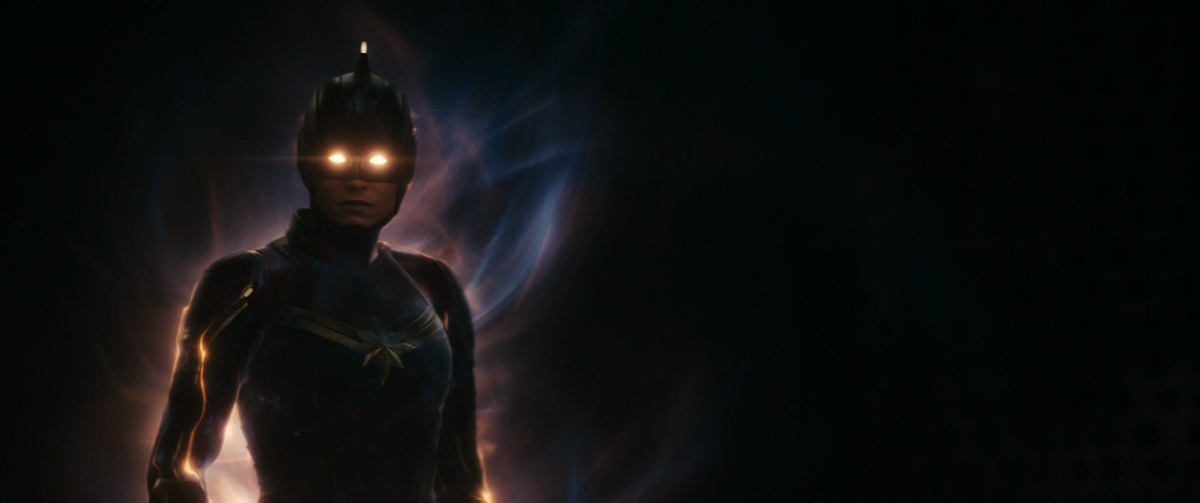
    An absolute hangover from last year, a tombstone movie for a dead era of Disney-Marvel which fails at almost everything it attempts. A shame as it’s hung on a trio of decent lead performances but I’ve not thought fondly of this once since seeing it.

    23. Watchmen: Chapter One

    A tepid adaption of the graphic novel which hews even more close to the source than the famously meticulous Snyder film. The only real adjustments made are to bowdlerise it, so lines that are paced well on page become slugging, leaden scenes on screen.

    22. Emilia Pérez

    This did not work for me at all, which is a shame because I know a lot of people have highly rated it (and it’s got awards buzz, whatever that means.) I’ve seen a bunch of variations on the black comedy/musical combination, some that work (Dear Evan Hansen stage musical) and some that immediately collapse under their own contradictions (Dear Evan Hansen movie) and this just ended up more the latter for me.
    I promise you nothing interesting is happening here.

    21. The Caine Mutiny Court Marshall

    In his documentary Reel Bad Arabs, Jack Shaheen calls Friedkin’s Rules of Engagement the most racist film ever made against Arabs. Impossible to forget that watching the climax of this, a weepy-eyed polemic on behalf of America’s mid-2000s adventurism in the Middle East. Soured the whole film.

    20. Hit Man

    Fine, funny, forgettable.

    19. Argylle

    Who is the real Agent Argylle? Ironically something of a return to form for Matthew Vaughn after some wobbly Kingsman entries, this outstays its already limited welcome and then some. You spend the first half thinking “this isn’t so bad” and the second half thinking “please end”.
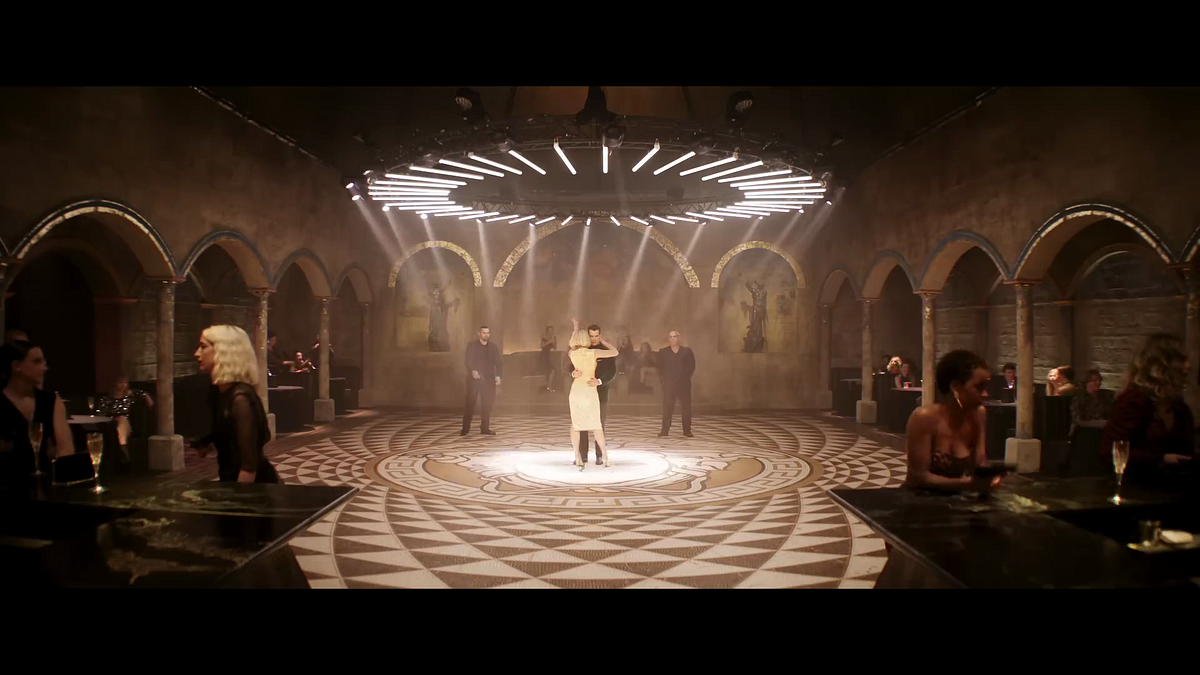
    Who is the real Agent Argylle?

    18. Madame Web

    Her web truly does connect us all. If you want this year’s Suicide Squad, look no further: the seeds of greatness are here, in this film nobody asked for and nobody wanted. Dakota Johnson is magnetic as the titular weird little gremlin woman forced by fate to creepily abduct three teenagers. Every frame of this film is a testament to how something went down here, and hopefully one day we’ll find out what.

    17. The Instigators

    It’s a buddy comedy farce with Matt Damon and Casey Affleck, who have enough chemistry to keep it watchable. Will mostly remember it for the insane BTS video about how they faked all the water in the final sequence.
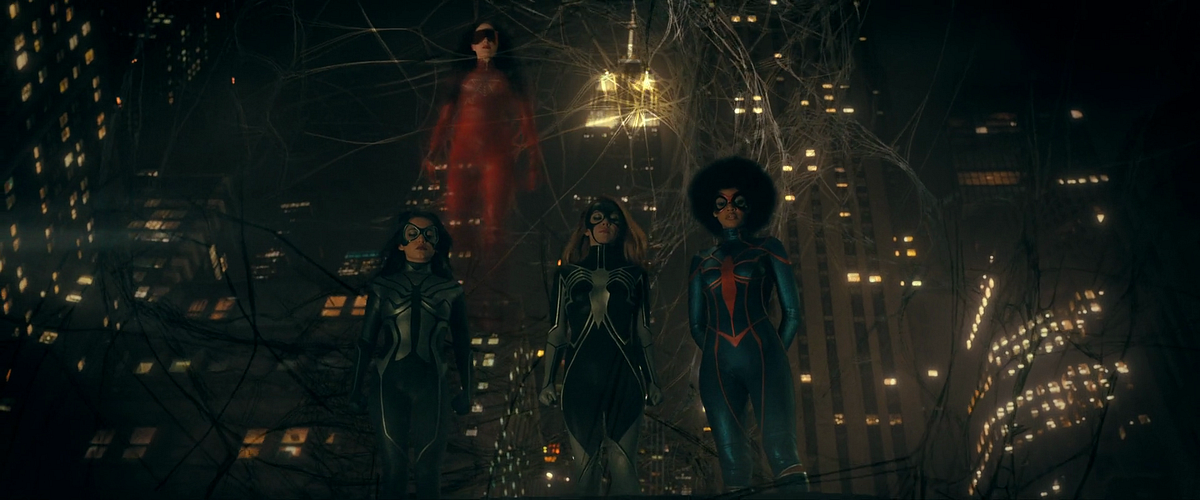
    I promise you most of Madame Web looked better than this.

    16. Pathaan

    Caught this Indian answer to both Bond and the MCU on a plane — great fun, very silly, some impressive action set pieces (as well as a few that seemed to have not quite worked out) and super interesting to watch soft power cultural chauvinism play out in a totally different context.

    15. Rebel Moon Part 2: The Scargiver

    I didn’t get to see this second half in the cinema, sadly, so it didn’t have a chance to wow me with the big screen visuals like the first. On top of that, it was chased up by the director’s cuts which are on all accounts superior, but I wasn’t able to pack them into my now baby-dominated schedule. I’m sure they’ll be on next year’s list. Fear not, I am still a died-in-the-wool Snyder Sicko.
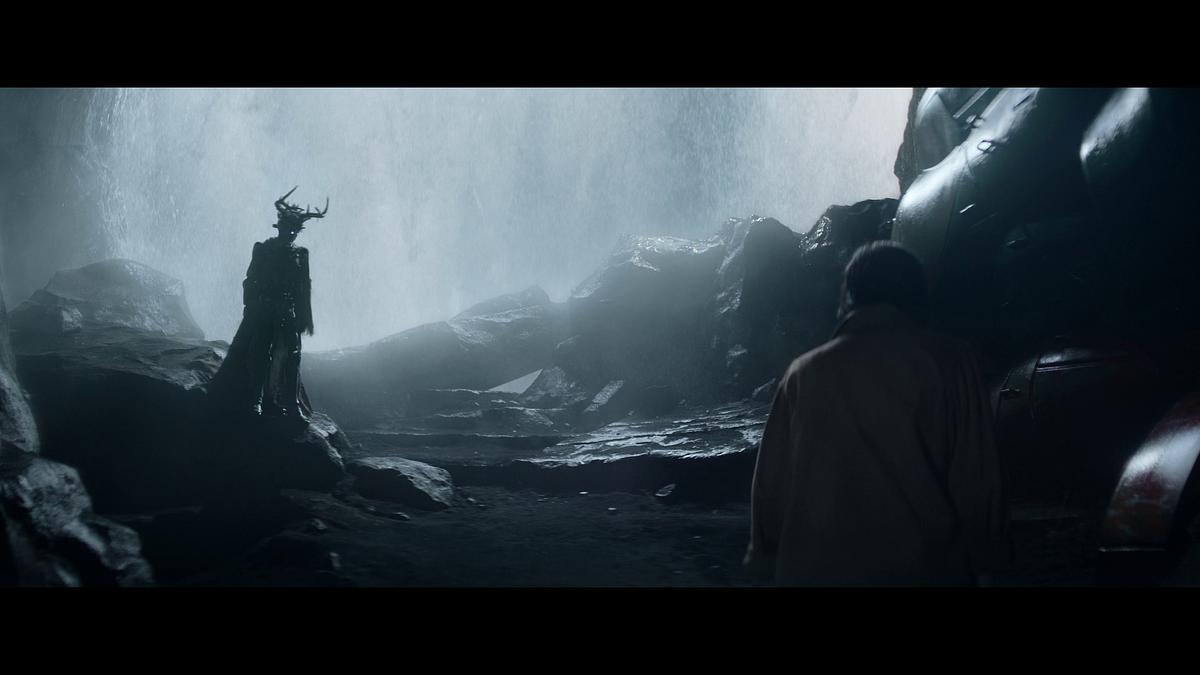
    That’s Jimmy.

    14. Rebel Ridge

    It’s good, and a very enjoyable watch, and it rightly draws attention to the scummy phenomenon of civil forfeiture, and Aaron Pierre has buckets of screen presence, I just expect a bit more from Jeremy Saulnier, the guy who directed Blue Ruin and Green Room. Feels like he was aiming for a broader appeal and just sanded a bit too much of his style away.

    13. Poor Things

    Still unsure what to make of Yorgos Lanthimos’ end-2023 sprawl of gothic steampunk and proto-feminism. Many excellent elements somehow fail to come together to produce something truly excellent, despite a stout lead performance by Emma Stone and a scene-stealing impresario in Mark Ruffalo.

    12. Unfrosted

    Jerry Seinfeld, I am horrified to say, is an auteur. A dispatch from an alien world in disguise as a comedy of the grotesque. Essential viewing.

    Words cannot prepare you for this Unfrosted sub-plot.

    11. Dune: Part Two

    This is far too low for Villeneuve’s middle entry into what will be a trilogy of Dune films; having read Dune Messiah earlier this year I can see why he considered it a necessary third — it’s basically the climax of the entire first book. Suffers a little as a distinct film from not having much of it’s own setting to introduce; the underground sietches are fine, and Giedi Prime is spectacular, but it’s a small slice of the worldbuilding of part one.

    10. Conclave

    As with 2019’s The Two Popes, scurrilous little priests bickering and scheming is an easy way to win my affection. Ralph Fiennes stars as the will-he won’t-he Cardinal trying to determine who should be the next Pope, with a pleasing cast of character actors to face off against. Unfortunately there’s a few slightly outlandish elements that are maybe meant to feel destabilising but can only summon bathos. Looks beautiful though.

    9. Love Lies Bleeding

    I really loved this bouncy, extravagent yet bleak tale of two bodybuilding lesbians and one gross dad. This sort of thing is so often scared to be goofy where appropriate, but the Las Vegas scene here will be sticking with me for a while, as will the [Steven Universe voice] giant woman.

    Good title, too.

    8. Megalopolis

    The year’s biggest contradiction in terms, the political thriller with no politics. Francis Ford Coppola spent his own money putting the biggest swing for the fences since Attack of the Clones in cinemas and it’s a truely unique bit of nonsense. It’s genius, it’s beautiful, it’s obviously had to ration the VFX shots and despite being absolutely mad it’s still exactly the film you’d expect Coppola to spend all his money making. Could have been at the bottom of the list, could have been at the top. In the event, it’s here.

    7. The Beekeeper

    My affection for the work of David Ayer is sealed in blood, sweat and tears of course, but it was still enervating to start the year out seeing him return to mainstream success. The Beekeeper, written by Kurt Wimmer of Equilibrium fame, is a script so silly but self-serious that it hits like alchemy combined with Ayer’s game direction. The rapid-fire shifts between nonsense and hard action seen in films like — for example — Suicide Squad just flies, and Jason Statham (who often seems on a permanent quest for his breakthrough action persona) is exactly the right man to swirl at the centre of it. He’s a Beekeeper, they need to get hit, he’s the man to hit them. All the way to the top.

    Do not say Megaflopolis.

    6. Hundreds of Beavers

    Surely not the first film inspired by the mechanics of a video game, or the comedic flow of a Let’s Play, but definitely the most successful. The Minecraft film is unlikely to capture the agonies of progression half as well as this did. An inspirational piece of low-budget filmmaking and genuinely funny to boot.

    5. Ferrari

    If only Signor Ferrari would attend to business matters and not be so fixed on racing! This was a very pleasant surprise, an exacting character study shared between Penelope Cruz and Adam Driver as Laura and Enzo Ferrari. Death — and the spectre of the war — is so omnipresent that no-one blinks an eye as another test driver careens off the track to his doom. Ferrari has races to win.
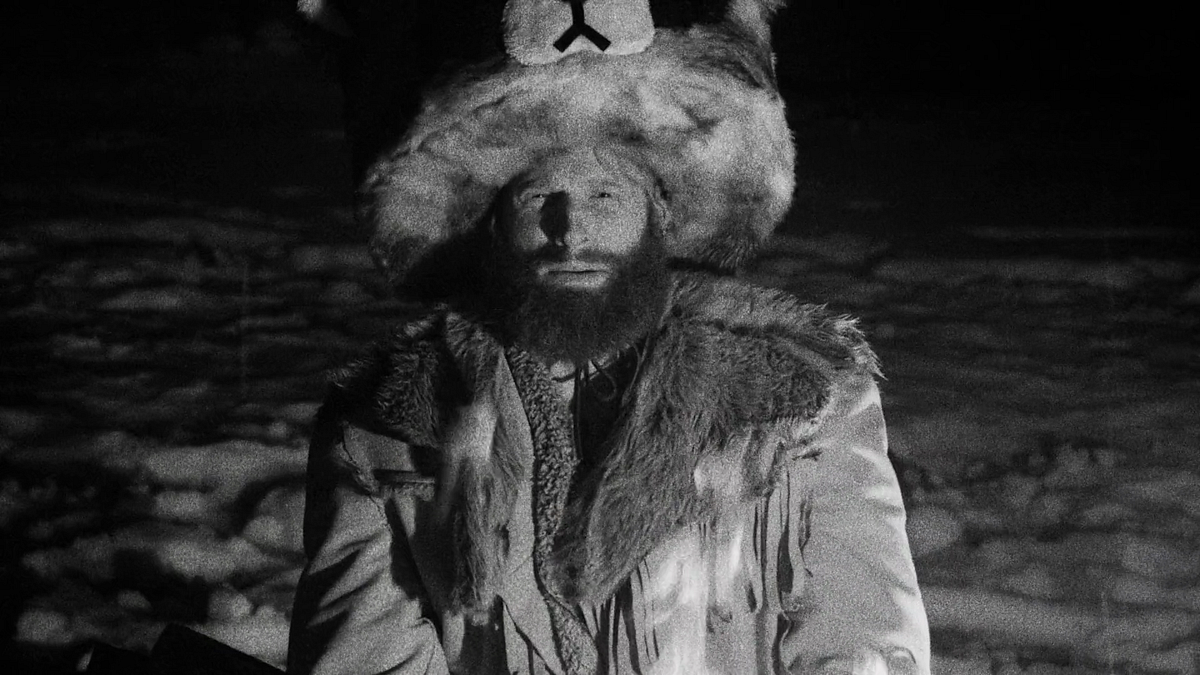
    The face of a man who has dealt death to Hundred of Beavers.

    4. The Holdovers

    Dragged across from 2023 is this instant Christmas classic, where frustrated schoolmaster Paul Giamatti must face down the holiday period responsible for Dominic Sessa’s troubled young man, with only Da’Vine Joy Randolph’s school cook to mediate. Deeply funny and affecting; the scene where Sessa visits his father is heartbreaking.

    3. Anatomy of a Fall

    Another holdover from 2023, you know Anatomy of a Fall is going to be genius from the moment that steel drum hits. Sandra Hüller is magnetic as the frosty professional writer accused of killing her talentless partner, summoning great oceans of displeasure in just sitting still with a neutral face. Alongside everything else, a fascinating insight into the French legal system.

    That’s Furiosa.

    2. Furiosa

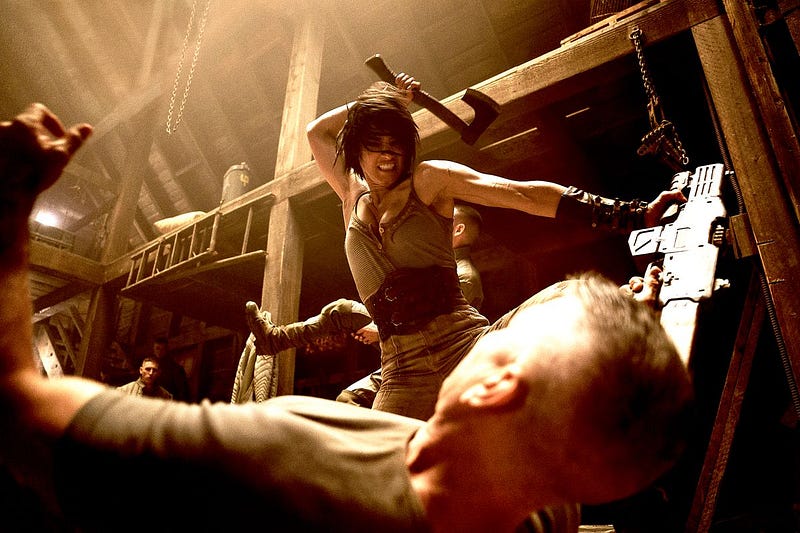
    Highly anticipated, I thought this was an astonishingly confident follow up to Fury Road, and a contribution that would enhance that film on a viewing of the pair together. Miller’s action sandy action set pieces are unlike anything else still being attempted, but for me the highlight of the film was the climax: an intense, intimate meditation on the utility of revenge and how any one person can be responsible for a whole world of shit.

    1. I Saw the TV Glow

    Speaking of poor viewing conditions, surely the best movie I have ever watched on a plane. Making it all the more impressive that this is sitting at number one! It’s such a slight thing as well, with a consciously truncated third act that leaves you screaming at the screen for more. A worse movie would feel unfinished or unsatisfying, but I Saw the TV Glow is filled with just enough absolute despair — and just enough brilliant hope — that all you want to do is experience it again.
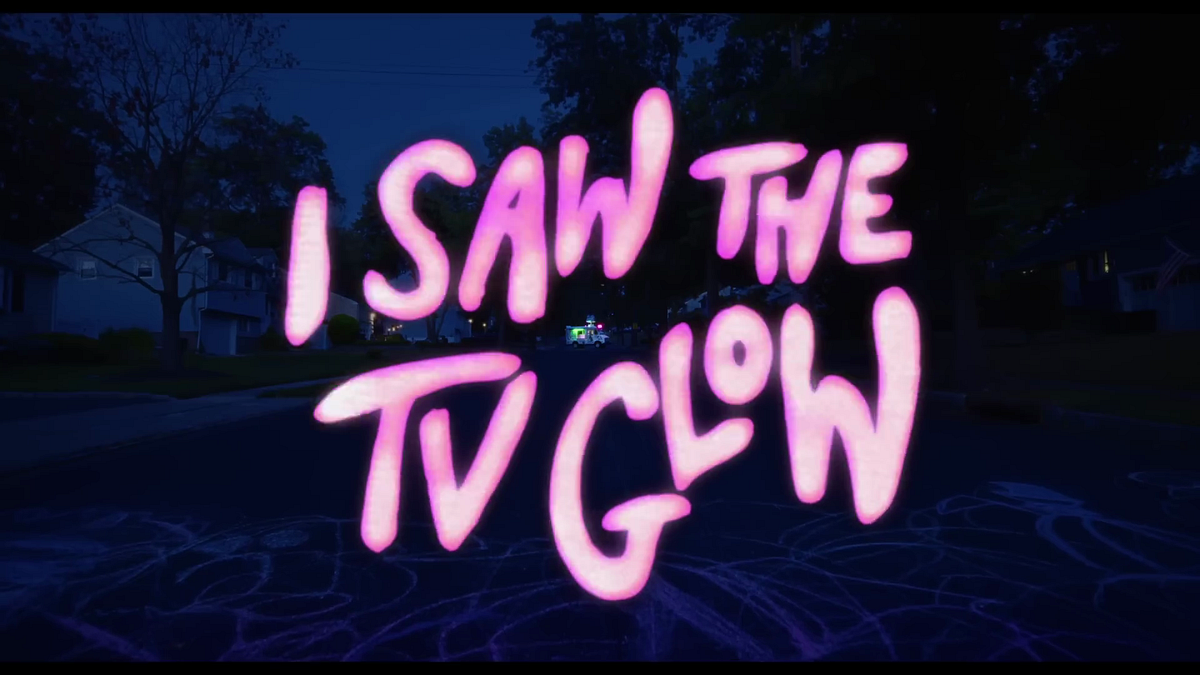

    Still on the docket —

    • Trap: I haven’t seen anything from the M. Night Shyamalan renaissance, hoping to give this a go.
    • Kinds of Kindness: Didn’t manage to find time for this Lanthimos follow-up.
    • The Substance: I’m not generally a horror person but this had great buzz at the end of the year.
    • Rebel Moon Director’s Cuts: Netflix’s decision to break this film into four indisputably a swing and a miss. I liked the theatrical cuts more than most but the red meat is meant to be in these extended versions.
    • Joker: Folie à Deux: No film that makes people this upset can have nothing going for it.
    • The People’s Joker: Vera Drew absolutely living the dream, giving two fingers to the notion that you can own pop culture and taking it all for herself. Sadly not out in the UK yet.
    • The Boy and the Heron: I’ll be straining credulity including this in the 2025 list.
    • Challengers: I will watch the sexy tennis love triangle movie.
    • Deadpool and Wolverine: I just think I’m better than this.

    If you like my writing, please watch my video essay The Fanatic, available now with a short companion essay kindly published by Blood Knife. If you’re after more text, please follow me on Medium or subscribe to my Letterboxd reviews.

  • Rebel Moon Part 1: A Child of Fire

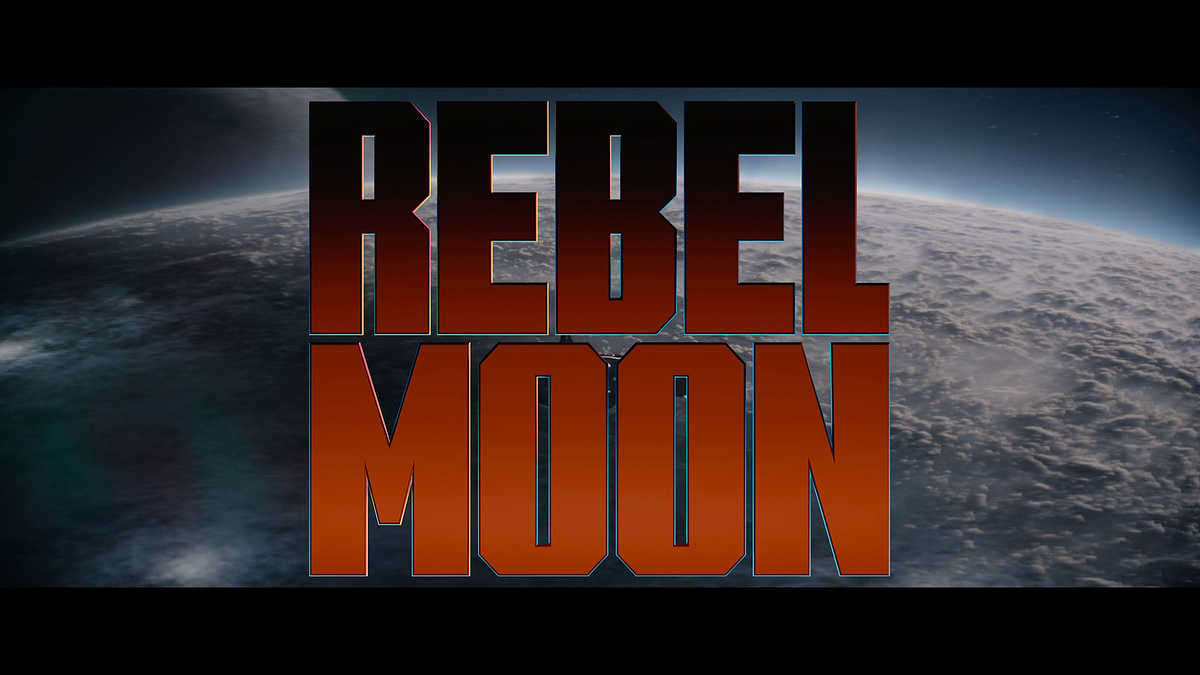
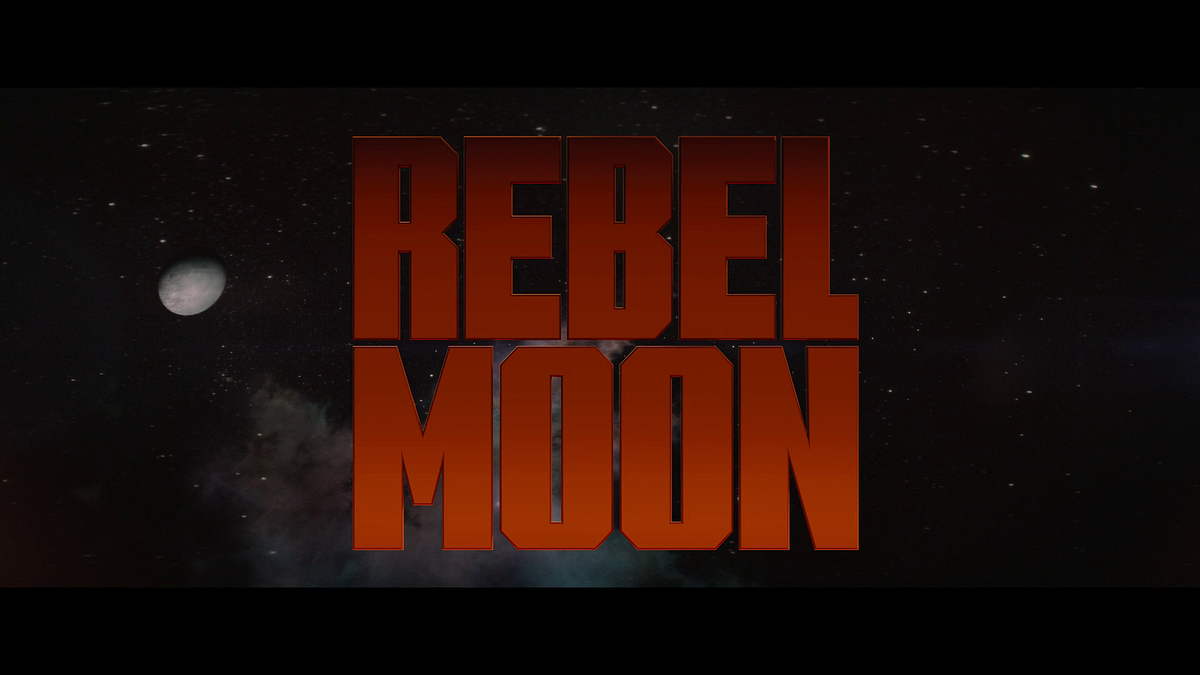
    The retro styling on the title card is very nice — I almost want the rest of the film to be this nostalgic.

    “Zack Snyder is making his own Star Wars.” It’s a bold premise. For better or worse, the film immediately begins to take shape in your mind — and from a filmmaker whose divisive reputation precedes him, there’s a strong temptation to assume what kind of film this will be before seeing a single frame of it. Zack Snyder’s Netflix production Rebel Moon: A Child of Fire wasn’t made on a shoestring budget, and by definition it can’t capture the blissfully ignorant innovation of making an off-brand Star Wars — a Starcrash or a The Man Who Saves The World with the ambition to do it all from scratch, in a period where the image of Baby Yoda wasn’t plastered on every lunch box. But there’s still some of that cheeky thrill in hearing “Zack Snyder’s doing an R-rated Star Wars,” as if you might have heard it on the playground at school and immediately started calculating how you would trick your parents into renting it for you.

    There’s already so very much Star Wars nowadays — mostly vented from the great Disney+ orifice, but it’s still only been four years since The Rise of Skywalker arrived on the big screen. People once had to wait sixteen long years for a new cinematic Star Wars experience. Unimaginable now in a world with Ahsoka and Andor and The Acolyte and so on. So the challenge for this new two-part space opera is to shake itself free of diminutive comparisons and distinguish itself as an original science fiction movie and setting.


    The first question is: which Zack Snyder is at the wheel? The contemplative, existentialist director of Man of Steel? The director wedged into the mythic/pulp aesthetic of Zack Snyder’s Justice League? Or the artisanal lens enthusiast of Army of the Dead? Naturally there’s a bit of each (especially that last one, with some truly beautiful lenses put together for this one ), but more than any other self-reference Rebel Moon sees Snyder return to the blushing, hyper-stylized action of 300, albeit with the benefit of hindsight and many years more experience.

    The soft focus is paired with rich, deep shadows for a unique, ghostly look.

    Much like the under-appreciated Jupiter Ascending, which had the Wachowskis exhibiting a similar competency, Rebel Moon treats its classic pulp sci-fi locales as a given, trusting the viewer to immediately clock the idyllic space-farm, the hive of scum and villainy, the Blade Runner city, the old West and so on. These varied settings are bound by a rich saturation and contrast in the colors that forms a coherent visual throughline; a comforting intensity that’s established in the lurid opening shots on protagonist Kora’s home moon of Veldt. As well, the infamous slo-mo — which has often been restrained or absent in Snyder’s work post-Watchmen — is back here in force, ratcheting the tension up in a way that will make you sad this initial release isn’t actually R-rated and can’t yet feature the heavily implied explosions of blood.

    The visual coherence helps the viewer keep up to speed, as the film moves at a breakneck pace through the second half of the story. The plot of Rebel Moon is explicitly that of Kurosawa’s Seven Samurai — or more directly John Sturges’ adaptation of that story, The Magnificent Seven. The traditional peasant village comes under threat from an evil empire and sends out representatives to recruit itinerant heroes, any they can find, to defend it. The opening act is given the most time and attention, laying out the lives of the villagers in such a way that their plight is apparent and human, as well as showing the evil empire engaged in some classic evil empire behavior: more Caesar than Palpatine, the fight is over grain tribute rather than lofty ideals (at least at first).

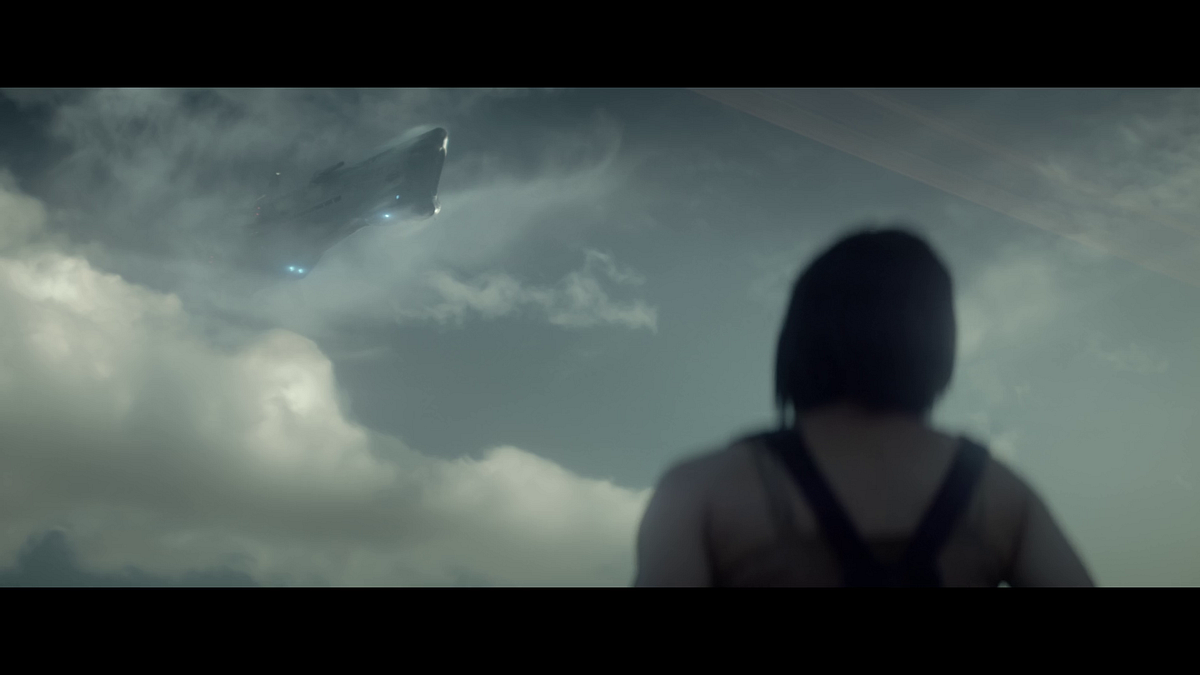
    The dreadnought in low orbit evokes similar imagery from last year’s The Creator.

    Similar to Magnificent Seven, the gathered recruits only get the space of a single vignette to distinguish themselves in. Even these, though, have evidently been cut to the bone to hit that two-hour runtime. It’s still intelligible — all we need to see is the indentured blacksmith strutting confidently towards the beast-too-wild-to-be-tamed to understand what’s going on, for example. Unlike this year’s other novel sci-fi epic, Gareth Edwards’ The Creator, there’s never a sense that the film has engaged the plot compression unit to such an extent that things have become dreamlike and abstract. The worst thing you’ll suffer is disappointment that we don’t get to spend more time with the various rogues who end up getting recruited.

    The final act is the least complete, given the difficult task of not resolving the plot before part two arrives in a few months’ time. It’s a hard sell, as hard here as it was for Across the Spider-verse or Mission Impossible: Dead Reckoning earlier in the year. A movie should have an ending. There’s an action showdown as you might expect, all flashing lights and dramatic violent flourishes. But without the catharsis of final victory or the establishment in that tight runtime of something like a Death Star to blow up, it feels like what it is: a midpoint. But even if this finale is more “wait and see” than it is overwhelming, the stinger right at the very end promises a sequel which might upend all sorts of expectations for how this story plays out.


    It casts the hexagonal grid motif the Marvel movies have settled on in a certain light.

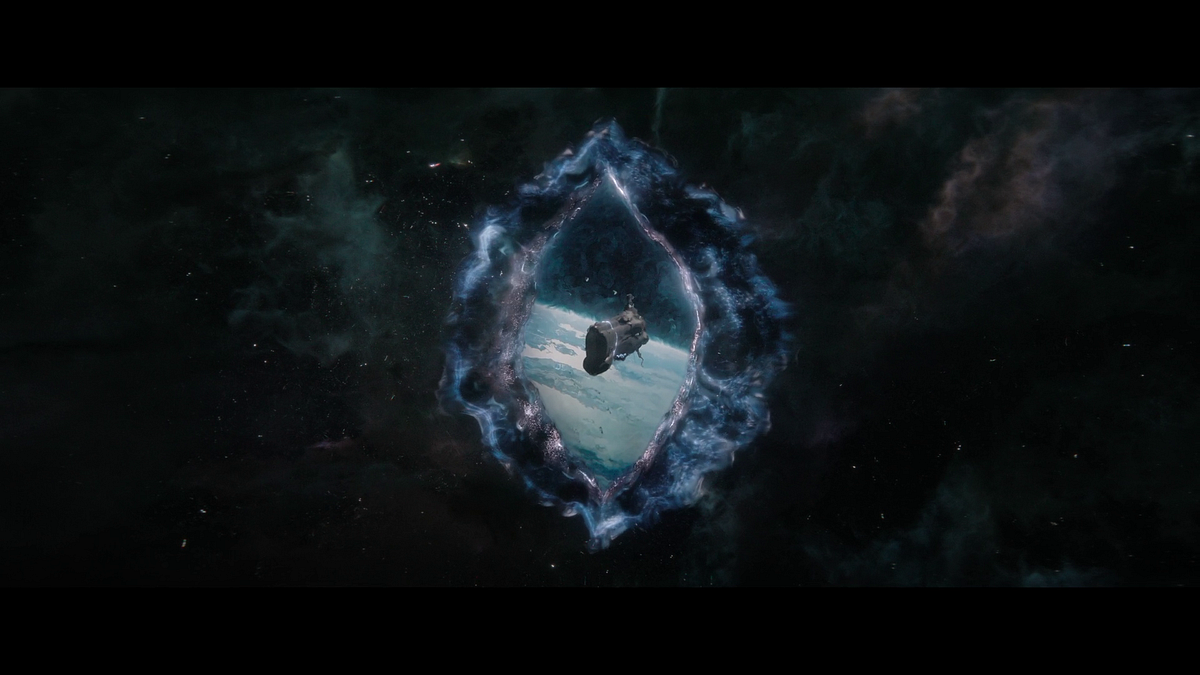
    Being a knock-off is permission to break all the rules, and Rebel Moon knows this full well. Is there a C3P0? Yes, and he gets shot. Is there a cantina? Yes, and it’s flirting with being a brothel. Is there a Han Solo? Well, no spoilers. And will it be trashy as all hell? In a clear statement of intent, the film opens with a girthy, tumescent space cruiser crossing the threshold of a great yonic portal.

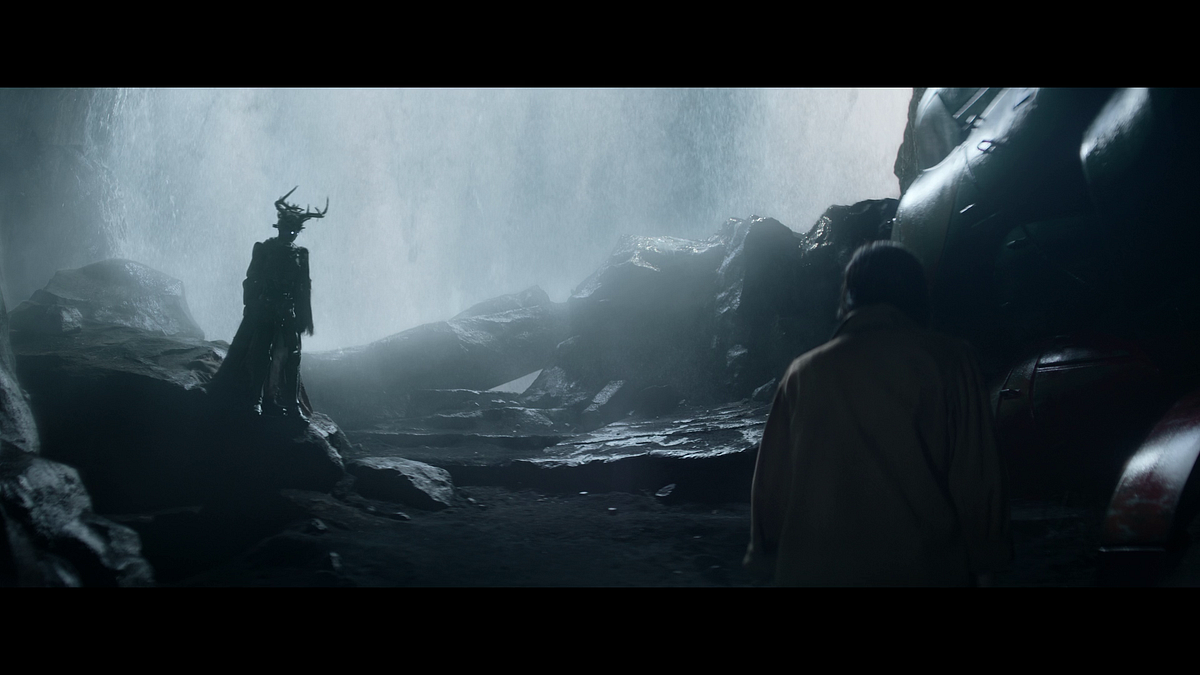
    Despite the headlines, Star Wars (and Seven Samurai and The Magnificent Seven) aren’t the only inspirations Rebel Moon is playing off. Excalibur is another obvious one, with the king dead or dying and his errant knights sickly and dispersed across the land. The Perceval here is Anthony Hopkins’ entrancing ‘Jimmy’, the C3P0-like pacifist robot who immediately breaks from that mold by shooting someone dead and fleeing into the forest to discover himself, only reappearing at the close now decorated with deer antlers. Comic relief, Jimmy is not.

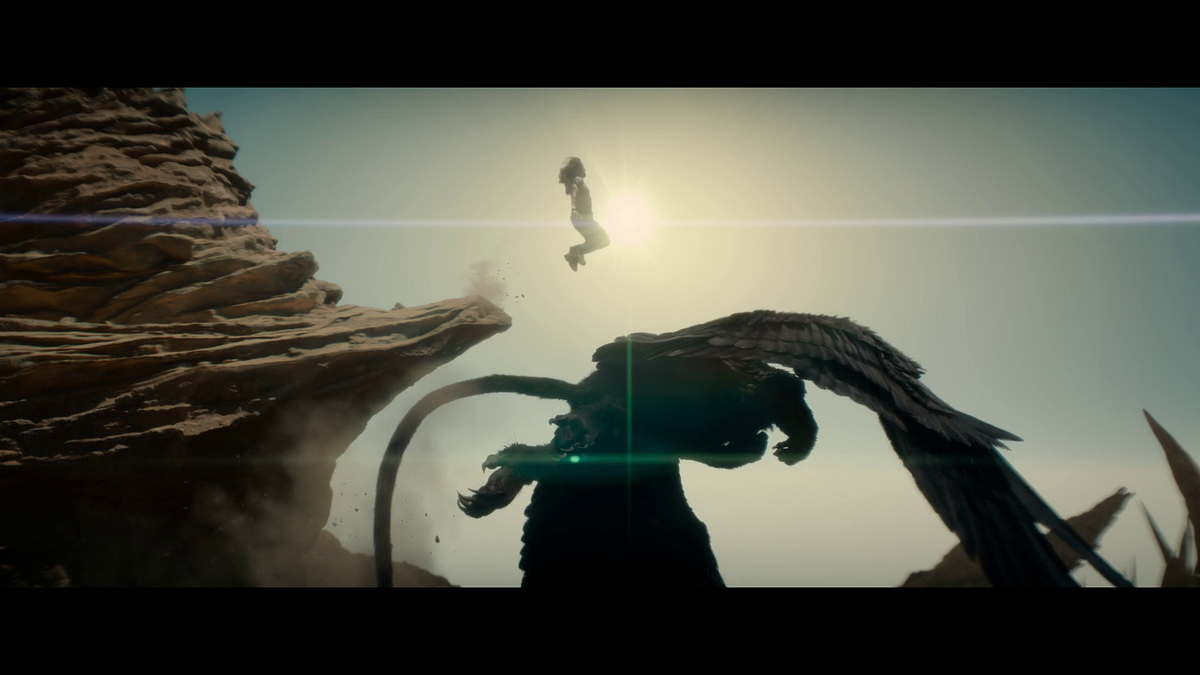
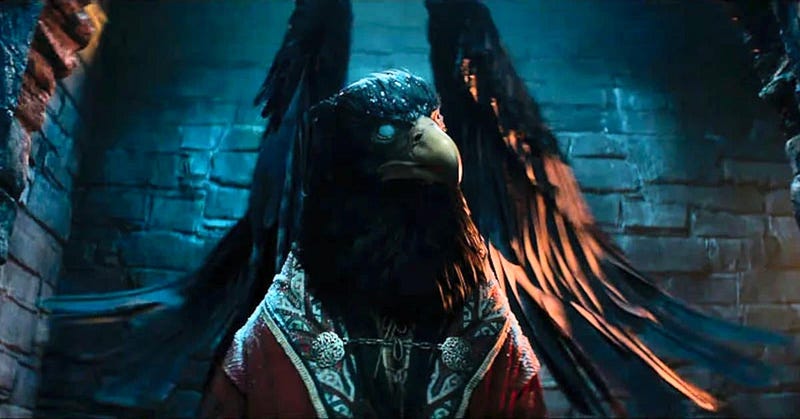
    The taming-the-beast sequence owes much to Avatar, though I somehow doubt featuring in a Zack Snyder film will quiet the “no cultural impact” crowd. Of course, George Lucas never shied away from having a character mount a great computer-generated beast — there’s one in all three prequel films. The Bennu, a griffin-like winged beast, is a fine addition to this canon.

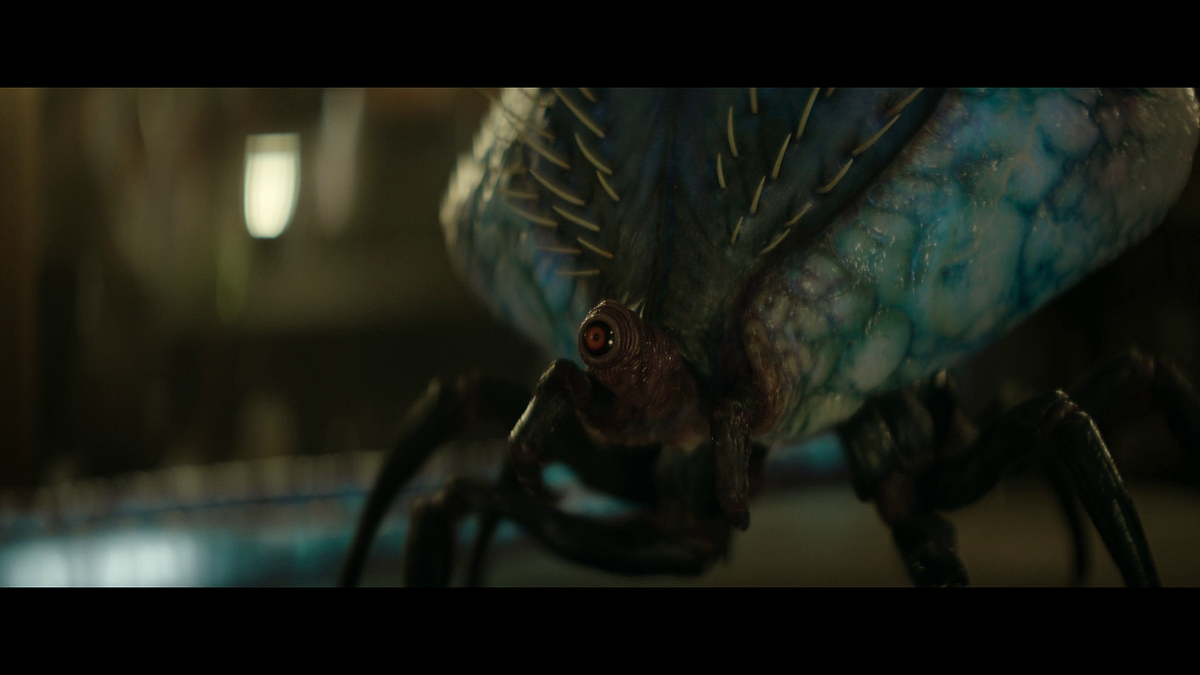
    Star Wars is when there’s a weird little guy in it.

    The most notable element of classic Star Wars that is missing is, sadly, the space politics. A much-mocked Lucas fixation, the scenes of machinations in the galactic senate or boardroom tables full of Imperial officers griping are lacking here. The tone is more in line with Dune, with us meeting or hearing about individual power brokers within an Imperial hierarchy but without even the token bureaucracy represented by Dune’s Mentats. And (delightfully for this PG-13 cut) we get to see just a little Baron Harkonnen moral decay on the part of the Imperial forces, and a touch of eXistenZ-aping body horror in the process.

    There’s more than a little of The Witcher creeping in around the edges too, especially in Kora’s flashback retellings of the story of the young princess. The backstory of Snyder’s universe here is more fantastical, more Lord of the Rings than Lucas’s tragedy of the republic — it’s good Kings and bad Regents, and prophesied children who will bring peace to the realm. And with a gothic God-King, a great empire across the stars that’s just maybe a little bit fascist, and a concerning undercurrent of implied necromancy , it’s hard to escape the touch of Games Workshop’s Warhammer 40,000 setting.


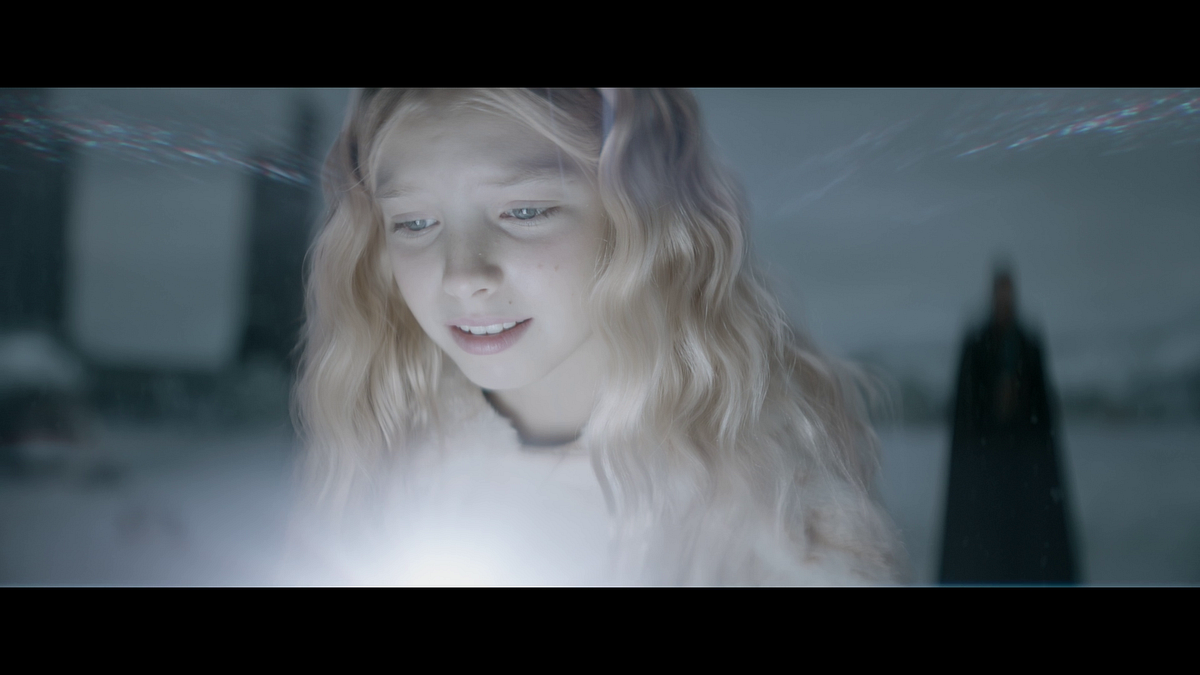
    A caped figure looms over a youngling.

    It’s unclear if Rebel Moon will be the Zack Snyder film to win over his detractors. Having made himself deeply unpopular in some circles with his mythopoetic take on DC’s superheroes, applying the same techniques to another sacred cow risks solidifying his reputation as an iconoclast — or worse, a contrarian. Netflix, who you can assume would very much like to have ‘Netflix’s Star Wars’, have engaged in an all-out marketing blitz, plastering the film across their media outlets and building small interactive moons in various cities. The film itself risks being swallowed up in all this external drama, but it’s enjoyable and distinctive enough to stand by itself. There are few big-budget films with a comparable ambition of style and motion and a director visually talented enough to realize that ambition. Rebel Moon is worth seeing on that justification alone.

    Is it Star Wars? Perhaps predictably, what makes Rebel Moon most interesting is all the ways in which it’s not Star Wars. Able to vary in characters, mood, setting and tone, Rebel Moon is fresher than any attempt to do this sort of thing since Jupiter Ascending. That film was compromised by running out of the hard cash required to see the full vision on screen. The fate of this film has been gambled on what has so far been a losing proposition, the two-part film epic. Like young Anakin Skywalker on Tatooine, we can only hope the old master has rigged the dice, and Rebel Moon realizes all this potential when part two lands next year.


    If you enjoyed this article I have conveniently already reviewed Rebel Moon Part 2. I’ll probably end up reviewing the extended cuts when they arrive in the summer also; subscribe to get them by email when I do. If you appreciate my writing, watch my video essay Sixteen Attempts to Talk to You About Suicide Squad. Then watch my video essay The Fanatic. Then back to Suicide Squad. Then The Fanatic again. If you’re after more text, subscribe to my Letterboxd reviews.

    This article was originally written for Blood Knife which is currently on hiatus.

  • Rebel Moon Part 2: The Scargiver

    Mild spoilers for Rebel Moon and The Tortured Poets Department.

    That’s Jimmy.

    In Dave Moore’s multipart essay on Taylor Swift, ‘How You Get the World’, he speculates that the media conditions of the late 2000s produced a generation of ultimate media: acts and brands and series that came from the era of universal appeal but which persisted into the era of Spotify and Netflix, where we are all so micro-served in our wants and desires that the sun has set on fame or success at that level. There may be more acts as talented as the Beatles, but their success will be diffuse, celebrity arriving in dribs and drabs instead of a supernova explosion of fame. Taylor Swift, as you might expect, is Moore’s primary example of this in modern music. For cinema, Moore cites the Marvel Cinematic Universe (MCU).

    For over ten years the MCU was inescapable in pop cinema, an Imperial march through the box office the successes of which were only accentuated by the tragicomic failure of every attempt to replicate it. Warner Bros sank their own battleship trying to ‘fix’ Justice League to the Marvel formula; the less said about Universal’s ‘Dark Universe’ the better. Even Disney — who bought Marvel wholesale — couldn’t keep Star Wars going for more than a handful of films.

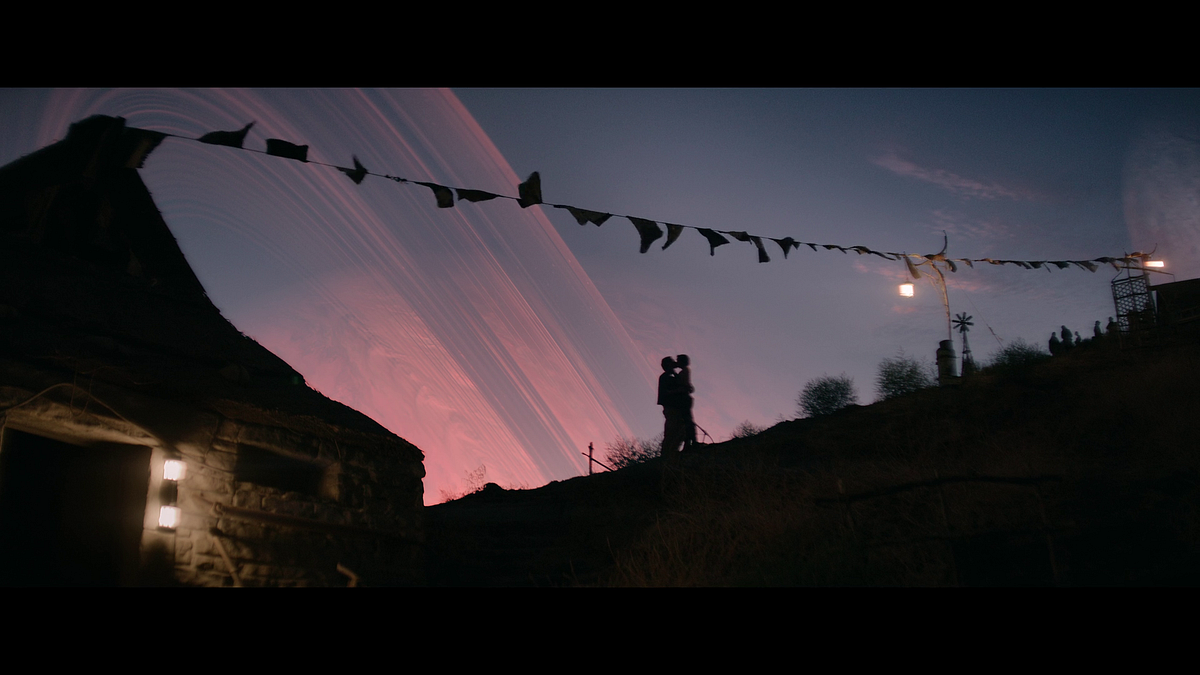
    Getting the pictures of grain in early so I can fit them all.

    Now it seems likely that we are in the twilight of the MCU, with tepid entries like the sequel to 2019’s billion-selling Captain Marvel failing to make back its budget and upcoming fare like Deadpool 3 leaning on the ageing, uncertain legacy of the Fox X-men films for appeal. The Achilles’ heel of the MCU was always the unbroken chain of continuity; the fear of missing an essential entry and slipping from the zeitgeist. In this Disney have prepared the MCU a shallow grave, the integration of streaming service TV shows into the core narrative turning an occasional pleasant visit to the cinema into something you need to devote hours of downtime to keeping up with. Even a smart director like Sam Raimi can’t make an attachment to the six hours of 2021’s WandaVision completely optional.

    Taylor Swift by contrast has retained her throne, for now, as a new round of reviewers tangle with the fear that her popularity might be driving their positive coverage rather than vice-versa. The roles of critic, taste-maker and customer advocate are never as intertwined as they seem and fresh off her enormous stadium tour and movie Swift seems likely to shrug off any negative reviews for her new album The Tortured Poets Department, released April 19th (Paste’s review was posted anonymously for fear of fan reprisals). A double album is one of the traditional marks of an act falling to hubris, and Swift’s detractors might be hoping that 31 songs with lyrics like “What if I can’t have us/I might just not get up” will be enough to bring her down to earth again. Personally I wouldn’t take that bet. This kind of uncomfortably proximate emoting is Swift’s trade, her authenticity, and what might appear cringeworthy to outsiders is the beating heart of her appeal to fans.


    The Rebel Moon title cards are an absolute joy.

    A world away from all this but on the same day, Zack Snyder finalises his own double album with the release of Rebel Moon Part 2: The Scargiver. The journey of this one seems to have taxed whoever is in charge of managing releases at Netflix to a point beyond all comprehension; it’s hard to imagine a more unhinged market strategy than “two films, each with two cuts, but not at the same time, and they’re each about five months apart”. Absence makes the heart grow fonder, and five months is not long enough to forget that the first part suffered deeply from being cleft in two like this. Arriving too soon to demand a rewatch of the first part, and effortlessly defeated in epic stakes by the recent blockbuster success of Villeneuve’s Dune, this latter half has not been set up for success. As with Ms Swift though, Snyder has a habit of beating the odds and confounding the critics — who may never forgive him for the trump card he pulled on all the nay-sayers and industry insiders by seeing his Justice League through to completion.

    In my review of Rebel Moon Part 1: A Child of Fire I speculated that Snyder was returning to his roots in doling out crowd-pleasing action with simple moral messages, with the risk being that Star Wars was yet another revered cultural artifact he might be perceived as mistreating. Star Wars is serious business, even now, and there’s something typically audacious in Rebel Moon’s refusal to emulate it too closely. There’s no force, no monks, no robot peasants. In this second part there isn’t even any planet hopping save for flashbacks and recaps. Snyder is mythopoetic where Lucas is spiritual — what unites his band of adventurers is life, living and working, and much of the first half of Part 2 is given over to seeing the protagonists of Rebel Moon working the land in common with the villagers they have come to save, sharing food and drink and dance. It’s an earnest message that casts into relief the difficulty of such human connection even in Snyder’s own superhero efforts — Batman v Superman in particular hinging on the distance Superman’s existence puts him and the people he aids. The MCU often inelegantly sidestepped this by having the heroes defend property in the quickly achieved absence of people; cars and buildings and other totems, Thanos meeting his final defeat when he knocks over the campus building. The lack of humanity can become distracting — the Avengers famously share a shawarma, but they don’t share it with Happy Hogan. Rebel Moon is deeply concerned with human behaviours — love, work, sex, violence — in a way that is often absent in modern films.

    It was a shame to watch this one on the small screen — there apparently were screenings in London this time but I wasn’t aware of them.

    Being in essence a two-hour final act, there’s not much room for structural game-playing here. We get an hour or so of beautifully shot grain harvesting with the expected nods to Magnificent Seven where they should be, and the brief story of how Admiral Noble got his groove back — in a joke that’s just a bit too arch for this movie, we’re repeatedly told that the resurrection process (a visual reference to The Matrix) may have turned him into a deranged psychopath. Naturally, his behaviour doesn’t change at all. Following this we get the scene which most resembles the first movie, as the members of the troupe who didn’t get to show off their deal in that movie fill in the gaps here in a series of vignettes. This includes a delightfully theatrical recounting of Kora’s killing of the magic princess, beginning with the King deciding to call his biggest, ugliest ship the ‘Peacemaker’ and ends with the string quartet playing a gun-toting Kora out of the room. It’s playful and stagey without being ridiculous or self-indulgent.


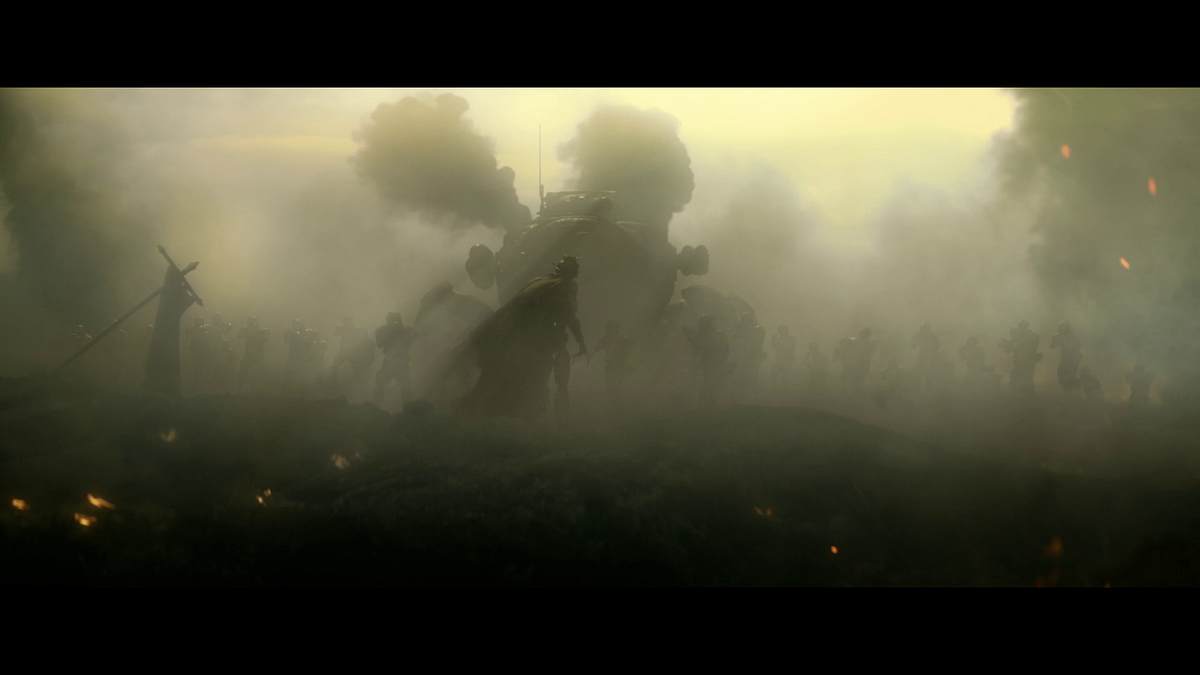
    More so than Part 1, the new film does flaunt some significant references to Lucas’ work. The invasion of the village, with walker tanks being airdropped in alongside ground troops as dust flies past the camera is a loving reproduction of the final battle from Attack of the Clones, and the topsy-turvy swordfight between Kora and the resurrected Admiral Noble at the climax has a similar sense of outlandish fun as the Obi-wan/Anakin duel in Revenge of the Sith, along with the spectacle of a great flagship crashing through the atmosphere. Closing the film out on a funeral pyre also highlights the affection this film has for that series. The comparison does throw up some areas where Rebel Moon’s reach exceeds its grasp, with the personal enmity between Noble and Kora always seeming more like pathetic competition than ideological clash. It’s not just that Vader is Luke’s father, it’s also that he’s a symbol of paternal authoritarianism to Luke’s hippy freewheeling. Kora on the other hand, though we’re shown that she has instinctually picked up the communitarian values of the village, is herself a product of the same Empire that Noble serves.

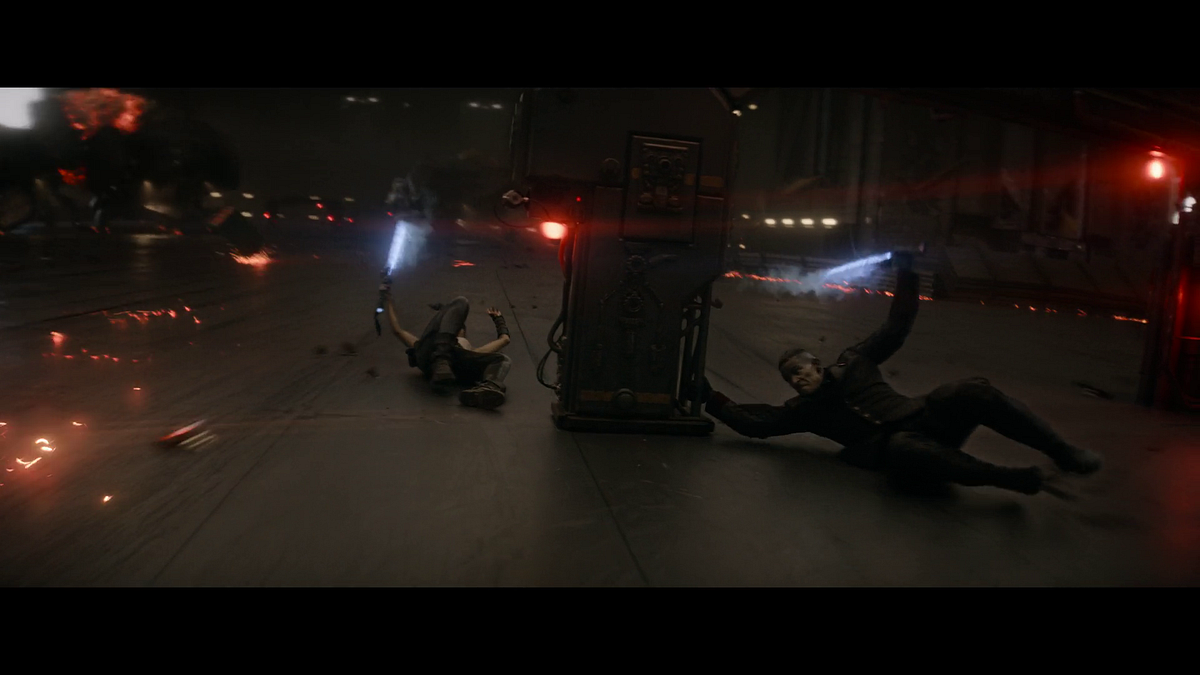
    Notably, there’s no contrivance to give them different coloured blades — in the end, they’re fighting over just one.

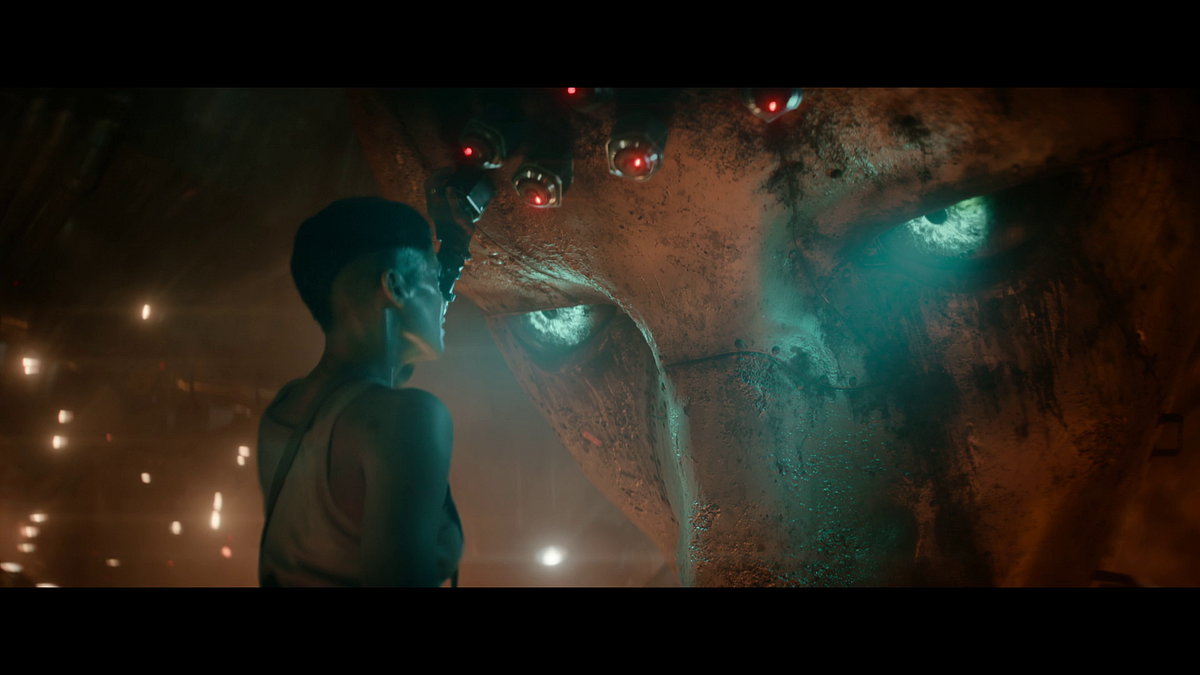
    What the interpersonal conflict doesn’t show though, the incidental details are happy to express — the extended sequence of communal labour is contrasted with what we see of the inner workings of the enemy dreadnought, with a clear reference to the class strata of Titanic whereby workers in the engine room shovel coal into great raging furnaces. Above this is some kind of spectral angelic computer, evoking Evangelion among other things, bound in a position of sedate submission as Kora installs explosives across its broad forehead, eyes flickering to light with the interaction. In the flashback, the senators of this Empire are aged and grotesque, the old stereotype of the Prussian noble, as they endorse Balisarius’s antiquity-themed coup. Old men of the future, in command as ever. There’s something pathetic in Noble’s repeated assertion that capturing Kora will win him a place on the senate — for all his love of the society he represents he is extremely blinkered about how it loves him.

    Notable by their absence, not compared to Star Wars but compared to the mode of nearly all modern genre films, are the quips. None of the characters of Rebel Moon are a Chris Pratt type and thank the heavens for it. There’s a confidence in the world of the film and the actions of the characters within it that liberates them from having to do the ritual ironic disavowal that pervades modern films. The villagers do not proclaim “oh damn!” on seeing the second wave of troops marching towards them because the villagers are in fear for their lives. The setting is taken seriously, and not just as a sort of pastiche the people within it are performing — the most obvious example of which being the world of The Marvels, where the planet of the sad refugee people is but a hop from the planet of people who just have to sing and dance all the time and so on. Rebel Moon is refreshingly straightforward: the soliders are competent and well-disciplined, the officers obey orders even if they disagree with them, and sensible decisions are made about tactics throughout. It’s a small thing, but it means when we then see Noble personally go on a trench warfare murder spree it’s exceptional rather than ludicrous. George Lucas always insisted that Star Wars was for children, and the comedic incompetence of the Stormtroopers was a reflection of that. Rebel Moon, with its R-rated director’s cuts hanging like phantasms in the distance, does not have such a commitment.

    Special mention to Ed Skrein’s face, even more of a skull mask here than in the first one.

    With hindsight it may turn out that Snyder’s peak of creativity and collaboration was his trilogy for DC, and he won’t seek out such intimate, introspective work on the grand canvas again. It may be that among fans there is much handwringing and disappointment over his experiments with cinematography and writing and the other elements he has, until now, sought out talented partnerships for. It may even be that unlike stablemate Michael Bay, Snyder never sees a broader reappraisal among critics as an auteur (with the concept more out of fashion than ever). Rebel Moon Part 2 currently has 18% on popular review aggregator Rotten Tomatoes. Love and Thunder, a movie without a shred of the craftsmanship or soul that is present here, has 63% and is certified ‘Fresh’.

    Believing as many people have that critical consensus will build a universal (American) canon liberates a person from the tyranny of choice. There is no risk of feeling your taste to be inadequate when there is an objective numerical measure of its accuracy. But if the numbers are a fantasy, and the consensus was only ever a reflection of contingent aspects of production and not a guiding factor at all — if The Shawshank Redemption or Citizen Kane or Everything Everywhere All At Once is not in fact the greatest film of all time, certified as top of the list— then every person is in danger of being a philistine. This is a troubling thought. But more troubling is the idea that, captured by engines that only feed back to us what we already like, we end up with nothing but attempts to recreate the MCU. For as much as I don’t hate these films, we end up with The Marvels or Madame Web or Wonder Woman 1984 or Thor: Love and Thunder. Films made by committee, with artistic endeavour a secondary concern. As Snyder himself put it in a recent interview, we end up with the Happy Meal.

    The shot composition is showy all the way through, but they really have fun with Jimmy.

    Snyder’s work is unique and particular, and fervent in its earnestness. Despite all the homage and pastiche and the readily apparent melting pot of influences, Rebel Moon is an original sci-fi universe in an age of adaptations and sequels. Snyder, who once helmed the major competition to the MCU, knows the folly of trying to reproduce it. Even the clumsy sequel hook here is only that, a sequel hook. It’s not the work that destroys all the critics and haters — but then we had that one in 2021 and it didn’t last anyway. It’s just another decent movie by Zack Snyder. Perhaps for his next one he will take a leaf from erstwhile creative partner Christopher Nolan and leave genre behind entirely. Oppenheimer brought the intensity of a Batman film to historical biography. Perhaps Snyder could bring the rich visuals of Rebel Moon to philosophical fiction. Or perhaps he will keep producing these grandiose micro-epics for as long as Netflix will pay him. All things are possible.

    I would be sad to never see another film like Rebel Moon and I don’t know if another director is likely to make one. Everything’s filthy, the lens is constantly trained on the narrowest plane of interest and there’s a healthy, satisfying thunk to every noise and interaction. It’s not a new Star Wars — it may be that nothing can be a new Star Wars, nothing can be a new MCU, nothing can be a new Taylor Swift. But it’s an enjoyable movie by a director who is always pushing his own limits. The lousy division into two parts, the held-off pair of Director’s cut, the fancy lenses and lingering shots of grain and such may not be to everyone’s taste. Few things are. Cynics will sneer at the simple truisms like “connecting with people will help you break an addicition” or “mutual respect can bring people from different backgrounds together”. But Rebel Moon is authentic and honest in a way that will overcome all cynicism to those who care — an inimitable talent for reaching people that Zack Snyder shares with Swift — and that alone is more than enough to save it.

    Kora and the engineer share some kind of moment here. The scene I’m most looking to see extended.

    If you appreciate my writing, watch my video essay Sixteen Attempts to Talk to You About Suicide Squad. Then watch my video essay The Fanatic. If you’re after more text, please follow me on Medium or subscribe to my Letterboxd reviews. Thanks to Jimbot and Jamie Faith for feedback.
  • 2023 review of films

    Expanding on my Letterboxd list, the new releases I saw this year and what they meant to me. Titles link to whatever gibberish I wrote at the time.

    18. The Flash

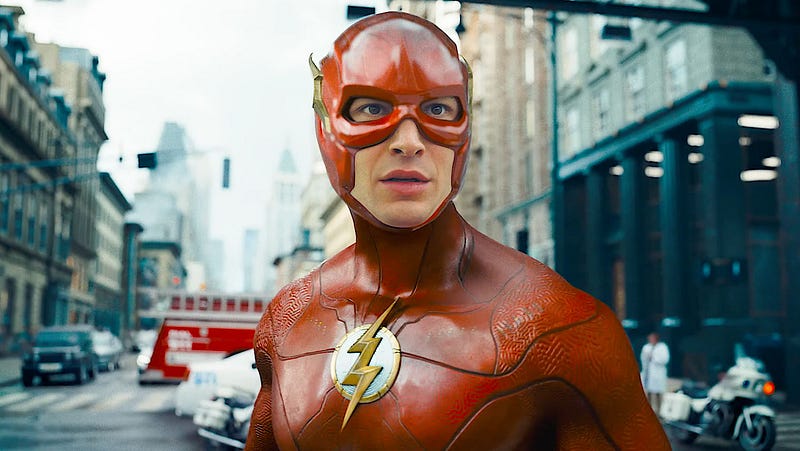
    In a year where I mostly didn’t bother seeing anything that I didn’t think would be good, The Flash has the indignity of being something that I went out of my way for despite expecting it to be a flavourless slurry. The production of this one is surely the nadir of Warner’s attempts to make a Marvel-like universe of DC films seaworthy, and ahead of release it seemed like it could only logically be an abomination in form and content. So it was with malice in my heart that I sat down to watch it in the cinema. But it surprised me — not offensively terrible except in certain specific ways and a tremendous sense of fun, some of the time. But the final third is a slog that just keeps getting worse and worse, and there’s nothing on this list that I can favourably compare it to.

    The suit looked really bad. Like a walking basketball, if you’re being kind.

    17. The Wonderful Story of Henry Sugar

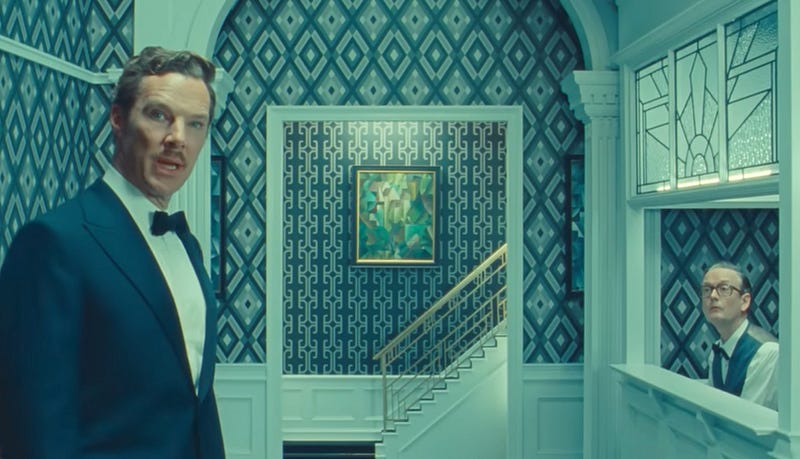
    It’s a tightly-sprung little diorama of 40 or so minutes, Wes Anderson’s adapation of a slightly obscure Roald Dahl tale that I must have read at some point as a child. I was a furious reader and Dahl is (or was) one of the archetypical British children’s writers. All of his tales have an enchantingly sinister edge to them that often crops up again in film adaptations, from the gothic trimmings of James and the Giant Peach through to the animalistic protagonists of Wes Anderson’s (there he is again) utterly inspired Fantastic Mr Fox.

    Anderson is deep in a particular style he’s been cultivating even as a subset of his well-known aesthetic, and it’s as on-show here as it will be in (spoiler alert) the Wes Anderson entry that is going to make an appearance higher up this list. I suspect the coherence and ambition of that entry makes this one pale unfairly by comparison, but it’s a wonderfully crafted little ditty that moves at a breakneck pace even though there’s not much of anything happening. No quarter whatsoever is given for the viewer to catch their breath while listening, which can be a frustrating experience if you’re half paying attention on a phone, but is a marvel to attend to.

    Cumberbatch is still good. He doesn’t seem to do much capital-A Acting any more, does he?

    16. Mission: Impossible — Dead Reckoning Part One

    Tom Cruise! You were the chosen one! You were supposed to be a fixed beacon of care and deliberation in blockbuster movie making, not propping up one end of a flimsy tent that’s blowing about in the wind… or something. End metaphor. I set myself up with this one really, having done a marathon over several weeks of the preceding six (six!) entries in the Mission: Impossible saga. Fallout remains the high watermark, with this being a real let-down that’s way less than the sum of its parts, despite the usual set-pieces and ensemble cast. It’s the shabby treatment of Rebecca Ferguson’s character that rankles most, and we can only hope that the (now consciously uncoupled) sequel remedies that.

    It’s a great stunt, but what does it have to do with AI?

    15. Dungeons & Dragons: Honor Among Thieves

    I knew this was well-regarded but I hadn’t actually planned to watch it; I’m not a huge Dungeons & Dragons fan, despite spending most of my childhood in front of Baldur’s Gate 2 on the family PC — at one time I could have identified any one of the several hundred items in that game from the icon alone. I’m also not a fan of mainstream American comedy, which to my refined British palate doesn’t feature nearly enough bon mots and/or upper class men putting regional accents on for fun.

    Having been sat in a room while this was on though, there’s plenty to appreciate — it is genuinely funny, and affectionate for the setting in a way that brings specificity to the comedy. Michelle Rodriguez solidifies her position as the safest pair of hands for your ‘competent number 2’ role and Hugh Grant, who seems to be enjoying something of a renaissance, is a scene-stealer even if he’s definitely only giving it 60%.

    Cute puppet, though the kinda janky movement is why they don’t do that so much any more.

    14. Taylor Swift: The Eras Tour

    In the gap between the release of this and now (only a few weeks), Swift has started to enjoy a little bit of a backlash, with critics pointing out that her feel-good, be-yourself non-specific feminism could be seen to be a little self-serving, and her silence on the genocide occurring in Palestine might suggest that selling records is a more prioritised leveraging of her pop culture cachet than doing good in the world.

    Of which, well, pop stars were never going to save us. Movies were never going to save us. It’s all worth saying — and saying so loud it becomes a problem for the great, crushing press engine that drives these stars forwards — but it struggles to become a moral imperative against enjoyment.

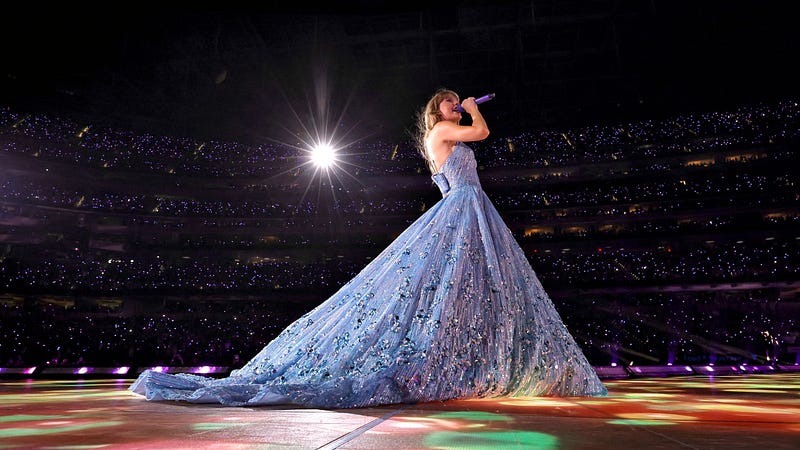
    As for the movie? Well, it’s nothing to write home about in terms of cinematography — a mostly prosaic camera is enough to show off the maximum-budget staging and on-stage choreography. On occasion there’s a shot that tells the big story here — Swift a giant astride the stadium — but no throughline. It’s all assuming that the staging and the Swift songs will be enough to sweep you along — and for me, they were. Taylor Swift dares you to suggest that her imperial days are behind her.

    This enormous woman will devour us all!

    13. John Wick: Chapter 4

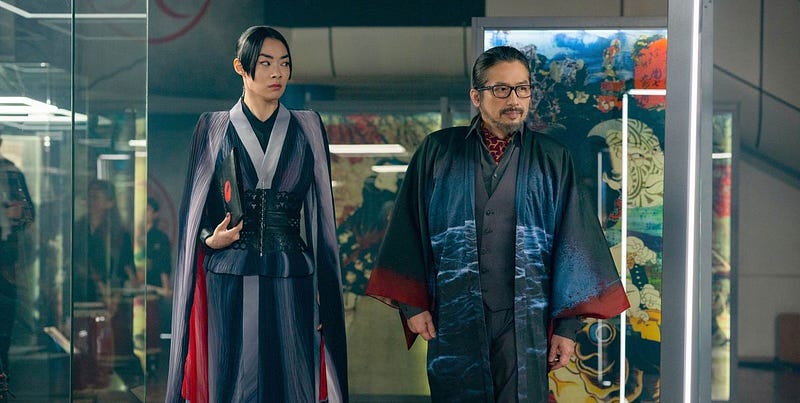
    The audience in the cinema with me for this audibly groaned when he rolls back down those stairs. A positive groan, to be clear, an expression of solidarity with poor Mr Wick who has just so painstakingly climbed them. But still a groan — at four long entries, Wick’s unceasing tear of film revenge hasn’t lost anything in the stunt choreography column — and the addition of both Donnie Yen’s blind assassin and Rina Sawayama’s hotelier ninja provide plenty of opportunity for fresh ways of showing off there. But this series can only subsist on ramping up the action for so long before the always-overwrought plot collapses into tedium, and that’s feeling like it might come soon now.

    Great costuming, too.

    12. Spider-Man: Across the Spider-Verse

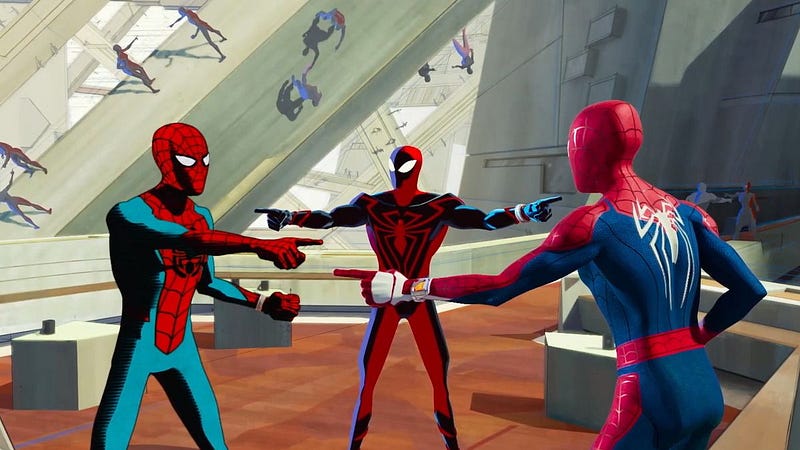
    It’s such a hard one to love. It’s got all the warmth, all the creativity and feels exactly as fresh as the first one, but out of all the “part 1 of 2s” that somehow came into confluence this year it’s the one where it just didn’t work for me. Not helped by seeing it in the cinema, where it certainly seemed like there was some kind of audio issues over the first twenty minutes (a bit of hyper-focus on the centre channel for dialogue?). And two people sat to the right of us who interacted with their various foodstuffs to such an extent that we fled like cowards to the other end of the row.

    But yeah, the film has just set up its major conflict… and then it ends. And unlike Rebel Moon, the first film is right there as a complete, cogent unit that told one story end-to-end. This feels like a regression — that’s terribly unfair to all the artistry and beauty, but making this list I found it a difficult notion to shake.

    Ahhh they’re doing the thing.

    11. A Haunting in Venice

    It’s just for me, the guy who loved both Murder on the Orient Express and Death on the Nile! Branagh’s Poirot is such an odd project, taking on a role so recently lived in with tremendous aplomb for so many years by David Suchet. But he’s persisted with it, and for me as the person who is happy to see really any classic detective tale at all, I’m glad.

    Orient Express suffered from an identity crisis, with Branagh’s idiosyncratic take on the character and setting emerging out of step with the film — intense action sequences clashing with posed frame composition. Nile was a cinematic victim of Covid, ending up more than a little stiled. But Haunting delivers on the promise of Branagh’s Poirot at last — moody and atmospheric, it’s the best of the three.

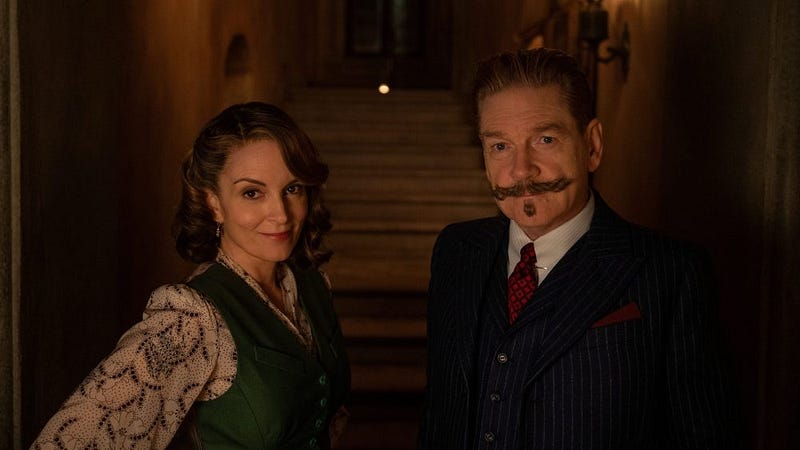
    Tina Fey’s in this one. She’s fine.

    10. Master Gardener

    I saw this in a cinema in Valencia, of all places, away on a work trip. There was a great big cardboard display out for it in the lobby, which is a delightful thing to find promoting a new Paul Schrader film. I bought popcorn and soda and settled in to ignore the Spanish/Valencian subtitles, then afterwards walked back through the raucous streets of the old town to my hotel room.

    El Maestro Jardinero

    Schrader is retreading familiar ground in this story of a former Neo-Nazi turned flower-tender who falls in love with Quintessa Swindell’s millennial dilettante, but it’s done with such an eye for beauty and the hopeless pain and loneliness at the heart of every person that you won’t care. It’s tight, it’s thrilling, it’s unique — but my god, that ending.

    9. How To Blow Up A Pipeline

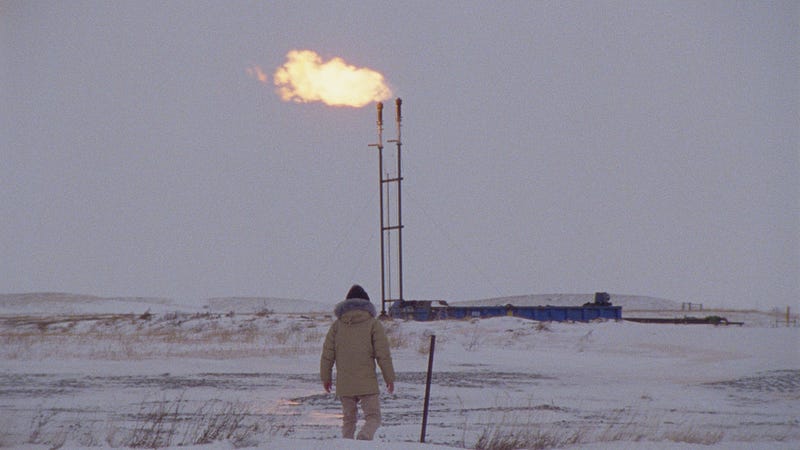
    Always fun to see a dramatic adaptation of a non-fiction book, and Daniel Goldhaber turns Andreas Malm’s book (which I sadly haven’t read) into a tense, small-scale thriller which approaches ‘Sorceror’ levels of tension. A group of activists each with their own reason to feel particularly passionately about the environment come together to do something about it: blow up a pipeline. Anyone with any kind of knowledge of activist groups can imagine from there the sorts of things that go wrong, but the true radical optimism of the film is in what it imagines could go right. Very few films have politics nowadays, so it was nice to go see one that did.

    It also looked really good, shot on 16mm film.

    8. The Pigeon Tunnel

    John Le Carre (fake name) tells tall tales about his disreputable father and time in the security services. It rivals F for Fake in the genre of documentary films that are actively messing with their you, but where in that film Orson Welles was actively setting out to disrupt the audience’s expectations of a documentary film, here veteran filmmaker Errol Morris (no stranger to deception and persuasion, mind) is desperately clinging to the rudder trying to keep this ship on course. At one point, prying ever so gently at his interviewee’s closely guarded secrets, he says “they think I should press you harder on this betrayal thing”, which provokes Le Carre into an absurd diversionary rant about his own sex life — but which reveals nothing. As enigmatic as one of Le Carre’s books.

    *whispering* That’s John Le Carre.

    7. BlackBerry

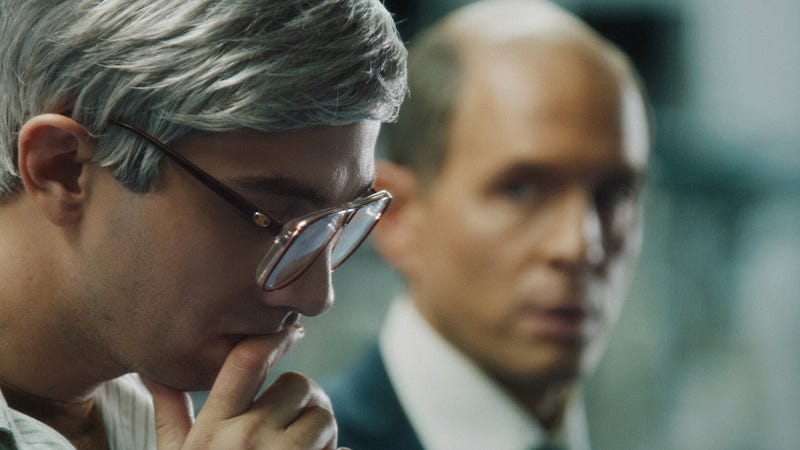
    The Thick of It mixed with It’s Always Sunny in Philadelphia mixed with Masters of Dune mixed with Bad Blood. The funniest film this year and probably the funniest film since The Death of Stalin. The rise and fall of Blackberry mobile phones, which were the undisputed top dog of business phones (‘Crackberry’, how quickly we forget) until the iPhone utterly obliterated it and left only a hard kernel of keyboard-phone devotees behind. Glenn Howerton manages to make a case for himself as a serious dramatic actor in a role which has him scream “I’m from Waterloo! Where the vampires hang out!” at a board of nonplussed executives.

    The most intimidating bald head.

    6. Rebel Moon

    This is generous, Zack! This ranking is generosity! Snyder’s reputation precedes him with all the internet’s worst critics and naturally this dreamy sci-fi action thriller has been received with the ceremony of a letterbomb, the audacity of doing Star Wars without involving the brand owner just too much for many. I’ve been a fully signed up Snyder sicko for many years now so this was high up on the anticipation list for me, and I got to see it in beautiful soapy 70mm at the Prince Charles Cinema in London. Snyder does what he does well on screen for two hours, though this may not be the one to convert to unfaithful.

    It’s the big Christmas Netflix release for this year, and Snyder’s take on the space opera has promise and promise and promise to spare — and of course, lots of utterly gratuitous slow-motion. But it’s part one of two, and (bafflingly) cut one of two, and cumulatively it’s hard not to feel some of the disappointment this year’s Spider-verse suffered from — but part two should hopefully only be a few months off.

    Brace for (bloodless) impact.

    5. The Killer

    Has Fincher been away? Since 2014’s Gone Girl there’s only been the 2020 cult hit Mank, about the writing of Citizen Kane, and well-regarded Netflix series Mindhunter. This then is something of a return to cinematic fiction, and he’s not missed a beat. Michael Fassbender’s titular trained killer muses existentially about the nature of his job, as a single missed shot unravels the whole thing. More than any other film on this list, the controlled, thoughtful nature of this is the foil to Dead Reckoning’s sprawling mess of plot sinew. There’s not a second out of place as Fassbender goes through the boring, everyday motions of hiring cars and unlocking storage lockers and memorably at one point signing up for a trial at a gym. A small slice of genius.

    Hits on the universal truth that everyone has their own special McDonalds order.

    4. Napoleon

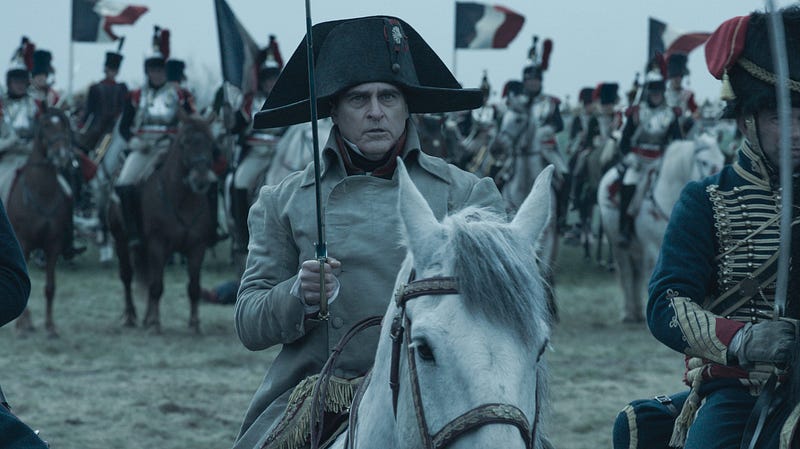
    What if Napoleon were just a grotty little guy? Ridley Scott swerves the historic epic expectations and delivers the year’s second-funniest film in this unflattering portrait of old history-on-horseback himself. Critics slated it for bias, for mendacity, for simplifying the intricate historical events that make the Napoleonic era so attractive to lay historians. But it captures something so essential about self-assurance, self-doubt, self-pity in the dual protagonists of Napoleon and Josephine — both of who do as they will and let the whole world come round to agreeing with it.

    Much like the man himself, Scott’s great sprawling epic doesn’t give a damn if you like it or not. It’s stupid, it’s grandiose, it’s slapstick, it’s everything. Like Rebel Moon, it has a full-fat version coming in the new year. Unlike Rebel Moon, it doesn’t need it.

    Big hat.

    3. Oppenheimer

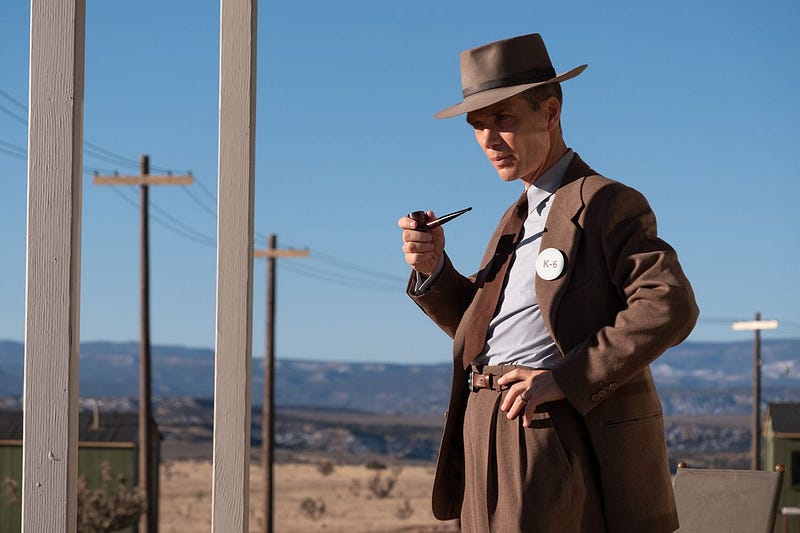
    I saw this on the biggest screen, the one at the BFI IMAX in London which I don’t think I’ve been to since seeing Watchmen there back in 2009. It’s an intoxicating experience, even if the three hours of film had me flagging slightly by the end. We had to get a taxi back it was so late.

    The badges look straight out of The Prisoner, but they were real.

    If Tenet felt like the peak of a certain cumulative thought in Nolan’s work, Oppenheimer feels like a whole new mountain. He keeps all the interpersonal tension, the motions of science and technology reflecting the behaviours of the people who enact them, but all the fiction is torn away, all the artifice. These were real people (and Nolan takes particular pleasure in showing as many of them to us as possible) but they may as well be in the plot of Interstellar with the scope of the world-historic change they provoked. Also it looked gorgeous in 4:3.

    It’s Nolan’s masterpiece, and I can’t see how he will top it. On that basis, it should be at number 1 in this list. But in a pairwise comparison of my own personal honest choice, I couldn’t place it above either of these next two films.

    2. Asteroid City

    Wes Anderson, as noted above, has started to make being Wes Anderson look effortless. Asteroid City is breezy, unassuming, utterly crushing, smart, unashamedly intellectual, silly, funny, lurid. If I watch it again I will cry. I might have cried the first time. Going back to The Royal Tenenbaums and presumably before, Anderson can tug the heartstrings when required with an expert finesse. But this is something more. It makes you feel for being human. I don’t know. Perhaps this is a film that will only be describable in the rear view mirror.

    The colour palette is superlative.

    1. The Creator

    Much like how Oppenheimer doesn’t deserve to not be number one, The Creator doesn’t deserve to be number one. It’s broken! It’s flawed! It doesn’t work at all! The film flies at a breakneck pace from scene to scene, setting to setting, allowing no time at all for establishment or inattention. Then, in the third act, it goes even faster. It doesn’t allow time for coherence, or explanation, or logic. Things just happen, images splashing across the screen. It’s left for the viewer to put them together into a compelling ending.

    If you’re not on board, it won’t work. But for me, seeing this on a last-minute trip to the cinema the day before it stopped showing, the imagery was enthralling. I can home talking about how incoherent it was and how it was in many ways a weaker retread of Avatar 2: The Way of Water. But it wasn’t weaker. It was stronger. And since seeing it that affection for it has only grown, to the point where when I did the pairwise comparison with the other movies on this list, it beat every one. The imagery is more direct, more vibrant than Oppenheimer. The story is more thrilling, more imaginative than Asteroid City. The subject matter is less tired than Napoleon. Every time, it wins. Unlike all the other flawed gems on this list, there’s no sign of an extended cut of The Creator. But perhaps that’s for the best; perhaps with a more complete version the spell would be broken.

    Didn’t see but will:

    • Barbie — I don’t watch films for children. But more seriously, the marketing campaign for this one was just a little bit too self-aware to click for me, and when the opportunity didn’t present itself I didn’t seek it out.
    • Blue Beetle — The latter DC cinematic universe is dead and gone and now’s the perfect time to start critically reappraising it.
    • Killers of the Flower Moon — I’m a philistine and a fraud and I should resign my stewardship of longmovie.club. There just wasn’t time to fit it in in a winter season full of films.
    • Maestro — I still haven’t gotten over Tár.
    • The Marvels — The latter Marvel cinematic universe limps on and I have no desire to start critically reappraising it.
    • May December — Might sneak this one in before the end of the year and silently edit it into this list.