Let’s get it out of the way up front: this has been a terrible year for my movie-watching. The baby, alluded to in my 2024 review of films, proved more and more adept at keeping me from carving out cinema visits as she grew steadily larger (within the prediction of the standardised curves which govern such things). I had a very brief patch of catching up with some Oscar nominees back in February, and since then it has been the slimmest of pickings with seven full calendar months in the year passing by without a single movie in them.
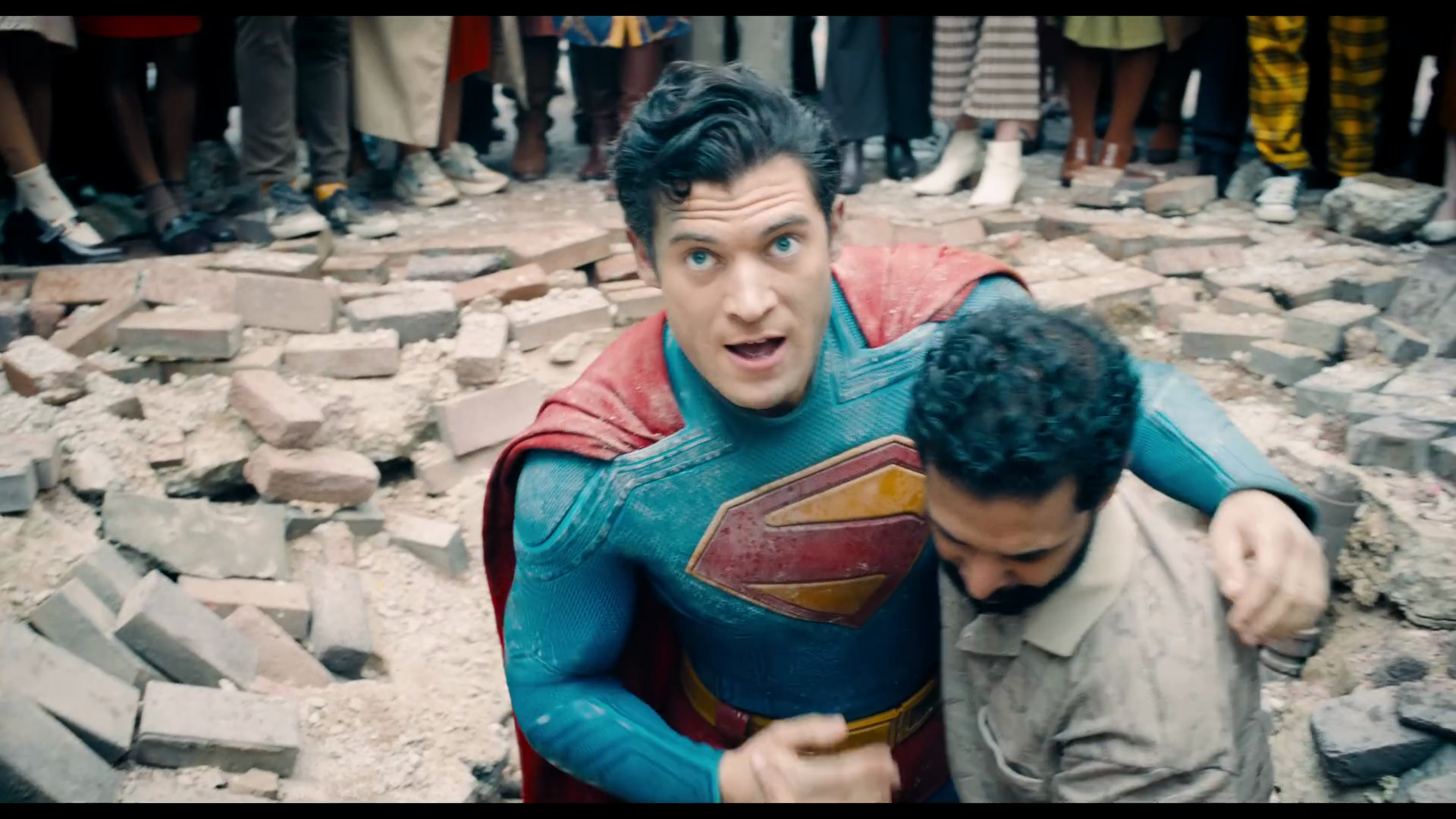
To match this, in a stunning piece of visual metaphor the physical, real world cinema I visit caught fire this year. It was ultimately fine, with only mild water damage that has since been repaired, but talk about a bad omen. The only film I managed to see there over the course of the year was James Gunn’s Superman (of which more later) which I was obliged to see both as a terminal DC super-fan and as a connoisseur of Dog Movies. I’m hoping to make it over there for Avatar: Fire and Ash before the end of the year, which will mean having to edit this list. A similar story with Netflix’s new Knives Out: Wake Up Dead Man. (update: I made time for both!)
I’m not going to make any kind of limitation on what gets in here: if I watched it for the first time this year, it’s going in the list.
Look I’ll be very honest: I don’t remember this. I had a three-month-old and this was a shit film streaming at Christmas. Die Hard 2 by way of Phone Booth? Or something? I remember the climax hinging on a contrivance about permissible cabin bag sizes, which is great commitment to the part if nothing else. Michael Bluth was in it?
I was amiable enough to this in the cinema, I slated it in review at the time, and now I hold it in contempt. Pablum and shlock, dream bigger. Dream bigger!
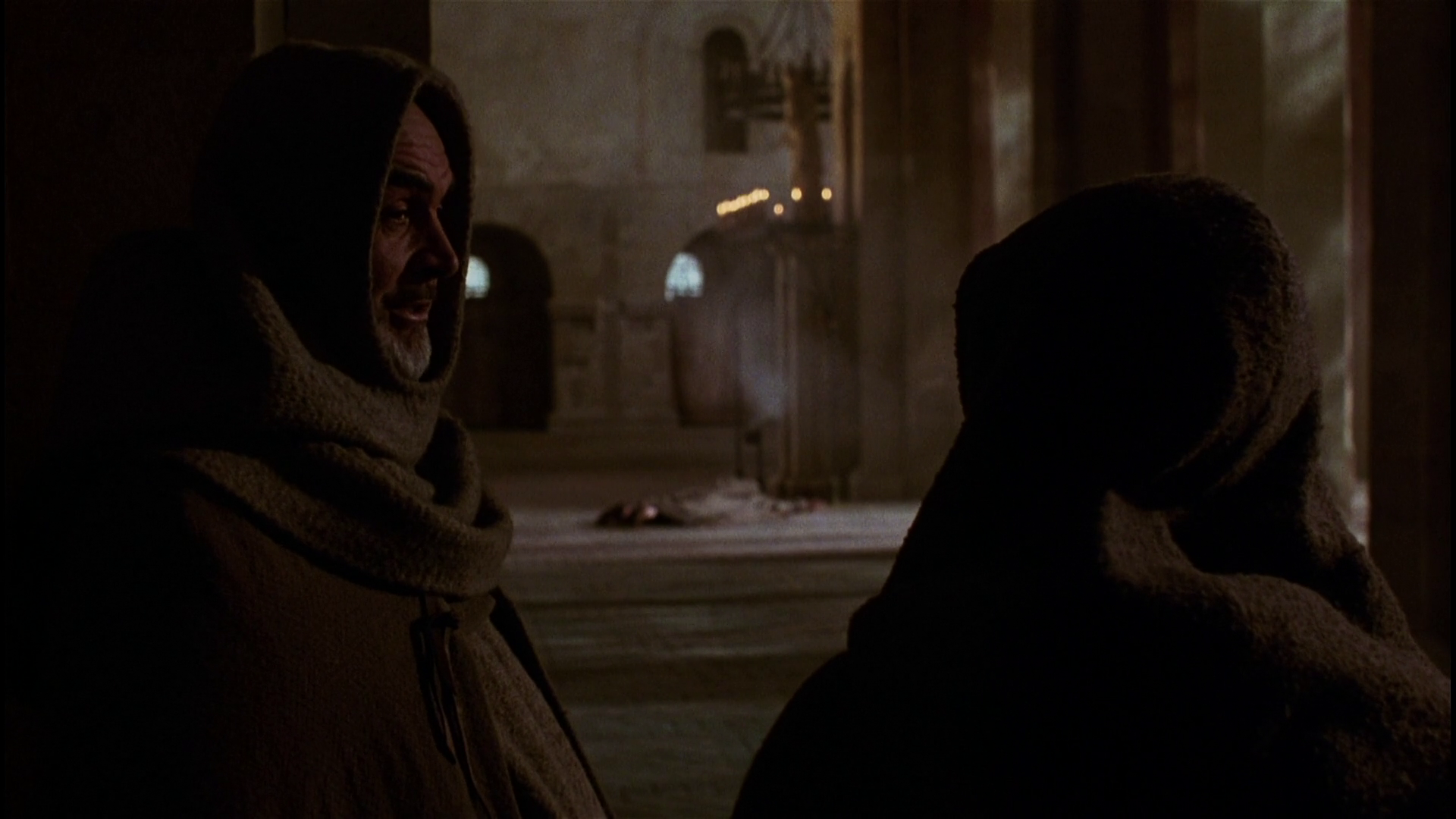
Starring Sean Connery and Christian Slater as the only two clean men in Christendom. An enjoyable convention of grotesques in an adaptation that I felt kinda missed the point the book was making by throwing an epic rationalist in among all these superstitious monks: that modernity is an evolution of society, not fire handed down to the apes.
The two things a Formula 1 team has never tried: cheating and hiring a superfluous American. Looks great though and brings a bit of that race-day magic to the screen, even if glossing over qualifying should be a capital crime.
Rian Johnson does atheist G.K. Chesterton pretty well. Daniel Craig is having the time of his silly life. Like the second one, it’s somehow less than the sum of its parts, but this time some of the parts are pretty great.
This was a fun watch, bags of charisma and lots of sympathy for its characters. With hindsight I’m not too sure what it was trying to say, beyond the enjoyable yarn about a woman who sees her chance, grabs it with both hands and holds on for dear life. I just don’t think I’ll remember it? Best picture? Not sure about that, although thank God Emilia Perez didn’t get it.
Maybe it’s just that I have infinite sympathy for scenes of baffled tourists standing on train platforms in Europe.
Sometimes a film is just a great excuse to hang out with two of your favourite on-screen guys, and Jesse Eisenberg and Kieran Culkin definitely fall into that category. Eisenberg’s wound way too tight, Culkin is chronically oversharing, they’ve gone on holiday to Poland together to remember their dear departed Gran.
I don’t think there have been many successful Hollywood movies split into two parts, and I haven’t seen Part Two yet so maybe Wicked will still fluff it, but I can say that this particular split was made for me, the guy who stood up after Defying Gravity at the Apollo theatre in London circa 2008 and started putting on his coat and hat.
People moan about the colour palette as a synecdoche for this era of digital colour but eh, it works here. Movie looks great. As I said in my review at the time, it’s fascinating seeing someone do what Disney keep trying and failing to do in recent years and hitting a home run with it.
It has only taken sixteen years but James Cameron has convinced me. I’m a Na’vi guy now. I’m true blue. I will watch these until the end of time if he keeps making them. I hope every single one ends with a fistfight between Jake Sully and Quaritch.
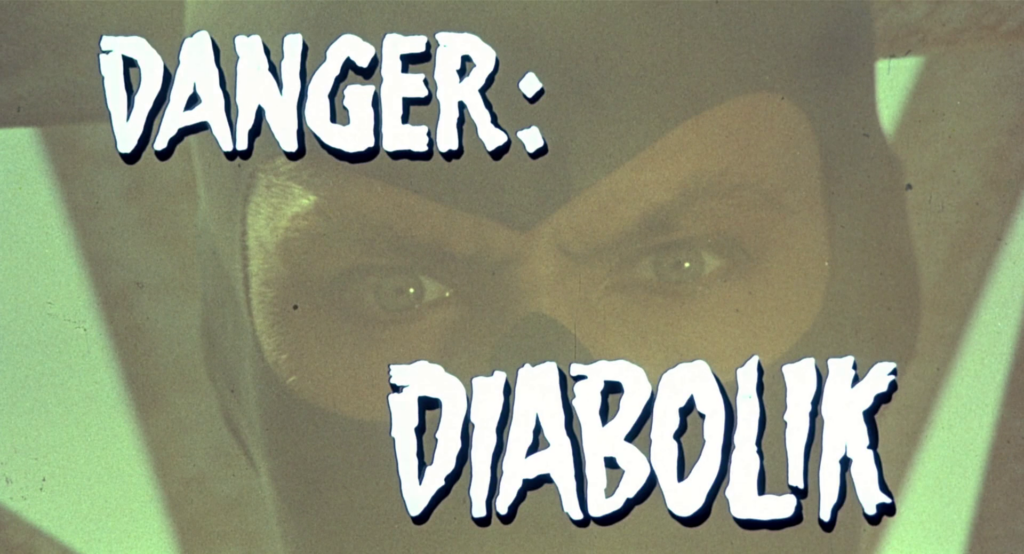
In a year where I was starved, parched, fully withdrawn from the glory of the movies, I am so glad I managed to pack Danger: Diabolik in. Anarchic glee from the first frame to the last, all centred round the happy, healthy relationship between a man who only leaves the house in full leathers and his beautiful partner who sees things on the news and wants to steal them. Featuring possibly the worst Bond villain trap of all time, a plane with a trap door built in.
I’ve accidentally been savouring the Scorcese big hitters so this is a genuine first timer for me, and in terms of craft it’s basically flawless. Funny, infuriating, scandelous, every vignette chosen for maximum effect. Three hours float past like a dream as the guy gets it all and… well, doesn’t lose it all. Loses some of it. And that’s just how it went.
Impressively, I don’t appear to have watched a single film from the docket list at the end of my 2024 review. Whoops!
If you like my writing and want to read more, you can dissuade yourself of that notion by trying out “Step One: You take an onion”, my one-page party game RPG for making your friends all hate you. Otherwise I continue to review films on Letterboxd.
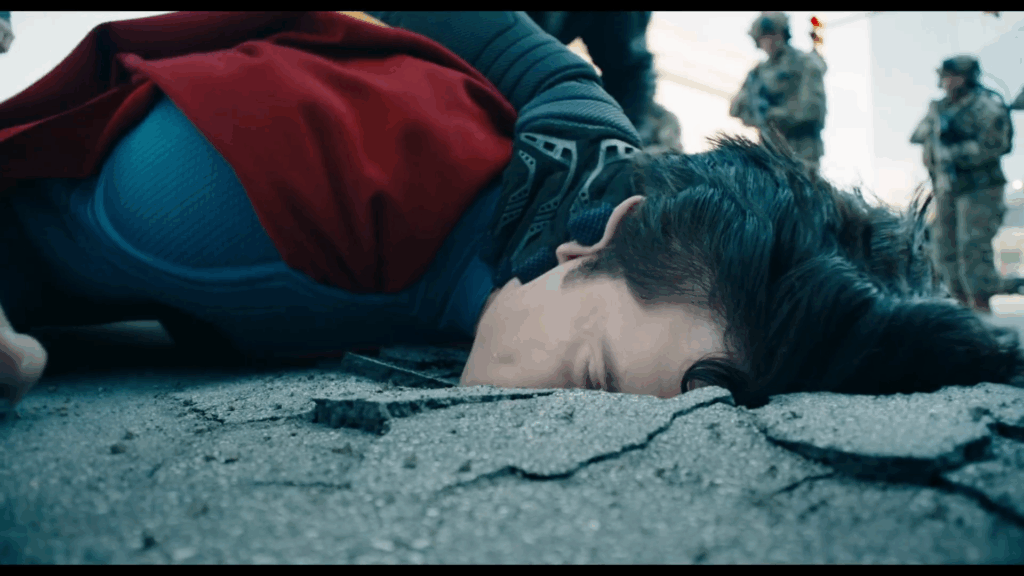
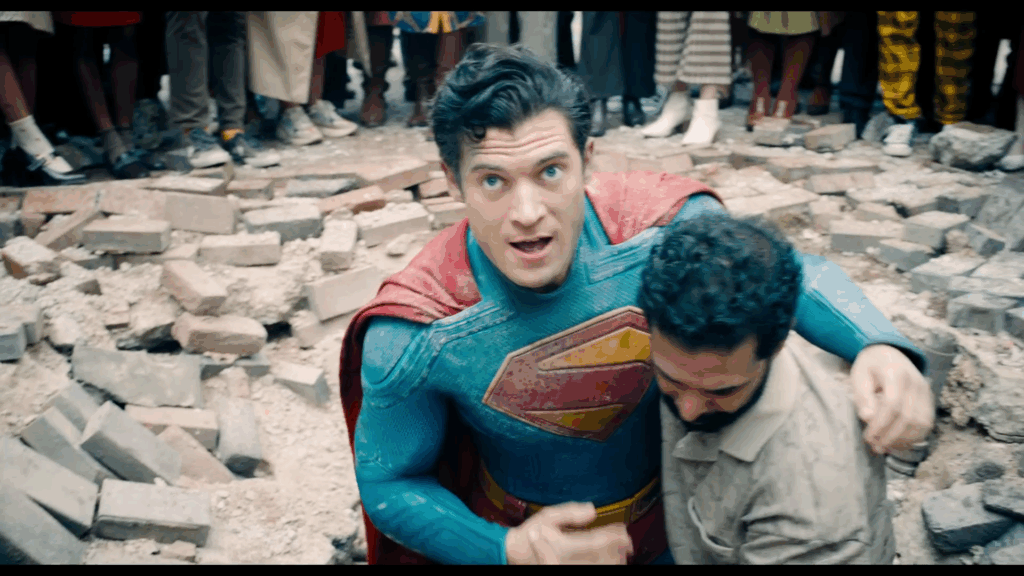
Ringing in my ears as I enter the cinema is Pulp’s old-new single off their latest album, Got To Have Love. I don’t know how seriously I’m supposed to take this self-directed admonishment from leading man Jarvis Cocker, who so often inhabits a grim, seedy persona as the protagonist of his songs. I’m here to see the Superman film that is also about how we’ve got to have love, or kindness, or something. In its worst, most tawdry moments the script tries to get away with calling this attitude ‘punk rock’. It’s not, and the comparison lands uncomfortably similarly to those awful right-wing op-eds that call Conservatism ‘the new punk rock’ every five years. But it’s Superman, back on screen, and if Cocker can breath life back into these hoary old aphorisms then there’s no reason that seeing a straight depiction of mild-mannered reporter Clark Kent back on the big screen shouldn’t be cause for celebration.
Before we go further, permit me to address my motivations directly to the camera – as so many characters in this film choose to do: I was dubious in my anticipation of this film. Superman (2025) is the latest effort by DC and Warner Bros to make seaworthy their idealised Whedonesque universe of heroes. It didn’t work in Justice League (2017) and it didn’t work in The Flash (2023) and that it works here is down to the careful efforts of new CEO(!) James Gunn in the twin caps of writer and director. Gunn draws liberally from the previous cinema outings for the ‘big blue boy scout’ in a manner that recalls Matt Reeves’ The Batman, and as with that film there is a note of the grim reaper’s chill hand in realising that there has now been 9 years since Batman v Superman, 12 since Man of Steel, 19 since Superman Returns and 46 since Superman (1978). It’s a haunting reminder of the passage of time, seeing these films (most of which I was around for the release of) plundered for many of their best ideas, repackaged for a new generation of cinema-goers.
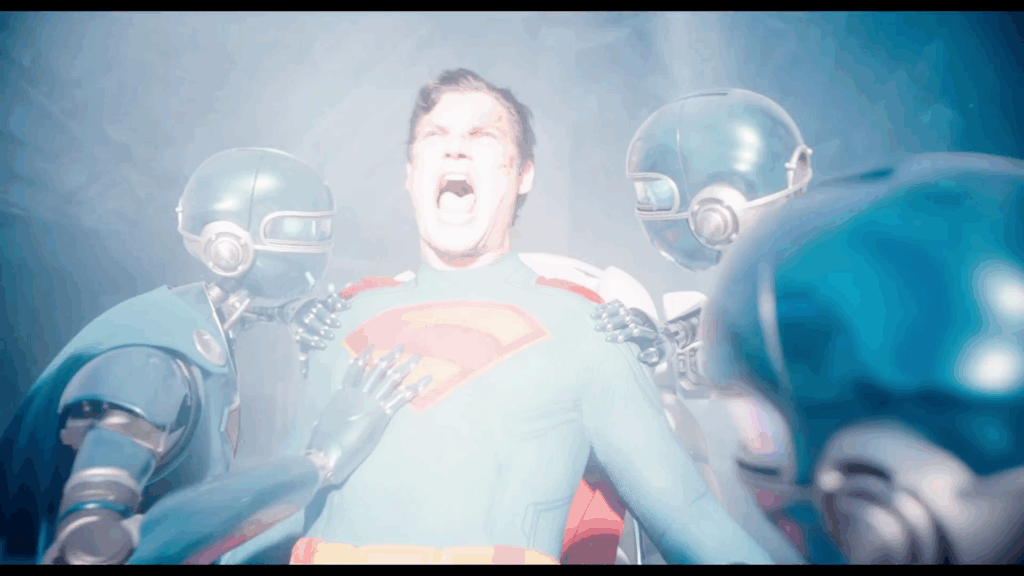
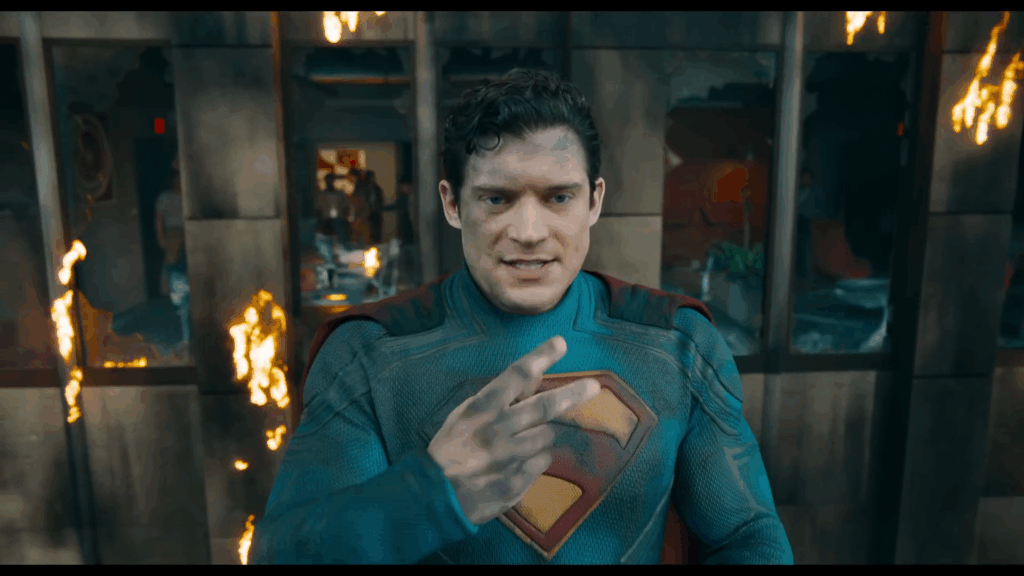
Indeed the earlier films aren’t so much referenced as ransacked: The visual design pulls from the Donner and Lester films, particularly in the elements of Krypton present. There’s a plot point pulled directly from Sidney J. Furie’s The Quest for Peace which is so prominent that it feels strange to call it an Easter Egg. There’s even a particular attention to eyeballs which speaks to an influence from the disgraced Bryan Singer’s Superman Returns. And the plot, at least until the final act, is something of a greatest-hits-tour of imagery from the two Zack Snyder movies: Superman cooking breakfast for Lois, a naive Superman intervening in foreign affairs, Superman placed in handcuffs while surrendering himself to the state. Lex Luthor turning opinion against Superman, Lex Luthor pitching killing Superman to politicians, Lex Luthor creating a monster for Superman to fight. It’s all transliterated into a post-streaming world of characters who state their feelings and intentions out loud, and action which sits solidly within a centre vertical for TikTok, but it’s recognisably the same stuff. Where there are changes, it’s to externalise and literalise: In the aftermath of his conflicts, Snyder’s Superman had to sit with the existential anguish of free choice. Gunn’s Superman has to sit with robots holding him down in the big agony chair that shoots fire at you because it hurts to be a hero.
Sometimes a guy just has a second, secret home where he can hang out with the guys and the agony chair.
I’m being droll but that’s not necessarily a criticism; there’s nothing inherently wrong with simplifying and literalising, though it means that this Superman is ironically often a bit more alien than he might otherwise be, oscillating in his scenes with Rachel Brosnahan’s Lois Lane between a kind of post-teenage petulance, demanding that the world be simpler so that he can act without consequence, and a detached aloofness. Fortunately Brosnahan brings her considerable talents to making the relationship seem plausible, with a nice subtle humour to the idea that – tormented by her own relationship demons – she is in a sense settling for Superman.
One of the more perplexing elements of Superman (2025) is that in the final analysis, Superman isn’t the one to deal the meaningful blow to the hotheaded Lex Luthor. Rather, Superman being occupied contending with his nondescript clone Ultraman, the intrepid reporters of the Daily Planet crowd into Mr Terrific’s Owlship and hover over the ruins of Metropolis as they publish a front-page takedown of Luthor’s crimes to the internet. Exposed at last, and savaged by the unruly Krypto in a strange bit of dark humour, Luthor is ushered into the back of a vehicle by some of the heavily militarised operatives he spent the film directing. Presumably this sequence of events is intended to split agency over the film’s climax between Superman himself and Lois Lane, reporter at large, and it’s broadly successful. The Planet gang are a distinct if glossy bunch, and Wendell Pierce plays a delightful but brief Perry White, editor, as a man who only seems to own one cigar.
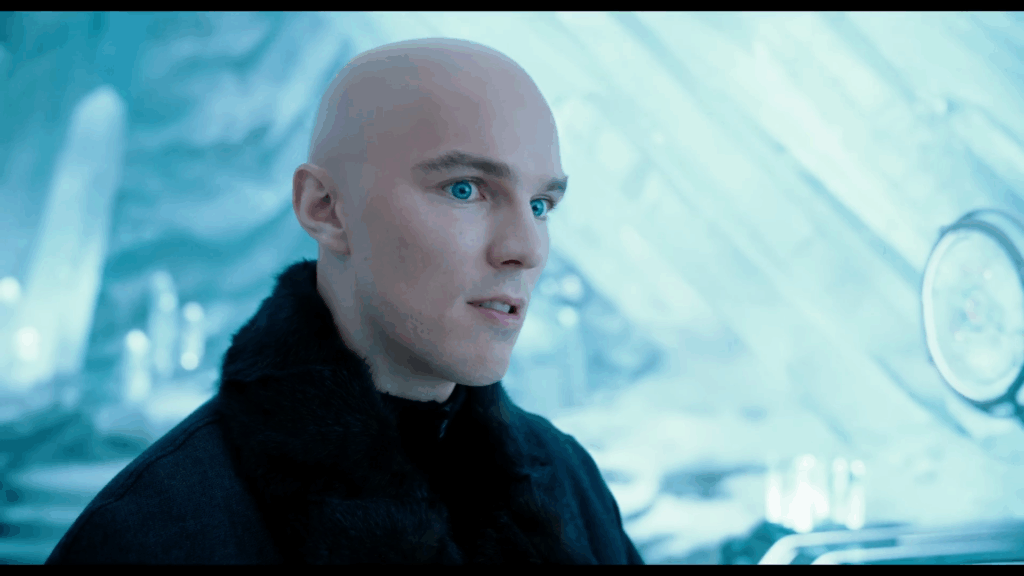
Hoult’s Luthor is a delight, even when he’s given lines like “Super… man.”
It’s not unusual for blockbusters to get a little All the President’s Men when depicting journalism. The myth of the crusading journalist cuts across the 20th century, from John Reed to Hunter S. Thompson. But it’s a curiously narrow take here, not even going as far as the depiction in Batman v Superman of legacy media as an honest institution in ignoble decline. The Daily Planet gang are happy, healthy, gainfully employed, and all operate out of a lush downtown office space with dedicated cubicles – hell if you’re Neo trapped in the long 90s, but positively anachronistic for a world where WeWork has been and gone. It’s curious that the plot doesn’t go anywhere near touching on the idea of Lex buying the Daily Planet, something both Smallville and the Adventures of Lois and Clark took their swings at. Jeff Bezos put his fingers on the scales at the Washington Post to keep it from endorsing a candidate in the US Presidential election; it seems odd to portray fictional journalists free from editorial intervention when the real-life ones evidently aren’t.
You might contend that the film is really just a piece of fluff, an object of wish fulfilment and that earnest journalists who speak truth to power are of a set with the flying man with laser eyes – a cynical take, but reasonable. But the film is really very concerned with this question of the good journalist, and touches on it a few times. Lois and Clark come to sharp words in an early scene over Lois’s insistence on interviewing Superman as she would any other political figure: over her refusal to ‘print the legend’, which we are meant to assume Clark has been doing in his ethically questionable self-interviews. In a bizarre aside, Clark insists that he – Superman – doesn’t engage in social media, before naturally revealing an encyclopaedic knowledge of what people are saying about him on it. Implicitly, that’s why he needs to write these dishonest features about himself: to put right the braying masses who are speaking ill of him. Now this is not Superman’s finest hour, and so the film is quick to offer an excuse for him. During the interminable pocket universe sequence, there’s a quick visual gag in which Lex Luthor claims to have a host of barely-literate apes tasked with running Superman down online. A quirkly take on the notion of bot armies manipulating opinion for pay, this must be a comforting notion for Director Gunn, who infamously lost his job – but then quickly regained it – after a social media storm over the content of some of his old tweets. Among the feckless prisoners in Luthor’s space prison is, we are told, a blogger who wrote a negative profile of him. Presumably they’ve been preserved as the last of a dying breed. If the general quality of discourse is so poor, the suggestion seems to be, then it’s impossible to say if Superman or Lex Luthor or anyone else is good or bad – unless it’s printed by the authorities at the Daily Planet.
Ah yeah a stun stick, that’ll do it.
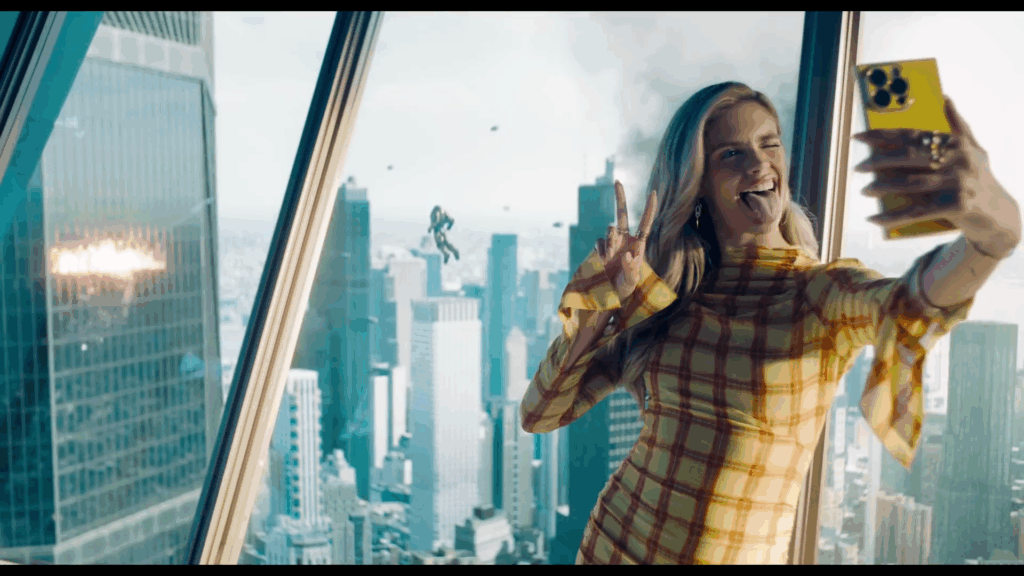
A final discordant note on social media comes with the depiction of Eve Teschmacher by a vaguely scene-stealing Sara Sampaio. Lex Luthor’s partner, she’s a constant presence alongside him taking an endless array of selfies with goofy expressions on her face, as he goes about his many crimes. Exactly why he indulges her in this is never touched on, and the degree to which she is intentionally cataloguing his sins is also frustratingly vague. For some unknown reason she’s head over heels for Skyler Gisondo’s unpleasant Jimmy Olson, who in a strange and mean-spirited bit has issues with her physical appearance. Via Olson, Teschmaker gets her crucial smoking gun of photographic evidence to Lois for publication at great personal risk, despite which Jimmy continues to shun her. In this way Eve really takes second credit for exposing Luthor and it would have been nice for her to have her moment in the Owlship also. The absence of such means that the film makes an odd distinction between the serious Lois Lane and the slightly infantile Teschmacher, as if placing them on an even keel might sully Lois with Eve’s girlish vices.
Give her the Pulitzer!
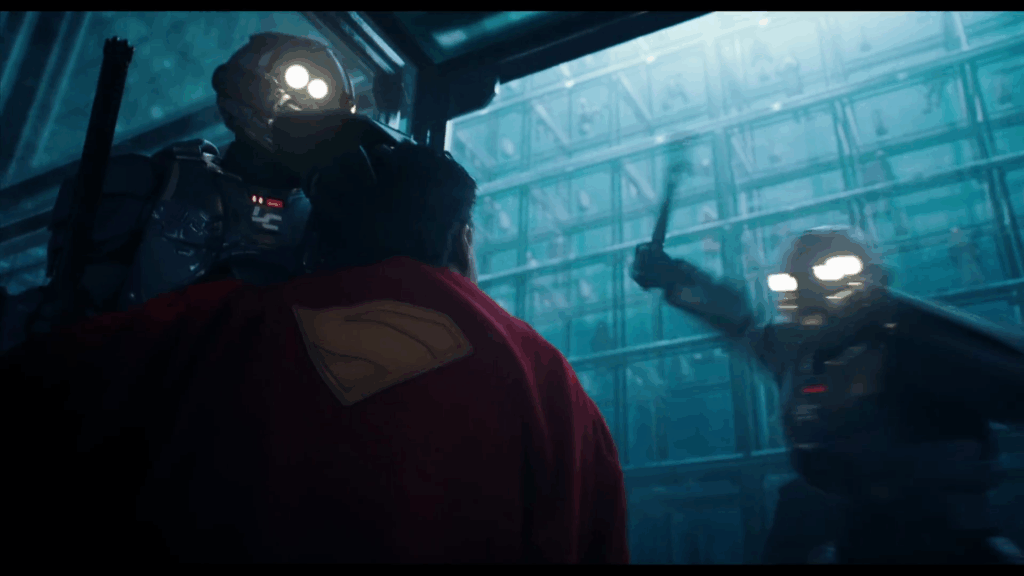
This aside, if there’s an Achilles’ heel to this Superman it comes in how the slightly disjointed plot doesn’t quite gel, and I’m no stranger to the prospect of stitching together multiple disconnected takes on a subject into a single whole which thus gains the appearance of deliberate creative intent. Early screenings of this film apparently made overt the formal structure of it, with title cards for each day of events proceeding linearly through a week of Superman’s life. But there’s an odd tension between the different ‘days’ of the film, some of which seem to be saying very different things to each other – the climax insists that the citizens of Metropolis can perfectly evacuate at a moment’s notice, when much of the rest of the film has hinted that they’re becoming dangerously carefree about superhero action. The absolute outlier is the aforementioned pocket universe sequence, which is visually uninspiring, reminiscent of the ugly Ant-Man 3, as well as trivial to the plot – Superman is locked in a room with only a deeply conscientious man to guard him. Whatever could happen next. Lois and Mr Terrific (a fantastic Edi Gathegi, who just sort of wills his character into having a bigger role than he does) stand in one spot for the majority of it, gazing at a distant green screen. And most oddly, Lex Luthor gets his big villain moment here: he’s picked out a man, Malik, who showed Superman basic human kindness earlier in the film, and he’s had him bound and gagged and brought before Superman, wherein Luthor shoots him in the head. It’s kind of sped past in the moment but it’s a real dark turn.
Why’s this guy got to be the Omelas here. Whats up with that.
Especially for a film that’s about to proceed into a third act where we are repeatedly assured, in excruciating detail, that no-one is harmed or hurt. What makes this guy so unspecial that Superman – who volunteered himself to the position where he’s unable to act to save him – gives up? Steven Moffat’s Doctor Who episodes used to have a recurring refrain of “Just this once, everybody lives!” where an episode that had seemingly settled into the regular fictional logic of tragic but unavoidable loss would rebound, go one step weirder and have the outcome be no loss at all. It’s a neat trick, and of course it’s the ending to Superman (1978), where Superman reverses time to keep Lois from dying. Not every Superman film has to be Man of Steel; if you’re making something purportedly inspired by All-Star Superman then I want to see Dr Leo Quintum popping in at the end with a hundred clones of Malik ready to go.
The politics of the movie are the kind of cypherous mush that has been typical of the genre going all the way back to Iron Man: war is bad, but also the fault of a bad man who can be individually picked up and struck off if we only had the moral fortitude and a smart enough missile. Everyone else, from the top to the bottom, is only following orders. This goes for Luthor’s oddly diverse goon squad as well as fictional foreign actor ‘Boravia’, with the movie’s clash between a Boravian military detachment and an gathering of innocent civilians on a nondescript (although strangely small) sandy outcrop being the closest it ever gets to looking like The Flash (2023).
This was in the trailer, I’m not sure this shot was actually in the finished film. Look at those tanks!
Any real dive into the morality of the film is blunted not just on the ‘be kind’ platitudes but also the shifting message between the different chunks of film; early on Superman is criticised for his naïveté, at the end of the film he’s commended for his inspirational rigidity. Killing is always bad, except when it’s the cowardly and murderous Boravia president, or you’re doing the ending of Batman Begins and allowing public transport to bring your antagonist to an untimely end. Even ‘be kind’ folds in the face of ‘let your dog knock a guy about if it’s funny’.
On a grandular level, in maybe the strongest sign of a botched script edit job, Mr Terrific appears in both a scene in the middle of the film where he’s strangly unconcerned with random antagonists milling about him as he works to shut down a portal, and a scene at the end of the film where he chews a guy out for attempting to assist him in closing the rift. Neither sits particularly well, given that the stakes for closing the rift are meant to be “the world is destroyed” and the portal in question was the one for taking people to Luthor’s extrajudicial space prison. The culpability of ordinary people is just not something the film concerns itself with – agency belongs to prime actors, business CEOs and presidents, the proud and free press, and superheroes.
Wow, rude.
Well, it’s not punk rock. In fact (you may be surprised to hear) it’s often quite cringe-worthy, the cynical (multiple lines confirming that someone who just fell down from space is ‘still breathing’) clashing with the earnest (Superman being so committed to 100% rescues that he’s moving squirrels about while a giant monster thrashes about). The action is mostly a bit naff and the acting is carried by a few strong players making the most of scraping their bowls clean (Nathan Fillion here operating at the elastic limit of his talent). It’s a $200 million dollar movie that leans heavily on putting a funny dog in centre view, like an episode of Britain’s Got Talent or a sequel to Soccer Dog.
But it’s coherent, and it’s fun – something DC’s films have generally only managed one or the other of for several years now. Corenswet is a charming enough presence that you want Superman to win even though he’s an idiot, and he has genuine chemistry with Brosnahan that makes you overlook all the yelling he does. The robots are funny. Is it the bedrock of a whole new franchise of films, fifteen years of sequels as James Gunn has promised? I won’t hold my breath, and I won’t watch Creature Commandos, but stranger things have happened.
This review was originally published on Letterboxd, but Superman: Solar was removed from that service.
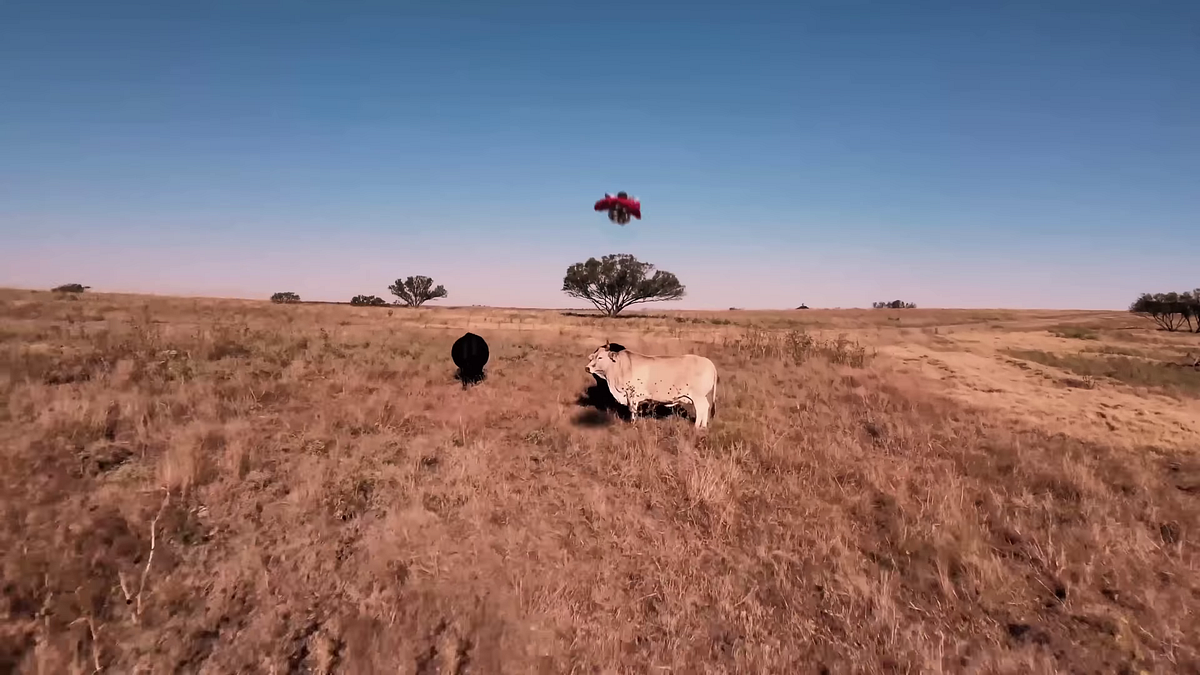
Superman saves the cow.
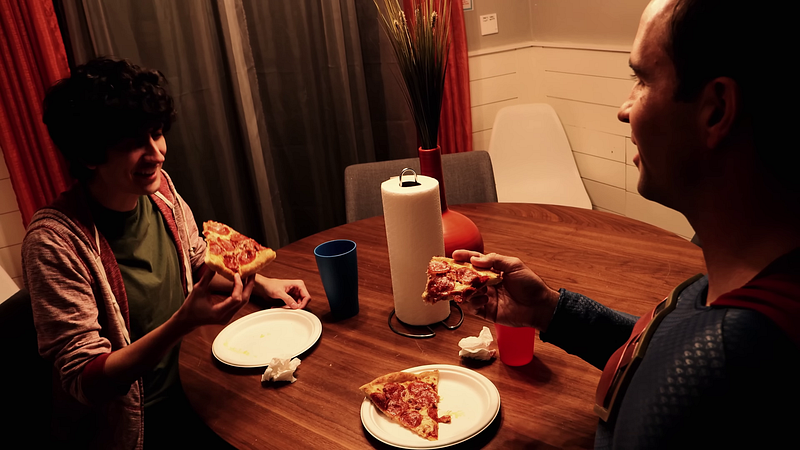
You can’t get mad at a fan film! It’s always nice to see people play the hits, and when Superman: Solar stays in that ball park it’s positively lovable. Much like the titular character, the film is at its best when allowed to ‘cut loose’ and do a flying action scene with a dynamic camera which captures no small percent of the dynamism of Man of Steel, the short’s obvious inspiration.
Everyone involved here is giving it their all, but the standard deviation of quality scene-to-scene ends up quite wide. For example, there’s a scene towards the end where Clark meets Lois Lane to accept a job at the Daily Planet suffers terribly from the choice of set location, which ends up making the placid Clark seem like he’s borderline harassing Lane simply by remaining present in the tight corridor. Lex Luthor has an extended cameo by a chap doing a stellar Jason Statham impression, which is certainly a new direction for the character — I wanted more of that guy. And the green screen is pretty competently done, with only some evidently strained lighting choices and backspill in the desert fight to complain about.
It’s that connection to Man of Steel which is Superman: Solar’s Achilles’s heel though. Snyder’s film is both saint and sinner to this adaptation, with constant commendably-executed visual references somewhat at war with a script that has a little of the ‘fix-it’ ethos about it. When it’s not dubious pablum put into the mouths of side characters (the Clarks “saved our business” says one man, so he won’t be turning them in to the FBI) the script is relitigating twitter arguments which border on theodicy. Aping Batman v Superman’s news studio scenes, a pair of broadcasters debate whether an invincible man is braver than the troops. A delightfully hard-nosed Lois Lane asks directly if Superman is a ‘dictator’, but is bizarrely placated when he basically answers ‘yes’.
The central conflict of the film isn’t drawn from Man of Steel however, it’s ostensibly pulled from the page of Grant Morrison’s All-Star Superman where Superman rescues Regan, a suicidal teen, from a rooftop. I’ve long argued that the page in question is very specific to the format and context and would prove difficult to adapt to another medium, and this does not dissuade me. The scene as adapted quickly swings into bathos, but the absurd dialogue between Superman and the teen — who gives a performance that rescues the affair — ends up coming round to its own poignancy. They connect, not because any of Superman’s mantras hit home, but just in that they make a silly shared conversation on this rooftop, and connect, and sometimes that’s all someone needs.
Damn Superman, gonna make the kid host you for dinner?
As I said above, ultimately it’s quite a fun watch. Making films is hard! Hollywood, with its outlandish budgets, often makes it seem like the easiest thing in the world. This fan film aims high, and I can’t hate that.
This short essay responds to the video “Superman Saves the Cat” by essayist Maggie Mae Fish.
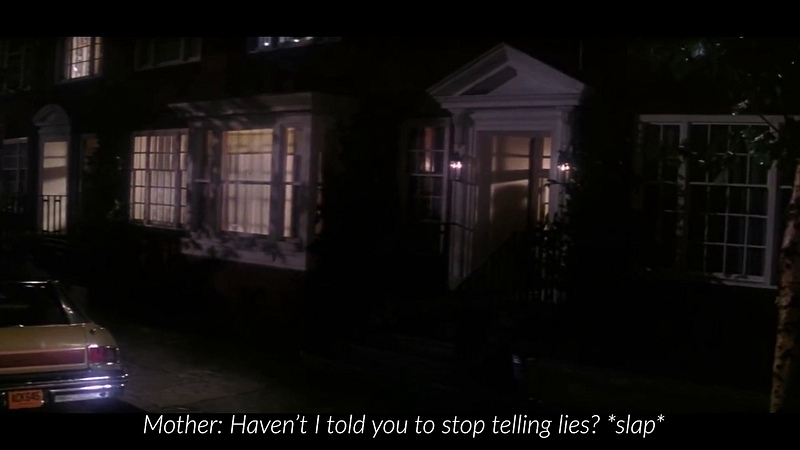
In Superman (1978) a mother slaps her child for a presumed lie about a man swooping down from the sky.
My problem begins with the slap. The child, having met and interacted with Superman, and having received a light scolding from him, heads indoors and — by her mother — is slapped. I agree with you about the cycle of violence and the message conveyed — that Superman is the embodiment of America’s better nature — but the truth of the scene is belied in that slap. Richard Donner is a cynic; I don’t think it’s credible to claim that the director of Lethal Weapon is so doe-eyed that he was unaware that this is how the scene plays out. Superman could have intervened and prevented that child coming to physical harm; he could have walked her home and met her mother, and found out for himself what kind of cycle of violence was being incurred. But Donner’s Superman does not use his powers to fix the world.
The status quo, being very literally restored in the scene from Superman (1978) where time is reversed.
There is a difference, as I don’t believe you note in your video, between the things that happen in a film and the message the film sends about them being done. I agree that the sequence of shots from Batman v Superman are intended to convey Superman’s actions with a degree of ambivalence and separation. The sequence is intercut with talking heads criticising Superman, if it weren’t clear enough. But crucially, the actions he is depicted as performing are heroic. They might be presented in any given way, but they are unambiguously heroic and are not undercut for humour or cynicism like Donner chooses to do. Is it not heroic to save people if you feel conflicted about the positions you are put in? Does it become less heroic to have rescued people from a burning building if you are later frustrated or angry when criticised? Which is to say: your thesis appears to be that the content of a message is irrelevant if it is perceived to have the wrong tone. This is the crux of your criticism of Man of Steel.
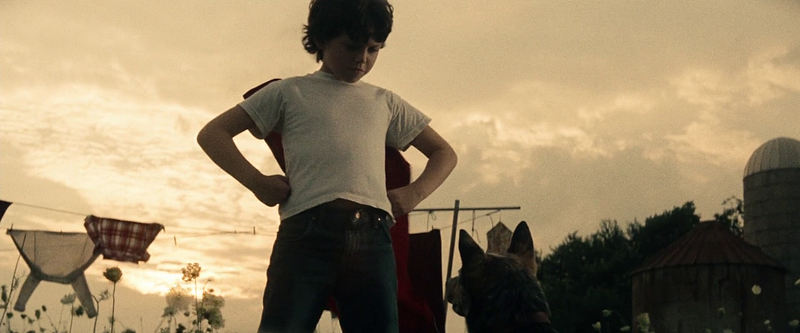
Clark saves a family in this scene from the climax of Man of Steel.
Clark in Man of Steel is never shown to do other than the correct thing, save human life discerningly and unconditionally. You specifically mock the scene where he kills Zod to protect a cowering family; would it have been more heroic to let them die? He acts; he would presumably have intervened in the young girl getting slapped. Perhaps he would have overreacted, as when he wrecks the driver’s truck. Donner’s Superman, for all his merits, does not act in the scene. He rescues the cat from the tree, a trivial, superficial heroism, but he goes no further. His heroism is restricted to maintaining the status quo. You compare the Superman of Man of Steel to a cop in that he “doesn’t care about human life”, an utterly torturous (and perhaps distasteful) allusion to of the problems with policing in the United States. But what is worse, to use power fairly but wrestle with misgivings, or to use power unquestioningly to maintain the status quo?
There’s a dog, I guess.
Man of Steel does not literally save a cat, but it has scenes where Clark performs selfless acts which help others at a cost to him; it is slightly dishonest, in my opinion, to intercut these with scenes from Batman v Superman which are intended to distance us from the character, as if they were all of a kind. Donner’s Superman has a scene where he literally saves a cat, and literally allows a child to be slapped. Cinematic language can convey many things and is very interesting to develop, but it first and foremost conveys the literal events which happen onscreen and a project which bypasses those to speculate on psychoanalysis of the director is misguided at best.