Tag: Watchmen

  • 2024 review of films

    It’s been a funny year for movie watching — the arthouse cinema near me closed down in the middle of the year, which was disappointing. The Odeon over the road still thrives though, so plenty more blockbusters in my future. More than anything else though, my movie-watching has been dictated by the preparation for and arrival of my shiny new baby, which is delightful in most ways but did put a dent in the time I’d previously have used to sneak in the Rebel Moon director’s cuts, which I’ve shamefully still not caught up on.

    For fun cinema experiences not represented here, I saw Burden of Dreams at a small cinema in downtown Las Vegas while I was over there on my second trip of the year, using a giant spanner to adjust the big bolt that keeps the Sphere from floating off. I think that was about it — I saw Beekeeper, Madame Web, Love Lies Bleeding and Megalopolis on the big screen, all of which benefitted from it (Madame Web in particular was something of an impromptu private screening). Hopefully next year I can muscle in on the baby viewing game — there’s a cinema a short drive away where they’ll bring you a cake while you and the little one watch, which sounds pleasant.

    Without further adieu, the list. It’s ‘new releases’ ranked, for a definition of that which includes everything since my 2023 review and a few more that I just felt like fitting in.

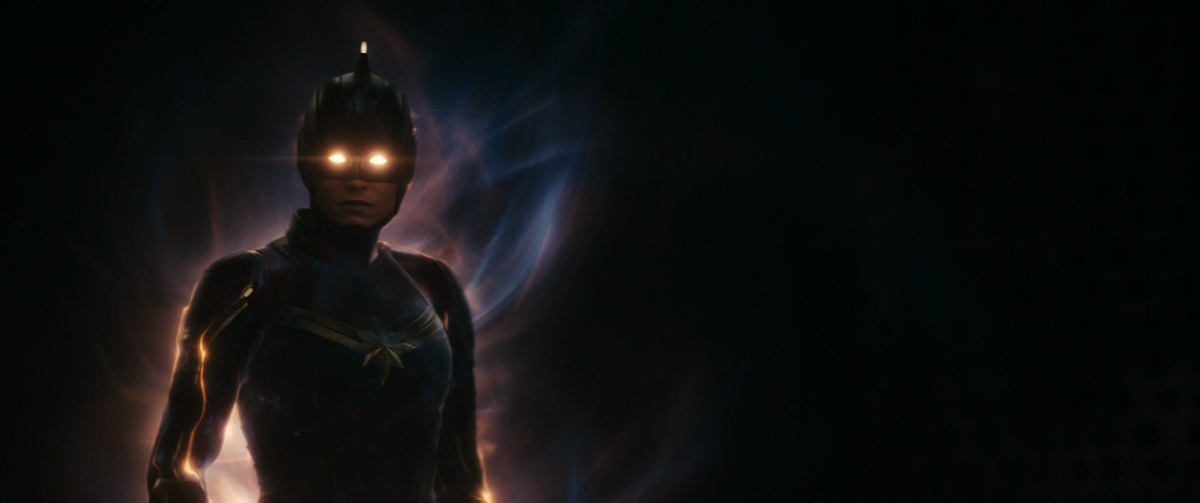
    24. The Marvels

    An absolute hangover from last year, a tombstone movie for a dead era of Disney-Marvel which fails at almost everything it attempts. A shame as it’s hung on a trio of decent lead performances but I’ve not thought fondly of this once since seeing it.

    23. Watchmen: Chapter One

    A tepid adaption of the graphic novel which hews even more close to the source than the famously meticulous Snyder film. The only real adjustments made are to bowdlerise it, so lines that are paced well on page become slugging, leaden scenes on screen.

    22. Emilia Pérez

    This did not work for me at all, which is a shame because I know a lot of people have highly rated it (and it’s got awards buzz, whatever that means.) I’ve seen a bunch of variations on the black comedy/musical combination, some that work (Dear Evan Hansen stage musical) and some that immediately collapse under their own contradictions (Dear Evan Hansen movie) and this just ended up more the latter for me.
    I promise you nothing interesting is happening here.

    21. The Caine Mutiny Court Marshall

    In his documentary Reel Bad Arabs, Jack Shaheen calls Friedkin’s Rules of Engagement the most racist film ever made against Arabs. Impossible to forget that watching the climax of this, a weepy-eyed polemic on behalf of America’s mid-2000s adventurism in the Middle East. Soured the whole film.

    20. Hit Man

    Fine, funny, forgettable.

    19. Argylle

    Who is the real Agent Argylle? Ironically something of a return to form for Matthew Vaughn after some wobbly Kingsman entries, this outstays its already limited welcome and then some. You spend the first half thinking “this isn’t so bad” and the second half thinking “please end”.
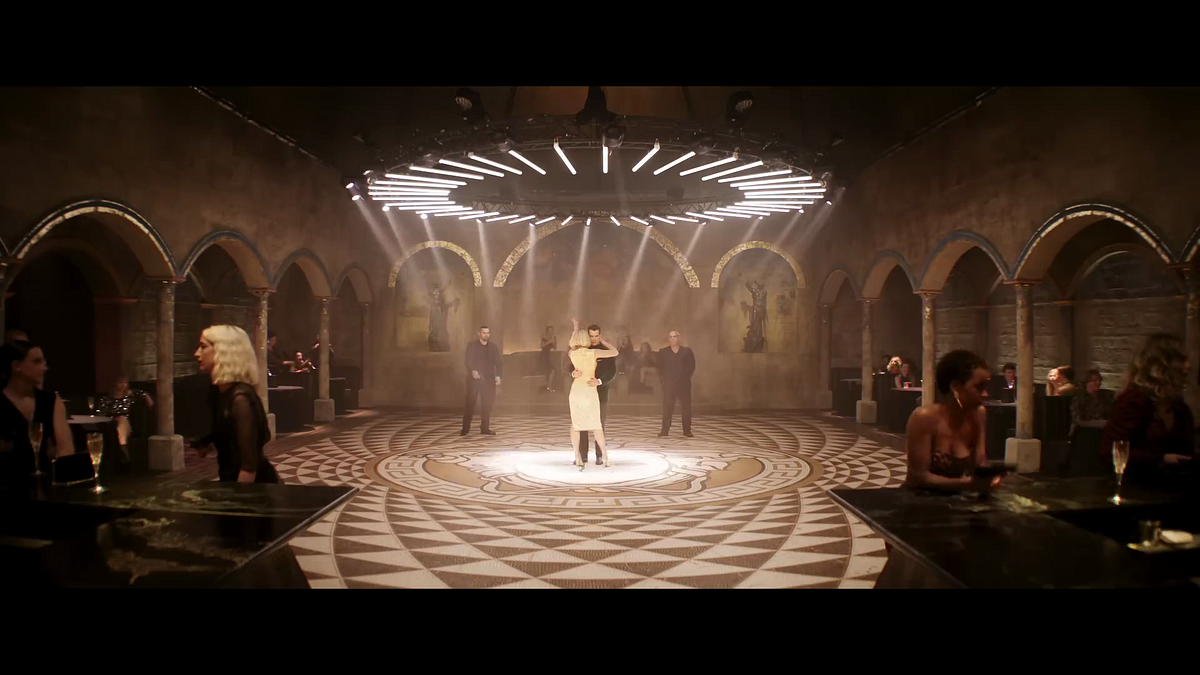
    Who is the real Agent Argylle?

    18. Madame Web

    Her web truly does connect us all. If you want this year’s Suicide Squad, look no further: the seeds of greatness are here, in this film nobody asked for and nobody wanted. Dakota Johnson is magnetic as the titular weird little gremlin woman forced by fate to creepily abduct three teenagers. Every frame of this film is a testament to how something went down here, and hopefully one day we’ll find out what.

    17. The Instigators

    It’s a buddy comedy farce with Matt Damon and Casey Affleck, who have enough chemistry to keep it watchable. Will mostly remember it for the insane BTS video about how they faked all the water in the final sequence.
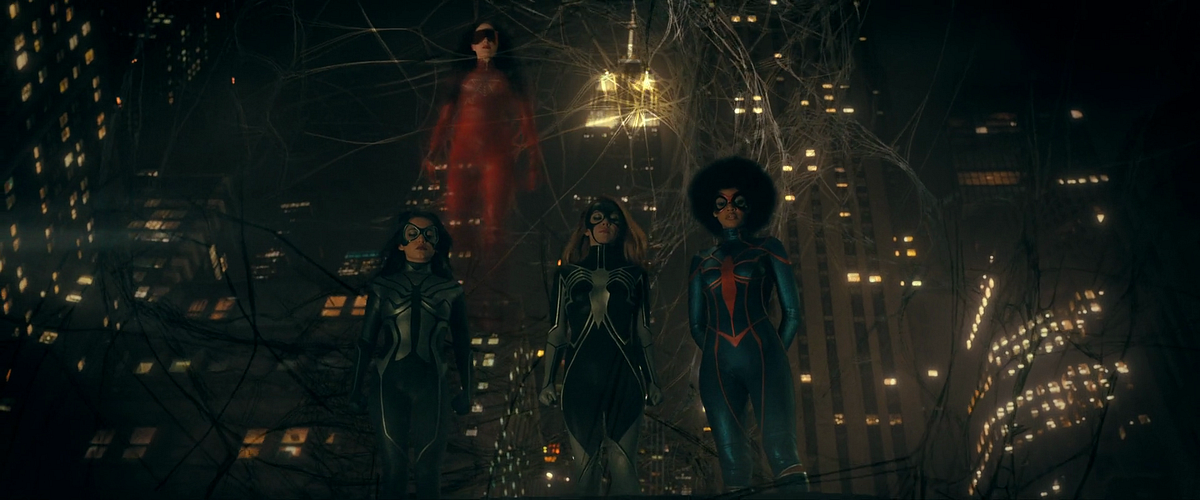
    I promise you most of Madame Web looked better than this.

    16. Pathaan

    Caught this Indian answer to both Bond and the MCU on a plane — great fun, very silly, some impressive action set pieces (as well as a few that seemed to have not quite worked out) and super interesting to watch soft power cultural chauvinism play out in a totally different context.

    15. Rebel Moon Part 2: The Scargiver

    I didn’t get to see this second half in the cinema, sadly, so it didn’t have a chance to wow me with the big screen visuals like the first. On top of that, it was chased up by the director’s cuts which are on all accounts superior, but I wasn’t able to pack them into my now baby-dominated schedule. I’m sure they’ll be on next year’s list. Fear not, I am still a died-in-the-wool Snyder Sicko.
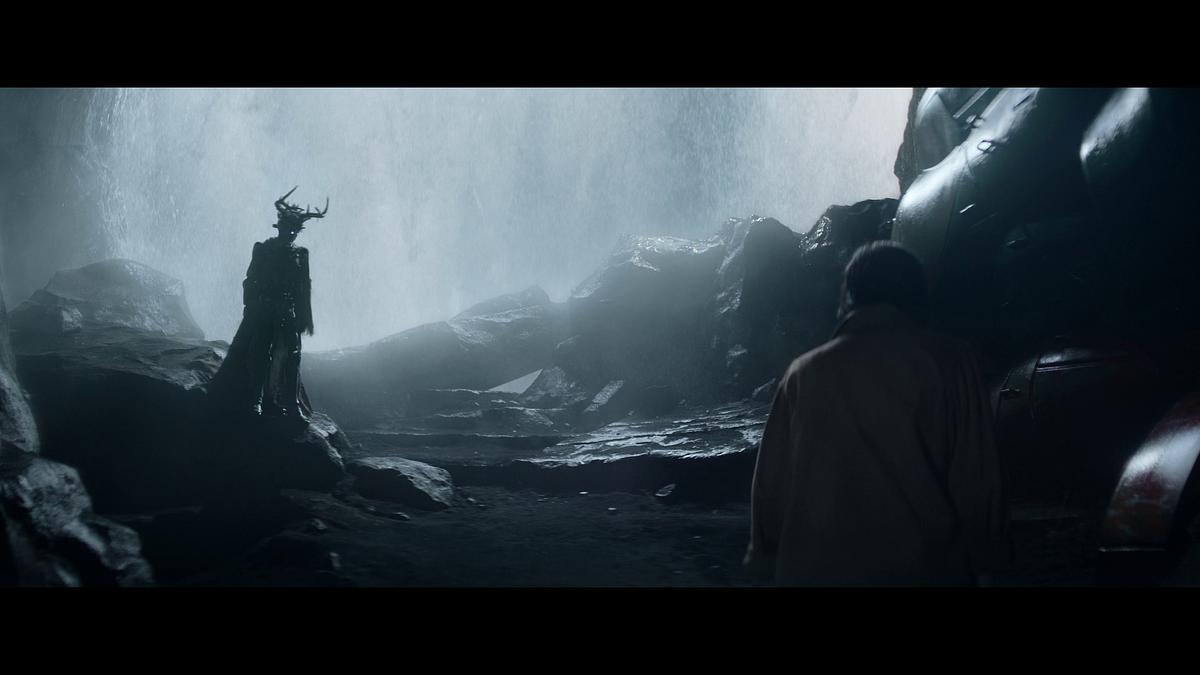
    That’s Jimmy.

    14. Rebel Ridge

    It’s good, and a very enjoyable watch, and it rightly draws attention to the scummy phenomenon of civil forfeiture, and Aaron Pierre has buckets of screen presence, I just expect a bit more from Jeremy Saulnier, the guy who directed Blue Ruin and Green Room. Feels like he was aiming for a broader appeal and just sanded a bit too much of his style away.

    13. Poor Things

    Still unsure what to make of Yorgos Lanthimos’ end-2023 sprawl of gothic steampunk and proto-feminism. Many excellent elements somehow fail to come together to produce something truly excellent, despite a stout lead performance by Emma Stone and a scene-stealing impresario in Mark Ruffalo.

    12. Unfrosted

    Jerry Seinfeld, I am horrified to say, is an auteur. A dispatch from an alien world in disguise as a comedy of the grotesque. Essential viewing.

    Words cannot prepare you for this Unfrosted sub-plot.

    11. Dune: Part Two

    This is far too low for Villeneuve’s middle entry into what will be a trilogy of Dune films; having read Dune Messiah earlier this year I can see why he considered it a necessary third — it’s basically the climax of the entire first book. Suffers a little as a distinct film from not having much of it’s own setting to introduce; the underground sietches are fine, and Giedi Prime is spectacular, but it’s a small slice of the worldbuilding of part one.

    10. Conclave

    As with 2019’s The Two Popes, scurrilous little priests bickering and scheming is an easy way to win my affection. Ralph Fiennes stars as the will-he won’t-he Cardinal trying to determine who should be the next Pope, with a pleasing cast of character actors to face off against. Unfortunately there’s a few slightly outlandish elements that are maybe meant to feel destabilising but can only summon bathos. Looks beautiful though.

    9. Love Lies Bleeding

    I really loved this bouncy, extravagent yet bleak tale of two bodybuilding lesbians and one gross dad. This sort of thing is so often scared to be goofy where appropriate, but the Las Vegas scene here will be sticking with me for a while, as will the [Steven Universe voice] giant woman.

    Good title, too.

    8. Megalopolis

    The year’s biggest contradiction in terms, the political thriller with no politics. Francis Ford Coppola spent his own money putting the biggest swing for the fences since Attack of the Clones in cinemas and it’s a truely unique bit of nonsense. It’s genius, it’s beautiful, it’s obviously had to ration the VFX shots and despite being absolutely mad it’s still exactly the film you’d expect Coppola to spend all his money making. Could have been at the bottom of the list, could have been at the top. In the event, it’s here.

    7. The Beekeeper

    My affection for the work of David Ayer is sealed in blood, sweat and tears of course, but it was still enervating to start the year out seeing him return to mainstream success. The Beekeeper, written by Kurt Wimmer of Equilibrium fame, is a script so silly but self-serious that it hits like alchemy combined with Ayer’s game direction. The rapid-fire shifts between nonsense and hard action seen in films like — for example — Suicide Squad just flies, and Jason Statham (who often seems on a permanent quest for his breakthrough action persona) is exactly the right man to swirl at the centre of it. He’s a Beekeeper, they need to get hit, he’s the man to hit them. All the way to the top.

    Do not say Megaflopolis.

    6. Hundreds of Beavers

    Surely not the first film inspired by the mechanics of a video game, or the comedic flow of a Let’s Play, but definitely the most successful. The Minecraft film is unlikely to capture the agonies of progression half as well as this did. An inspirational piece of low-budget filmmaking and genuinely funny to boot.

    5. Ferrari

    If only Signor Ferrari would attend to business matters and not be so fixed on racing! This was a very pleasant surprise, an exacting character study shared between Penelope Cruz and Adam Driver as Laura and Enzo Ferrari. Death — and the spectre of the war — is so omnipresent that no-one blinks an eye as another test driver careens off the track to his doom. Ferrari has races to win.
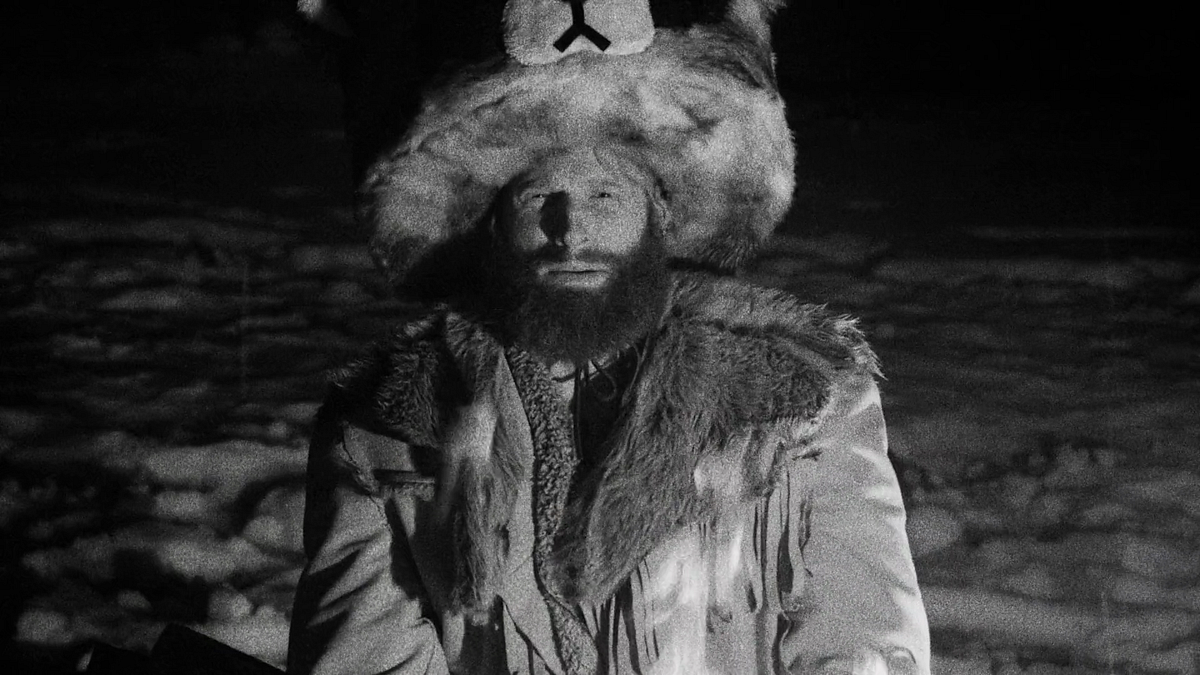
    The face of a man who has dealt death to Hundred of Beavers.

    4. The Holdovers

    Dragged across from 2023 is this instant Christmas classic, where frustrated schoolmaster Paul Giamatti must face down the holiday period responsible for Dominic Sessa’s troubled young man, with only Da’Vine Joy Randolph’s school cook to mediate. Deeply funny and affecting; the scene where Sessa visits his father is heartbreaking.

    3. Anatomy of a Fall

    Another holdover from 2023, you know Anatomy of a Fall is going to be genius from the moment that steel drum hits. Sandra Hüller is magnetic as the frosty professional writer accused of killing her talentless partner, summoning great oceans of displeasure in just sitting still with a neutral face. Alongside everything else, a fascinating insight into the French legal system.

    That’s Furiosa.

    2. Furiosa

    Highly anticipated, I thought this was an astonishingly confident follow up to Fury Road, and a contribution that would enhance that film on a viewing of the pair together. Miller’s action sandy action set pieces are unlike anything else still being attempted, but for me the highlight of the film was the climax: an intense, intimate meditation on the utility of revenge and how any one person can be responsible for a whole world of shit.

    1. I Saw the TV Glow

    Speaking of poor viewing conditions, surely the best movie I have ever watched on a plane. Making it all the more impressive that this is sitting at number one! It’s such a slight thing as well, with a consciously truncated third act that leaves you screaming at the screen for more. A worse movie would feel unfinished or unsatisfying, but I Saw the TV Glow is filled with just enough absolute despair — and just enough brilliant hope — that all you want to do is experience it again.
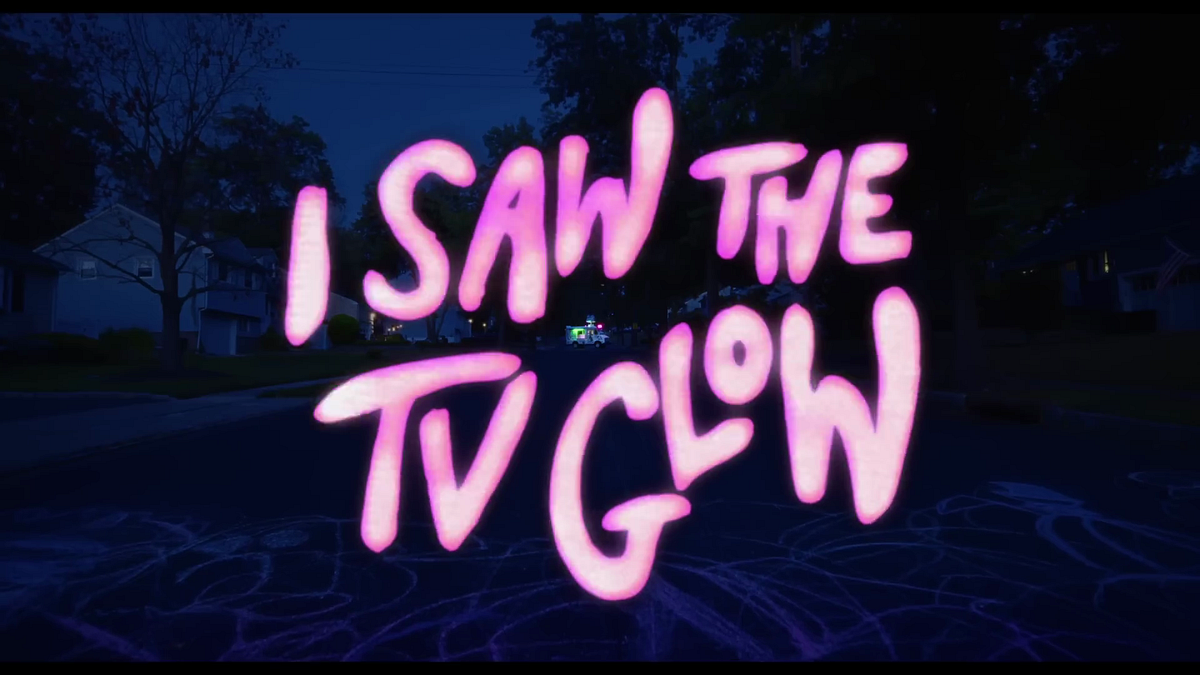

    Still on the docket —

    • Trap: I haven’t seen anything from the M. Night Shyamalan renaissance, hoping to give this a go.
    • Kinds of Kindness: Didn’t manage to find time for this Lanthimos follow-up.
    • The Substance: I’m not generally a horror person but this had great buzz at the end of the year.
    • Rebel Moon Director’s Cuts: Netflix’s decision to break this film into four indisputably a swing and a miss. I liked the theatrical cuts more than most but the red meat is meant to be in these extended versions.
    • Joker: Folie à Deux: No film that makes people this upset can have nothing going for it.
    • The People’s Joker: Vera Drew absolutely living the dream, giving two fingers to the notion that you can own pop culture and taking it all for herself. Sadly not out in the UK yet.
    • The Boy and the Heron: I’ll be straining credulity including this in the 2025 list.
    • Challengers: I will watch the sexy tennis love triangle movie.
    • Deadpool and Wolverine: I just think I’m better than this.

    If you like my writing, please watch my video essay The Fanatic, available now with a short companion essay kindly published by Blood Knife. If you’re after more text, please follow me on Medium or subscribe to my Letterboxd reviews.
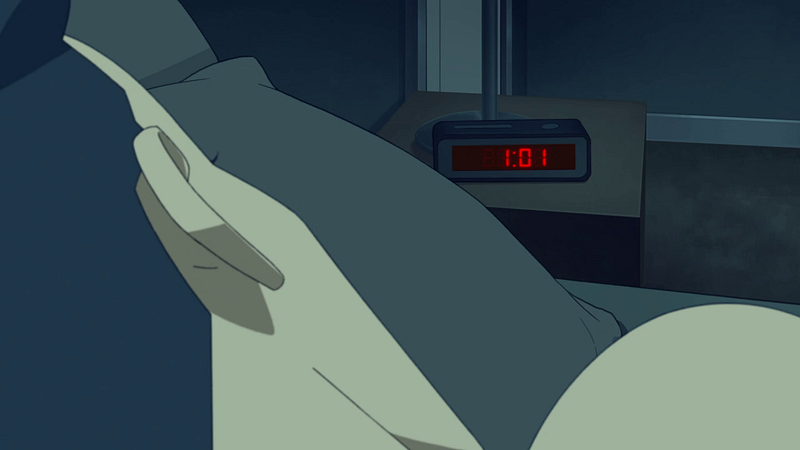
  • Unvincible (#1)

    This is the eighth and final in a series of episode reviews for the animated TV show Invincible, starting from the end and working backwards. See the overview here.

    Last time the show was tidying things up in anticipation of the big… beginning?

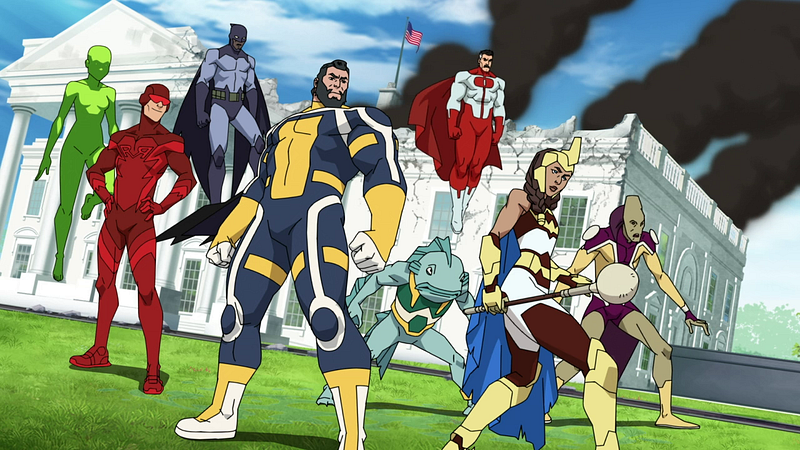
    And so the clock ticks back round to the midnight position. Here we are in the first episode, and handily (for the purpose of writing a series of reviews backwards) it is itself a mix of beginnings and endings. I was more surprised than anything by how little the scene of ultra-violence at the end of the episode can be called a ‘twist’. The comparisons to Watchmen have ultimately been thematic rather than direct as I’ve gone through the series, but I think there’s something here in how the episode plays out deterministically — from the moment we’re introduced to the Guardians of the Globe there’s a palpable sense of sand moving through the hour-glass. These are not our characters, they receive precisely enough characterisation so that we know their skill set and we vaguely empathise with them, and not a moment more. The fight scene itself is almost perfunctory, the result a foregone conclusion, happening as it does post-credits. This was all done 35 minutes ago.

    There are the parts I didn’t anticipate, like the vague unease with which the Guardians treat Omni-man as their unofficial extra member. There’s some very effective cinematography making sure that Omni-man’s appearance on the White House lawn is a little bit off, a little bit tense. The Immortal, last seen dug out of a grave and howling Omni-man’s name, seems like a complete asshole in the minor interactions with him we see. At least in terms of Omni-man, however, he is correct — his naked distrust as he pauses to check that Omni-man is bothering to catch the airborne people he’s hurling is impossible to read any other way, even if we didn’t know the twist.

    Omni-man enters this group shot last, legs together where everyone else’s are apart. His cape continues to flutter in a breeze that doesn’t touch the others.

    What is interesting is the sense, through the whole episode, that it’s Mark gaining his powers that has set this whole affair in motion. That Omni-man had plans long laid that have been brought into action as a result of needing to teach his son the Saiyan ways. It’s almost a shame this isn’t vocalised in the finale, unsubtle as the show is in most other ways. Puberty is a traumatic experience that can feel like it is completely destabilising the world around you — imagine if it really was. Omni-man, for his part, is not being very smart at all. His long-term plan for the child was clearly thought up around the time we see him give the puberty talk and little revised since; when he does speak the whole truth in episode 8, it’s an earlier Omni-man speaking. He can’t hold true to those principles himself any more, and ultimately doesn’t, flying off.

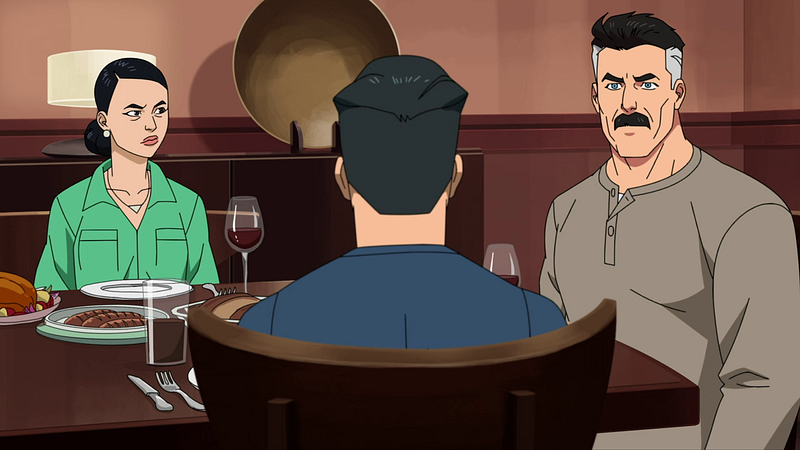
    I wish there were more scenes with Debbie and Mark in the show, although to some extent what we get here sets the entire tone — there’s more of her in him than his father, and that’s going to make him completely unreceptive to the fascist rhetoric his father will pitch him with.

    The Immortal’s distasteful persona is perhaps foreshadowing Rex’s participation in the New Guardians — and the general disfunction that that team will have in both their professional and personal lives. I don’t think it’s ever mentioned after this episode that Guardians HQ is in the side of a mountain; I’d been imagining a Justice League-esque Watchtower satellite this entire time. There’s some thematic purpose here — Cecil is notably fond of being able to place awkward people in subterranean pits to get rid of them, between the Guardian HQ, the prison where the cloners were being kept, and his sending the Rorschach demon back to ‘Hell’.

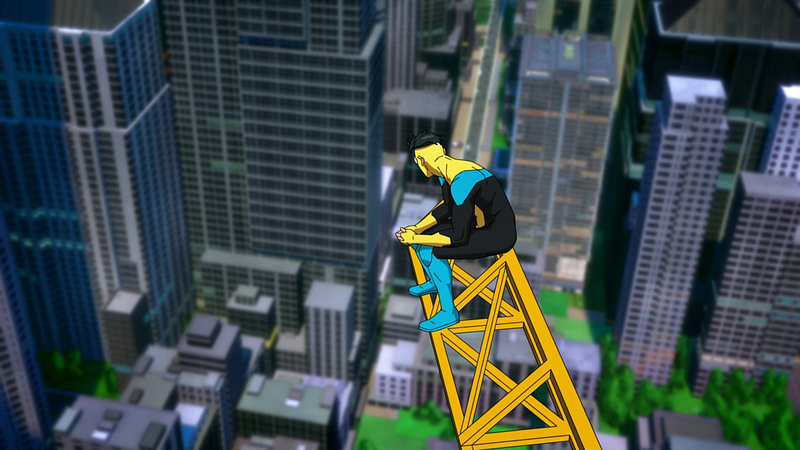
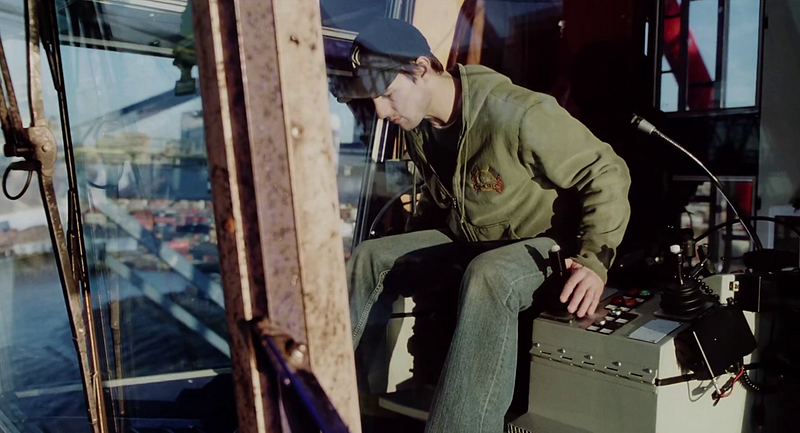
    In the other direction, Mark pauses briefly to look over the city, enamoured with his newfound flight, and sits on the end of a crane in what is probably not a refence to Spielberg’s War of the Worlds, but that’s certainly what it brought forward for me. Tom Cruise’s character, a crane operator, is spatially mirrored with the invading Martian tripods in his position up high above the city, and through the film learns to care for his family rather than his oblique idea of ‘protecting’ them. Mark’s arc through Invincible is not dissimilar, though obviously the perspective is shifted. His father, Omni-man, actively tries to see the world from the perspective of the crane. Every time Mark tries to intervene from on high however, he comprehensively fucks it up.


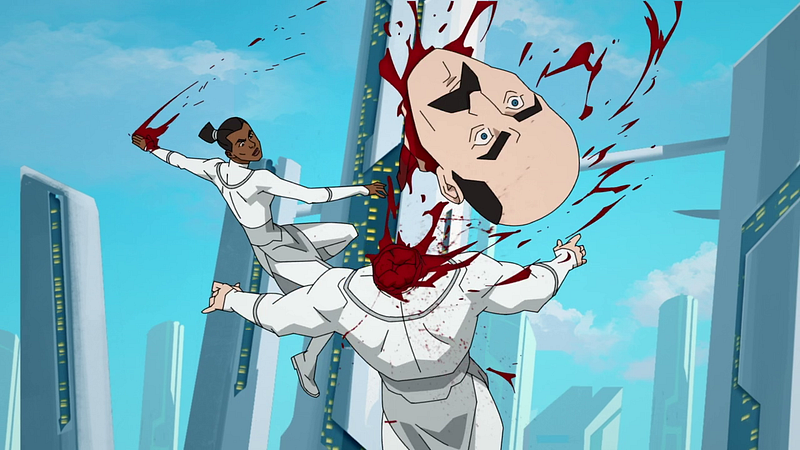
    Some final notes on the episode itself, I did have a little laugh realising the extremely hammy visuals of the Saiyan planet from episode 8 were a direct parody of the harmonious visions in this first one. Getting the blood out of those pure white bodysuits must be hell. And as metaphors go, Mark leaving a crator every time he lands is extremely on-the-nose — he will continue to do that, metaphorically or literally, all the way to the final episode of the season.

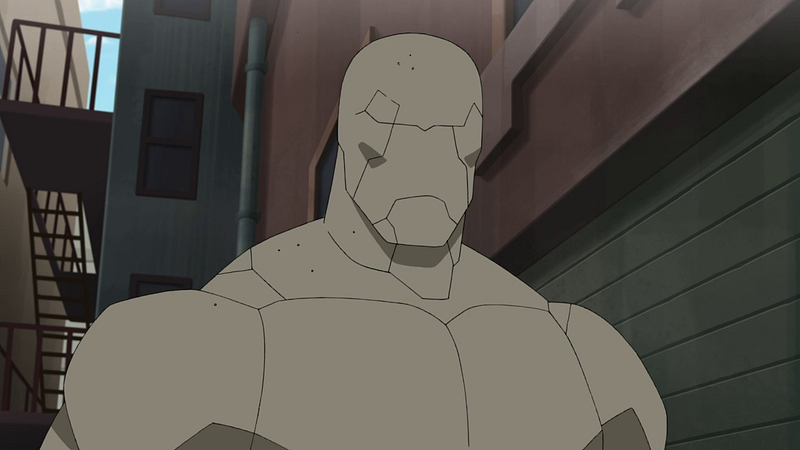
    A small thing, but the connected cold opens in this episode and the next were extremely charming, another dead-on throwback to the style of serialised superhero cartoons like Batman: The Animated Series, the episode-local supporting cast who get painted in the broadest strokes — “I can’t connect with my son!”/”Thank God I’ve finally connected with my son!”. For a series which ultimately hinges on an argument about whether the lives of the ‘little people’ matter, those non-superhero types are phased out as the series goes on. As well, a welcome early appearance for Titan, the man with stone for skin from episode 5, who I liked so much that just seeing him here improved my impression of this one.

    The act of watching the episodes backwards, arbitrary as it was, ended up highlighting the Watchmen comparisons more than anything. We started in episode 8 with Dr Manhattan leaving the earth, then wound back to episode 7 to see that the world’s most intelligent man poses no more threat than the world’s most intelligent ant. Then back to episode 4 where we see Rorschach leave his journal, and all the way back here in the first episode we have what is effectively the Comedian being murdered. As I mentioned in the write-up of episode 4, I think one of the modern developments in comic superheros is that all of the heroes, in their complicity with the state, are akin to the Comedian. And so here we are with them all dying like the Comedian. The only act of heroism we see the Guardians do is defending the White House lawn, casting them as stronger, more mobile versions of the mounted guns that here line the White House roof. We want Omni-man to be brought to justice for their murder, of course, but my prevailing thought as the credits rolled was ‘good riddence’.


    I wasn’t expecting to like Invincible, but obviously in the end I did. This is maybe not that surprising — it’s pulling from DC’s animated series, which I was always fond of, and from Buffy which was also a strong influence on Justice League and Justice League Unlimited. Watchmen, as well, obviously. The gravity of Watchmen in this area is best captured by the decision to include a Rorschach character in the show, a role so unsuited to the modern-day setting that he had to be gratuitously shoved through a door halfway through the season. Overall, what struck me most was the way in which the show seamlessly integrates the kind of totalising military presence which has been made default by the Marvel movies, with shadowy state actors directing and influencing a crowd of superheros who are somewhere between private military contractors and celebrity influencers. In a world of near-universal surveillance, everyone is always watching the Watchmen.

    I’m a little wary, rewatching the episode 8 ending montage, of where all this galactic nonsense is going to go. Seth Rogan’s character seems to me like a harbinger of some kind of eternal space liberalism, where we fly away from Earth to find out while we might be under threat from the space facists, there’s a well-meaning group of participants in space republic who, while they may be inefficient, mean well and want to help out. I’m worried that it will turn out that for all its mooted cynicism, this will be another world where there’s always a bigger parent to cry to.

    But accordingly, and in final conclusion, I award the show the highest honour I am capable of bestowing: I’d probably watch a second season.


    Final ranking, from best to worst:

    1. #5
    2. #8
    3. #4
    4. #7
    5. #1
    6. #2
    7. #3
    8. #6

    Evidently I preferred the second half of the season, though that might just be a necessary outcome of having a bunch of tedious world-building to get out of the way. That said, I certainly managed without it. Ultimately #6 was the only episode I’d consider bad outright, with #5 and #8 the obvious standouts.

  • Unvincible (#2)

    This is the seventh in a series of episode reviews for the animated TV show Invincible, starting from the end and working backwards. See the overview here.

    Last time I was a little nonplussed.

    We arrive at the precipice, the penultimate instalment of Invincible viewed backwards. Game of Thrones, among other “prestige” TV shows, gave the penultimate episode a sense of importance: these are the episodes where Ned Stark dies, the narrative climax of our season-long train of events. This is a role that a second episode viewed in reverse order can’t really hope to fill — there are no grand revelations here, no sudden departures. Instead we get as close to a stock episode of the show as is possible, an artefact from a dimension where Invincible is a Saturday-morning cartoon, with every week a new villainous threat.

    It’s an episode heaving at the seams with what you might call “world-building”, endless detailing of who knows who from where, why, and when— and if you were invested in the worthiness of the itemised lists of facts about fictional worlds, this would be a fine first episode to watch. I may have given an involuntary groan upon realising I was being shown an establishing shot of an American High School, straight out of Family Guy. The sketch we’re given here for the structure of the show, interestingly enough however, is more in line with Rick and Morty than it would appear — from both subsequent episodes and from promotional materials . Space travel and inter-dimensional visits are firmly within bounds.

    Reginald Vel Johnson High School, Invincible
    Adam West High School, Family Guy

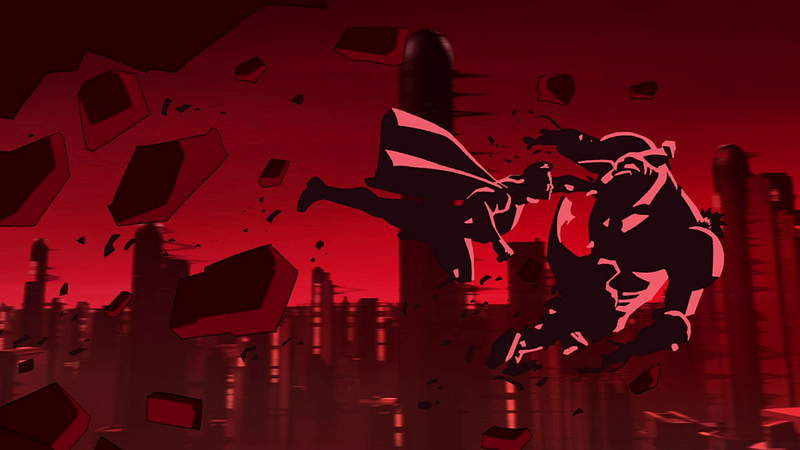
    What’s interesting are the lengths the creators go to present a best-foot-forwards view of what the show is able to do, despite being bound up in all this housekeeping. This could easily have been another episode #3, a sloppy plate of here’s-what-you-get where the inadequacy of individual elements is (hopefully) excused by the variety of them. In an appropriately backwards manner, the episode ends with a gorgeously rendered high-contrast sweep of action, as Omni-man destroys the art deco dimension. Reminiscent of nothing more than the original plan for the Superman: The Animated Series introduction, it’s a striking end to the episode, even if it does highlight that nothing of such indulgent ambition in the animation turns up again, save perhaps some of the scenes of detailed viscera.

    Superman: The Animated Series originally had a full stylised introduction in the style above, but it was revised to be a selection of clips from the show before release with only a small portion of the animation remaining.

    The genius of Rick and Morty is in the recognition that the average viewer of a show like Rick and Morty is immersed in this kind of thing, and so is both likely to be very familiar with the tropes of sci-fi and fantasy — and be willing to explain them and/or read explanation of them at length on the internet. In this way, the show is free to engage in it’s iconic rapid-fire movement through different high-concept settings, pastiches and references. (This means the show is completely antithetical to ‘world-building’, by the by, and the writers are not afraid of nakedly poking fun at the legion of fans determined to fit the show into one unifying rational world.) The time-travelling aliens in this episode would fit easily into any given episode of Rick and Morty — we efficiently find out how they work (they move through time fast relative to us), the implications of that (they’ll be coming back) and then they come back. The basics fixed, we get some details that are going to cause us trouble: they advance very quickly technologically, but not so quickly that they cannot hold a grudge. And finally we get the twist: Omni-man can destroy their civilisation in the relative time it takes him to grow a small beard.


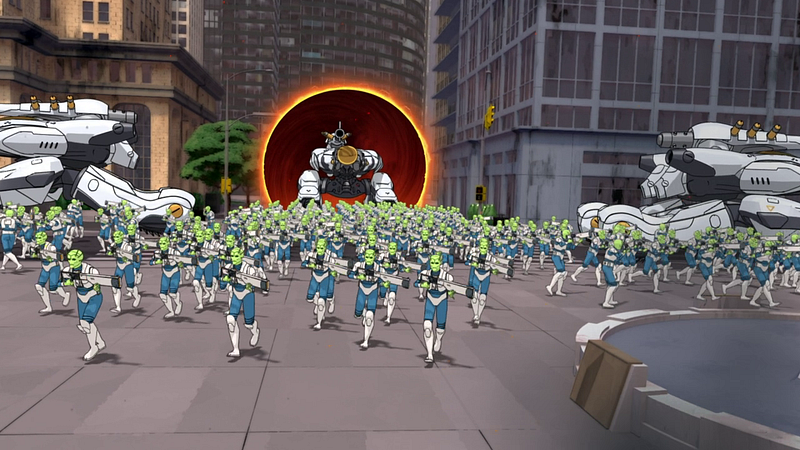
    The trouble is that Rick and Morty isn’t just brutally efficient in the high-concept sci-fi settings; it’s also brutally efficient in the more prosaic stuff. Which is to say that most of this episode felt unnecessary to me, devoted to disseminating facts that are easily apparent from any given episode of the show — we get to find out that Eve goes to the same school as Mark, and she’s in a second-string hero gang led by an intolerable robot with tedious teammates. We get introduced to the space-CIA, exercising global authority under a constantly visible US flag. We’re introduced to Rex, who threads the needle between irritating and pathological a lot better here than he will in subsequent appearances (I can confidently state now that the scene where the “New Guardians” wash the blood off in episode 8 is, in full context of his season arc, still laughable).

    As discussed in the previous episode (#3), every subsequent appearance from the detective demon has made him look less threatening and more incompetent. This episode does not break the pattern. He really does only feature for his five minutes of being-Rorschach.

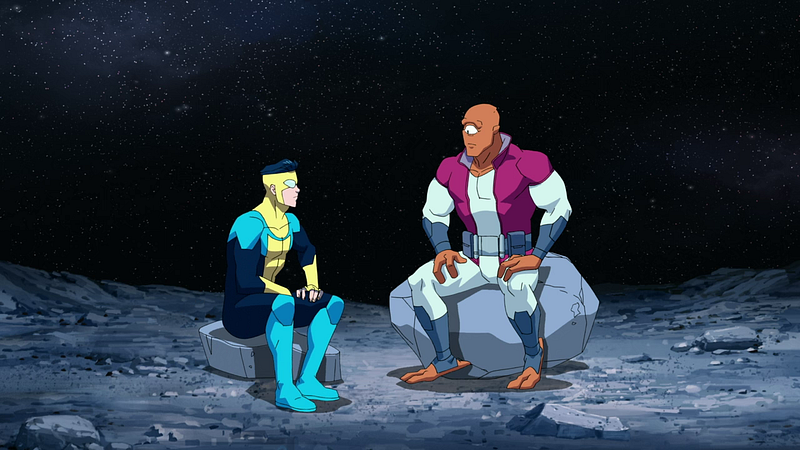
    Alien Seth Rogan is a pleasant diversion and nothing more — it was a little unclear to me whether or not he’d ultimately been to Earth before and what had happened? With the benefit of foresight I know he’s only coming back for some denouement at the end of the season anyway.

    Because I don’t think I’ve mentioned it under any other episode heading, Sandra Oh (Debbie) really is top tier, along with JK Simmons (Omni-man) and Walton Goggins (Cecil). Between the three of them, the work-life balance scenes are consistently the most engaging scenes in the show.

    I’ll take a moment to note the gorgeous design of the family house itself, a well-realised, well utilised set, despite being animated. It’s a house that at first appears open and welcoming, but the more time you spend with it the more it becomes clear that it’s a winding nest of secrets and cubby holes and invisible observers where the only constant is that wherever you are, someone could be watching. This episode may only be setting up the fundamentals, and to me that seems unnecessary, but it’s important to reflect on how much of those fundamentals — setting, casting, design— the show gets right.


    Next time: we finally meet and then unmeet the Guardians of the Globe.

    Ranking, best to worst:

    1. #5
    2. #8
    3. #4
    4. #7
    5. #2
    6. #3
    7. #6
  • Unvincible (#3)

    This is the sixth in a series of episode reviews for the animated TV show Invincible, starting from the end and working backwards. See the overview here.

    Last time we talked all about Watchmen.

    Mostly another miss, I fear.

    As was potentially inevitable with watching the series in the way I am, this episode dragged a little as scaffolding was rapidly constructed for the events of future episodes—with the real problem maybe being how much of it is for events that I wasn’t wildly endeared to when I was seeing them happen.

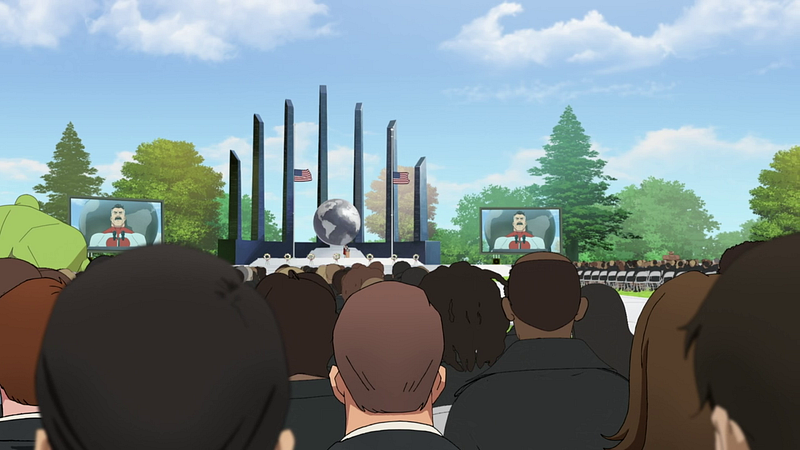
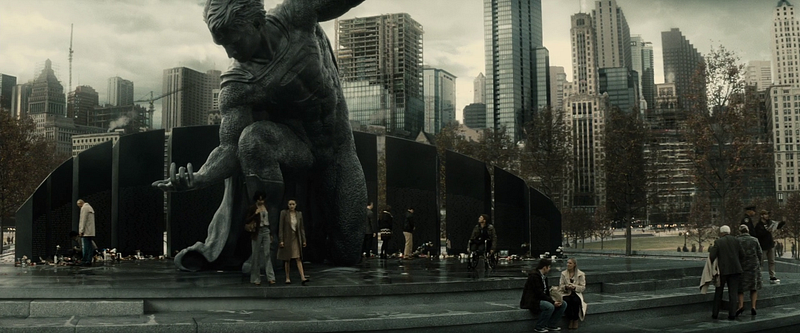
    Signals were mixed from the opening twin eulogies, where Omni-man as a public figure — matched, you’ll note, with military hardware as an element of state force — is contrasted with Omni-man as a private figure at a small funeral of friends. The sequence somehow fails to make very much of this contrast, where the similar sequence in Batman v Superman (surely a direct inspiration, complete with matching stone monument) contrasts the public sacrifice of Superman with the private loss of a son and a partner, Invincible ultimately doesn’t have anything to say about the bit-characters who have died. All it can say is that Omni-man is duplicitous and authoritarian, which may as well be stencilled on his costume.

    The bulk of time is given over to the (re)formation of the Justice League analogue, swallowing up Eve’s prior teammates in what is now clearly a set of Teen Titans (the name was obviously always there, but seeing Robot in action as the Red Tornado analogue seals it all together.) They fight, we see the team assembled — including the tensions that they will carry all the way through to episode #8. We get the introduction to Monster Girl’s tragic circumstances, whereby forcing her to be a superhero seems unspeakably cruel. Let someone else do it, Monster Girl. Live out your remaining life in the forwards direction.

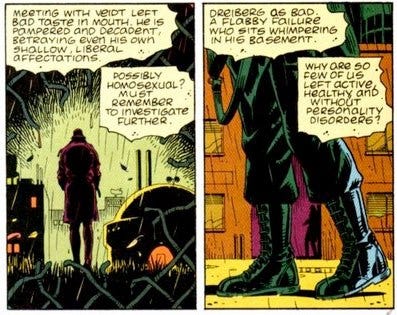
    Hell’s Rorschach is back again, this time with more of the demonic styling that his look is derived from. I found him less effective here because Kirkman (or whoever conceived this character for the TV show) can’t really pull off the trick Alan Moore did of properly getting inside the head of a radical libertarian and giving a sympathetic, if not positive, account of that worldview. The demon just seems like an imbecile, a suggestion not improved by his retro-future jumpsuit. He turns up in all the right places, but fails to ask any questions that would advance his investigation or successfully lance the morally grey characters he’s supposed to be furiously casting into good or bad. The best he can do is suggest that you’re going to go to double-hell or whatever. Have him rant! Have him accuse everyone who interferes with his investigation of morally compromising themselves or revealing their own perversions. It feels like because the writers don’t have any respect for the worldview, they didn’t feel obliged to give it any wins — where Moore with Rorschach is constantly weighing the scales towards and then against Rorschach, baiting you into finding him more appealing than the flabby liberal Dan Dreiberg, then reminding you that he’s a racist sexist fascist homophobe. A disappointment.

    Part of Rorschach’s appeal is that there’s a certain amount of perception mixed in with his paranoia and prejudice.

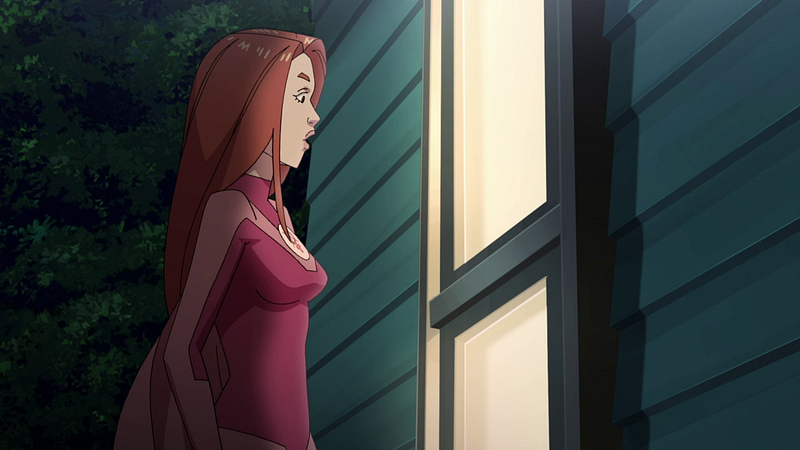
    Conversely CIA Cecil is back to his creepy, manipulative best: teleporting into a teenager’s bedroom to berate them for not advancing US military goals. Then with that achieved, he scoots back to the black site just over the road from our protagonist family, from where he can see a heat scan of the room he was just in. Eve later has a brief moment of voyeurism watching Mark and Amber make out through the window — the weedy CIA assistant is presumably watching as well.

    The less said about Doctor Seismic the better: completely incoherent, largely unfunny, the show cannot decide at all what it wants to say via this character’s inclusion. Why is there a link between Amber’s interest in social justice and this old man ranting about slave-owning Presidents while trying to sling some Hawaiian shirt-wearing, camera-toting tourists into a lava crevice? There is so little effort in this sequence that the scene ends with him dunking himself unprompted into some lava.

    I did enjoy the scenes between Eve and Rex, which was a pleasant surprise. Rex is here as a flash-forward of Mark and Amber’s relationship, constant minor betrayals interspersed with grand romantic gestures. She’s right to turf him out; the only think I’m left wondering is if there’s enough time left in the first two episodes of the show for Eve to do any being ‘long-suffering’ in. So far she has made at least one assertive, successful life choice in pretty much every single episode, contributing to her overall being one of the most compelling side characters.

    More than any other so far, this episode underwhelmed me. Aside from the Doctor Seismic sequence it wasn’t actively dysfunctional as with episode #6, but I might be reaching the limit of gaining perspective from viewing the episodes in reverse order. Little is clarified here by having future knowledge and much is made unnecessary. I’m hoping not to have the same experiences with episodes #2 and #1, but we’ll see.


    Next time: things start to end, by which I mean, begin.

    Ranking, best to worst:

    1. #5
    2. #8
    3. #4
    4. #7
    5. #3
    6. #6