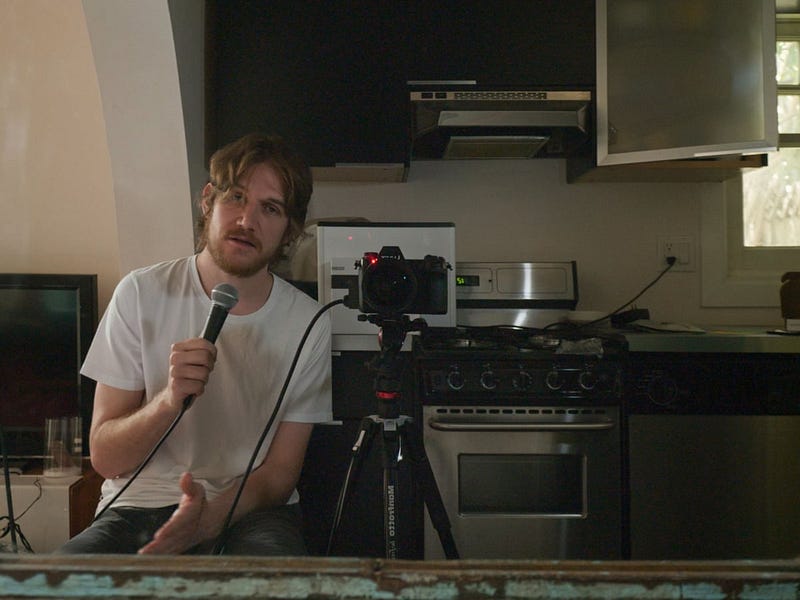
He’s tall and I’m short, and I don’t sing quite so well, but otherwise there was an unnerving amount of myself to see in Bo Burnham’s chronicle of his year indoors. I too spent most of the last year in a box room surrounded by tech kit. I too took the opportunity to grow a dubious beard that didn’t suit me. And I too used the lockdown period to shepherd a big long meandering video project through to its conclusion. I even, unknowingly, made a sock puppet.
It wasn’t the most difficult pandemic experience, and in many ways it’s the preferable one — the ability to seclude oneself, to work from home, to live in a box like that, is a privilege not everyone shares. But that doesn’t mean it’s fun, or a natural state of being. I don’t live in as grandiose a house as I’m sure the international celebrity Bo Burnham does, but I spent the year of lockdown being able to work in one room, relax in another, and sleep in a third — this too is a privilege. I was able, as Burnham surely was, to go for walks in the local area — another privilege by no means universal.
But these advantages don’t — or rather didn’t — free me, or presumably Burnham. They mitigate. They are things everyone ought to have access to even if not everyone does. But they don’t free you from the weight of boxing up your life, of not seeing your friends and loved ones, of attaching a risk assessment to every human interaction.
Unlike Bo Burnham, my video project didn’t start during the pandemic. My video project started in 2017 when I was writing up my PhD thesis. Again, I had very good fortune in being able to do a PhD and very good fortune in being able to see it through to its conclusion. But that conclusion was a miserable experience. Finishing a thesis (for me, I guess) was working twelve hours a day for weeks on end in near-complete seclusion, chasing a goal that ultimately becomes only relevant to you. I put my personal belongings in storage and moved back to the university; I imagined packing up elements of myself and putting them in storage too. Hobbies, interests, friends — all in cardboard boxes and up on a shelf.
It took a long time to unpack everything again. Some things may never have come back, forgotten deep in a mental storage locker. And some new things learned in that time have proven difficult to shake. But for COVID, and lockdown, this prepared me — somewhat. Putting things back in boxes, and getting them out again when safe. Taking solace in online relationships when interacting in person was unavailable. And taking the opportunity to finish my video project.
All of which is to say, I found ‘Inside’ far too familiar to comfortably assess. Burnham’s ticks, Burnham’s fixations — shots of his head on a pillow, shots of himself in his pants — Burnham’s packaging of unfinished thoughts, unfinished gags, unfunny songs representing his choking inability to find solace in creativity. These all have an intensely personal response in a way that would make saying “Oh the internet song was funny” seem beyond facile.
Following Stewart Lee, who Burnham occasionally channels in this: ‘Was it funny?’ ‘No, but I agreed the hell out of it.’
Tempting to say “Inception done right”, if that’s fair. Your tolerance may vary based on how able you are to keep up with the near-incessant rattling off of plot details in low voices — which comes to an apparently intentional breaking point in the finale — but if all else fails it’ll definitely support a rewatch. John David Washington and Robert Pattinson are up to the challenge of keeping it ticking over, both with a sort of pleasant, easy charisma, and they’re aided by a relentless, frenetic pace to the action for the bulk of the film.
Inception is increasingly hamstrung as it goes along by Nolan’s bloody-minded refusal to approach camp or psychedelia in his film entirely about dream-worlds. Which is not to say he refuses to get silly with it, just that what Dark Knight Rises does for “some days you just can’t get rid of a bomb”, Inception does for all of dreams. The world of Tenet, pegged as it is to the world of James Bond spy thrillers, is a much better match for Nolan’s pared-down aesthetic.
The video-game overtones of Inception make a reappearance here too, with the first pass through the tax haven vault following impeccable video game logic, up to the dispensing of a dual boss fight against a mysterious opponent. The motif makes a slightly less successful appearance at the climax of the film, where we’re forced to wait at a locked grille while the villain monologues over a PA.
The film’s commitment to the forwards/backwards theme is complete, with Branagh’s villain beginning the film attempting to have the protagonist killed, progressing from there to being deceived into having him to dinner, and departing the film as the image of the consummate family man (billionaire). Are we meant to think that his silver suicide pill is identical to the one that does not kill the protagonist at the start of the film? In that case, it’s only the presence of Debicki’s vengeful wife which allows him to be killed at all.
The most significant complaint I’d level is that the final action sequence is both a little confused — a showcase for forward/backward thinking that doesn’t quite linger long enough on the logic of any given part, and centred around the progress of protagonists who are difficult to pick out under their military gear. I assume it all makes sense in retrospect, but it lacks the finely tuned amping up that characterises the earlier action sequences — drip feeding a logical progression of increase in scope as we move from backwards bullets to backwards guns to backwards people to backwards plans.
It’s all very (brace for it) Steven Moffat, and one wonders about the link there — not least the extremely Doctor Who finale for Pattinson’s character. Who and Bond have a long history of mixing and matching that’s too interesting to explain here but it’s absolutely a sensible leap for someone making a sci-fi Bond. And of course they do little else the whole film long than reversing the polarity of things.
The costuming is pristine at every point, as you might hope. Special mention as well to the perfectly scored stamp on a cello in the opening sequence. It would have been nice to see this in a cinema — hopefully the opportunity will present itself at some point in a post-COVID world.
There is a series of article-essays by Jean Baudrillard called, collectively, “The Gulf War Did Not Take Place” where the continental philosopher discusses the way in which the mediation of the first Gulf War into images and live TV news constructed a simulated war. This fake war only took place in the perception of viewing audiences, who witnessed a full, proper and dramatic conflict through stories which were essentially fictional. In actuality, Baudrillard claims, the US military essentially walked to Baghdad unopposed, the Iraqi inability to engage in air combat having completely foreclosed on the potential for an actual war. What actually occurred was a pointless, brutal atrocity which would have caused popular discontent had it be represented accurately. The simulation was essential to preserving the image of a free, fair state doing good in the world.
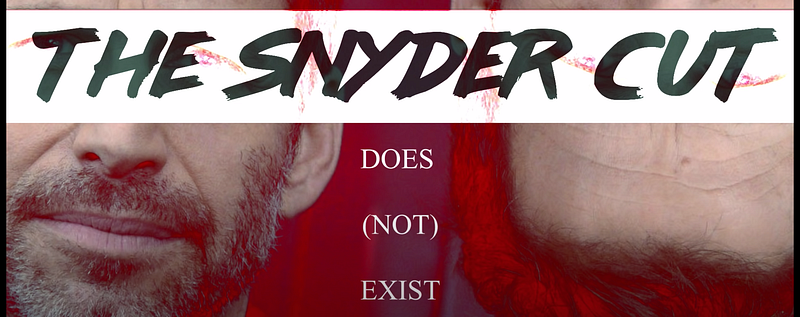
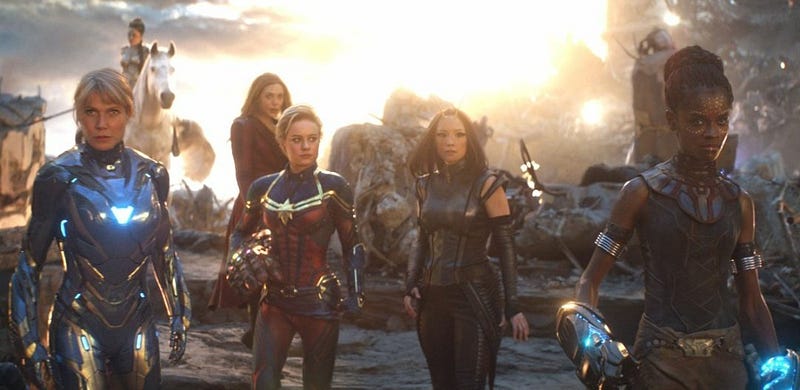
It is unclear whether or not the YouTube critic Dan Olson, in his video “The Snyder Cut does not exist”, was consciously referencing the aforementioned work by Baudrillard. He’s a sharp and well-read guy, so it may well have been intended as such. However, it is increasingly clear that the analogy is over-accurate: there is a fatal simulacrum in play, but it is not the image of the perfect movie in the eyes of the fans or some such triviality. Like most fans of modern pop culture, members of the Snyder Cut movement will likely expect all positive qualities from the released film and be, in some way, disappointed by the end result. But indeed, the advertising campaigns ran for these big modern blockbusters practically make it their goal to induce such projection, up to and including within the movies themselves — consider the much-derided ‘girl power’ sequence in Avengers Endgame: the realisation of the event could never have been satisfying, but it lent anticipation to the entire feature-length Captain Marvel movie before it.
No, the interesting fiction in this scenario is that monolithic conception of movies, the movie industry, movie analysis and movie twitter in the perception of people who don’t want the Snyder Cut and are forced, in their own miniature recreation of the pressures on the architects of the Gulf War, to construct a simulation that explains their bizarre, continued level of effort opposing the production of a single film — and why their authority over the subject of movies comprehensively failed to predict its existence.
Why would you not want a movie to exist, barring cases where the production of the movie would cause material harm? The option to not watch it is a near-universal right. To performatively disavow a movie is to try and say something about yourself, typically a claim to privileged knowledge or good taste. Michael Bay movies, you say, are beneath me. They might be objectively speaking popular, but I am initiated in the rules of being a Good Cinema Fan, whereby we do not like Michael Bay films (of course, as this becomes a popularly held position, the opposite starts to signify an even more refined taste; they’re ‘so bad they’re good.’)
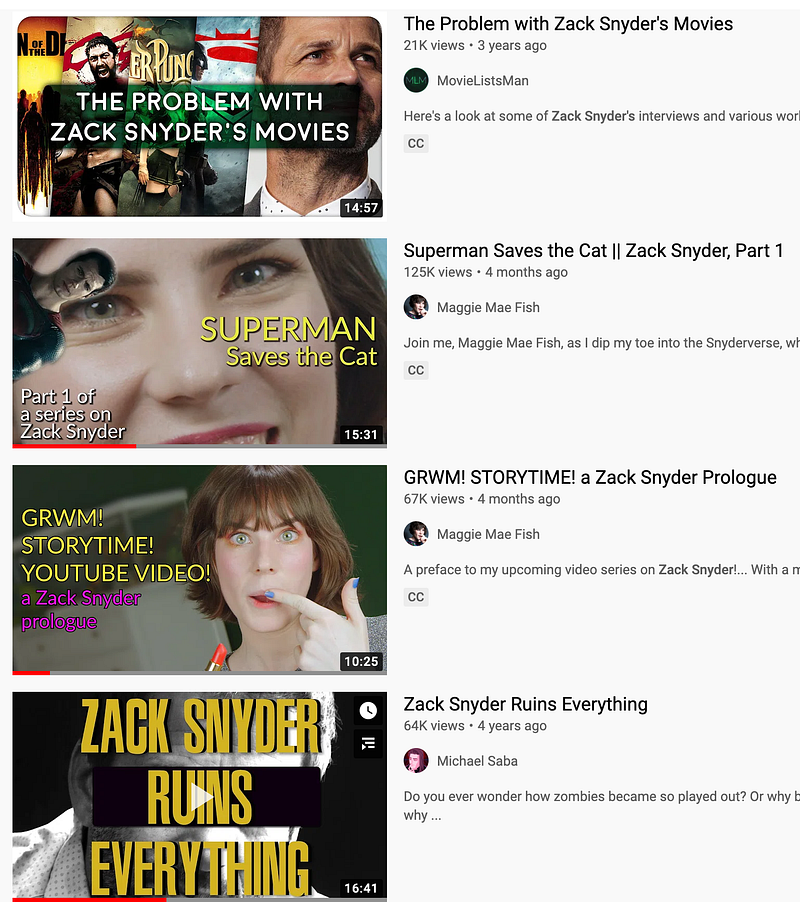
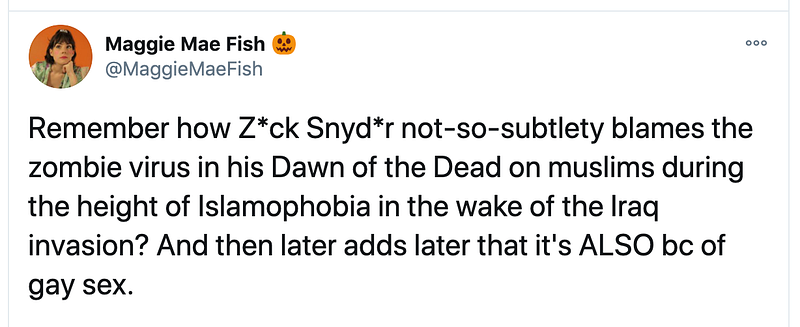
The works of Zack Snyder, broadly speaking, fall into this category. Properly initiated film buffs, particularly leftist film buffs, know that they are not to like Zack Snyder. There is no uniformity in this dislike — which is one of the tells that it is being actively constructed. They cannot agree which of the films are not bad, which of the films are very bad, and which of the films are actively evil in some way, but they nevertheless agree on the overall point: he is a bad director, whom you must doubly disavow: his films are not enjoyable, and even if they were, you ought not to enjoy them. The development of this conviction is performed in a manner akin to numerology; we are to ignore the basic content of the films and focus exclusively on fringe inferences. A film about zombies in suburban America becomes an anti-Muslim screed based on a half-second in a montage. A film where a man risks everything to save humanity becomes a Randian tract. A satire about baby-murdering Stormtroopers becomes a non-ironic statement of intent. If this paranoia about the minutiae of films seems incoherent, well, it can only be a reflection of the incoherence of this fool director himself.
Under this fiction, the realisation of the failure of such a Director can only ever be postponed. Box office disappointments, rather than being a fact of life for big-budget filmmakers, are the inevitable reconciliation of the Director’s failings. Internal corporate movement becomes a morality play rather than petty workplace strife. Where the Director succeeds, it is by accident. Where they fail, it is fate.
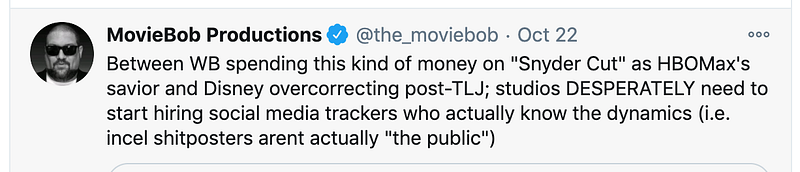
The existence of the Snyder Cut is a rupture into this fictional world, potentially throwing the whole thing into doubt. Snyder’s films have fans, and so are not universally held to be unpopular. Those fans have weight with the studio, so they must be significant in number. The movement raised money for charity and seems generally diverse if apolitical — it is not associated with the right. The original release of Justice League is so obviously lacking in quality that little meaningful attempt has been made to redeem it against a future ‘worse’ Snyder Cut. Having set the boundaries of a world where Snyder cannot possibly succeed, the leading figures in this loose movement are forced to explain what has gone so terribly wrong.
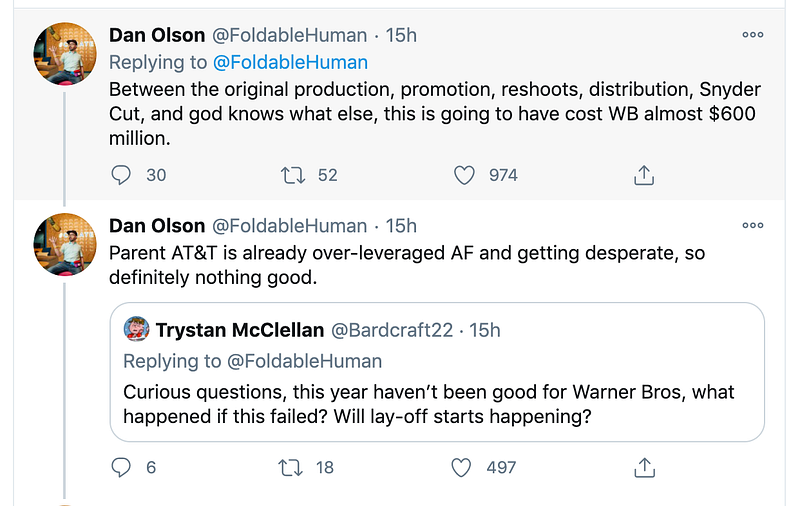
And so the Snyder Cut itself, and all of its fans, must be replaced by a series of simulacra. The original cut cannot have existed: instead of the simple fact of a box of film reels, there is the image of Snyder himself performing a catalysing deception, stringing fans along on a hopeless crusade that will never see success. In place of a film director happy to be allowed to finish a project, there must be a scam artist, ill intent behind his every motive. Will he trick the fans, lying about reshoots that will never take place? Will he trick the film studio into spending money on a doomed project? Or is he producing malevolent propaganda for his Ayn Rand views by hiding it in mass media? Take your pick. In place of a small popular movement which funded a few billboards and flyovers, as well as raising a modest amount for charity, there is an organised harassment campaign that we have a moral duty to stand against to the bitter end. And, most ridiculously, the movie studio, rather than participating in funding an (albeit unusual) project they expect a certain amount of success from, has been hoodwinked and lead into grave danger because they did not pay enough attention to the warnings of Twitter film personalities.
“Zack Snyder has tricked Warner Brothers into spending an outrageous amount of money on a movie no-one want except right-wing maniacs” is the ridiculous line we are expected to believe, requiring us to — merely — suspend our disbelief that a single director can pressure an entire movie studio, that a modest production budget is a moral outrage, and that the organised right are wasting their time procuring a four-hour cut of Justice League. And for what? So that we can maintain the image of a world where having the correct taste in pop culture can decide whether or not we are good people.
The “Snyder Cut”, as discussed online, is a fictional object loaded with every meaning up to and including the success of evil over goodness. Each new development, each step in the marketing cycle of leaking news, has to be met with the same level of incredulity. Budget news is more spurious waste. Casting news is more people tricked aboard a sinking ship. Filming news is more proof that the original promise was a lie — and if the people actually anticipating the film don’t see it that way, it’s more evidence that they’re credulous idiots. So the Snyder Cut will not exist. The Snyder Cut does not exist. And post the release of the film next year, expect eagerly to hear that the Snyder Cut did not exist.
This article transcribes a video essay available here, titled “Cats is a triumph of the cinematic form.”
Cats, the 2019 movie directed by Tom Hooper, represents countless hours of work-power, in likely miserable conditions, assembling what is unmistakably the world’s highest budget work of furry cinema.
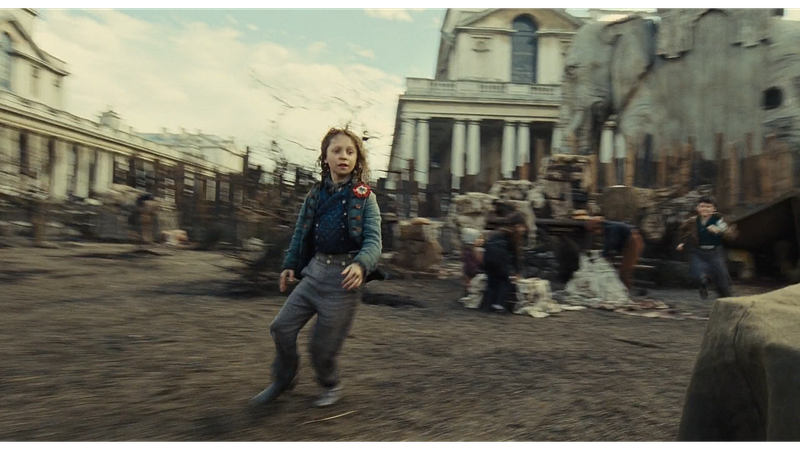
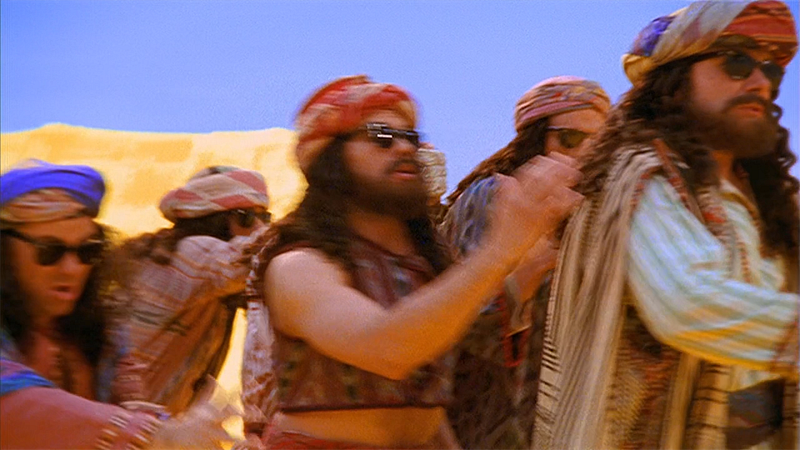
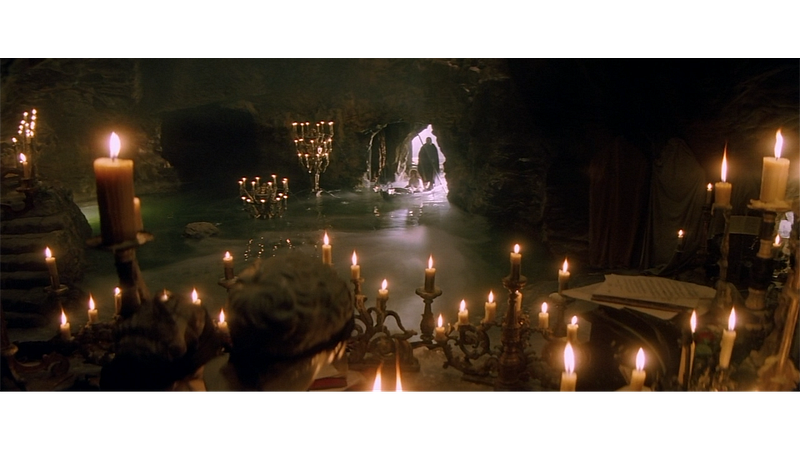
Hooper, fresh off the success of the Les Misérables movie adaptation, which I hate, likely had a free reign to interpret as he wished the Andrew Lloyd Webber musical CATS, itself a loose adaptation of T. S. Elliot’s poetry collection “Old Possum’s Book of Practical Cats”. The Webber musical is his standard campy fare, lurid face-paint and costumes in the fashion of Joseph and the Amazing Technicolour Dreamcoat or Phantom of the Opera, two other musicals which had their own dubious route to the big (or small) screen.
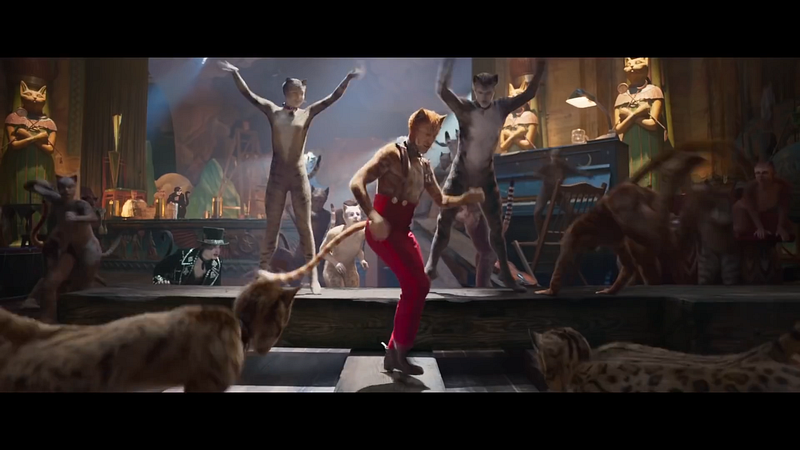
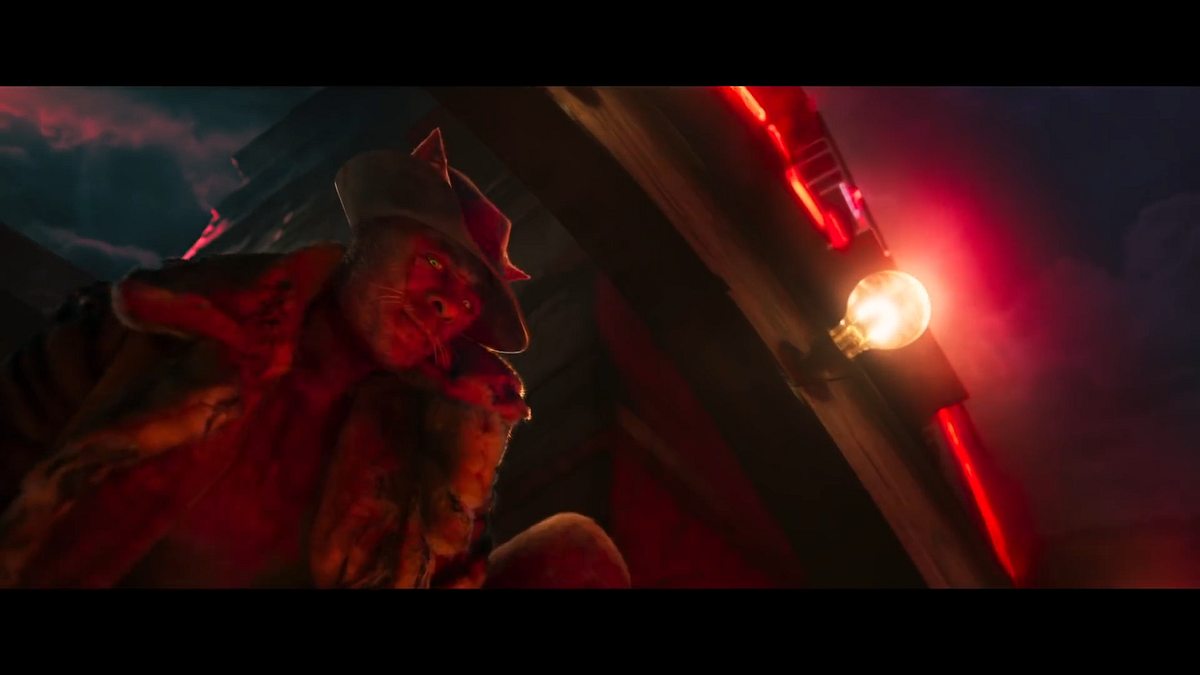
Easily the least interesting parts in Cats are where Tom Hooper concedes to the style that won him critical acclaim with Les Misérables and holds a steady close-up of an impassioned face singing a showstopper. Where he’s persuaded away from it, we get Rebel Wilson tearing the head off a cockroach with a human face, Jason Derulo showering himself with milk as a rake of female cats watch in awe, and a succession of cats improbably wearing human clothing seemingly only for fetishistic effect — an even more convincing case for Tom Hooper being prevented from filming close-ups than anything in Les Misérables. Macavity, the cat devil, is introduced with a Batman-like sudden disappearance once he’s off-camera — but the next time he appears he really can teleport and does it constantly for the rest of the film.
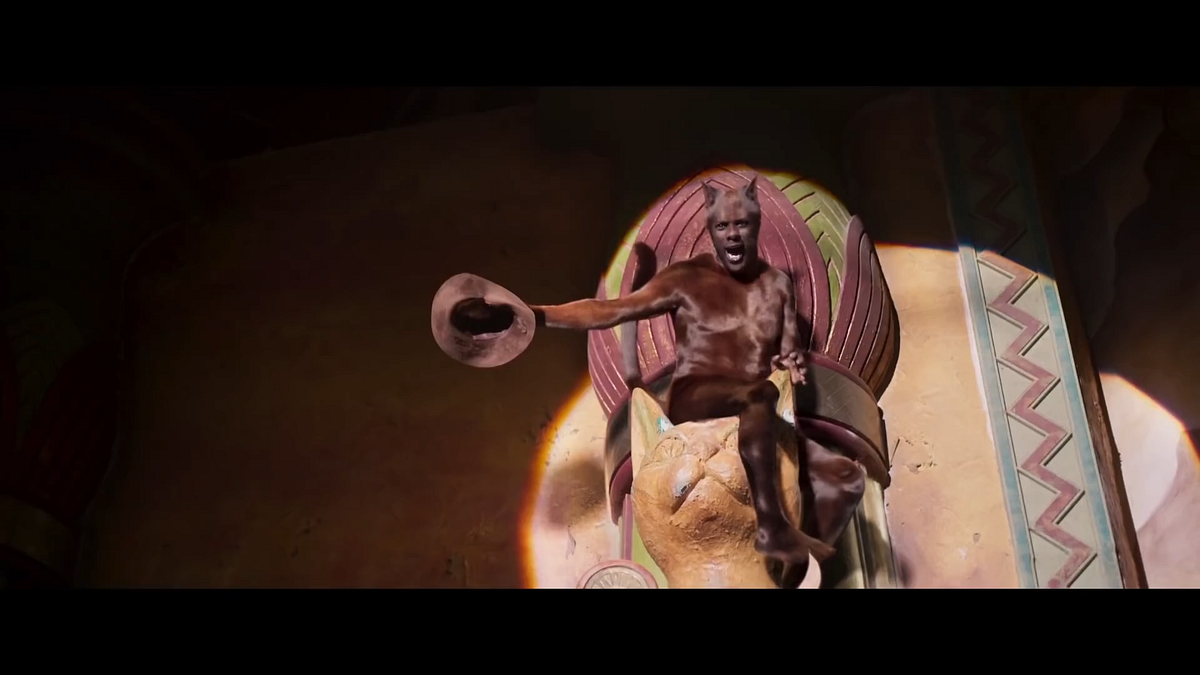
The film is determined to see any suggestion that there’s a sexual undertone off at the pass. Over the first thirty minutes, cats present their groins, arch their thighs, tangle round each other almost deliberately so that there’s as much contact with their Barbie-doll under-sections and chests as possible. Every cat is wearing a human-sized collar. Rebel Wilson’s cat bends her tail forward between her legs and swings it like a windmill. Cats wear fursuits, gorge themselves on food and dive into trash cans to rub themselves in waste. When a male character hits a high note, there is a conversation about neutering where Rebel Wilson makes a chop-chop motion with her fingers. As mentioned, Jason Derulo pours milk into his own mouth as he lies back on the floor. The cats devour other, smaller humanoids with a smile and a wink. During his song, there is a lingering shot where Jason Derulo has a furry cat foot inches from mouth with a furry cat foot. By the time three cats are cavorting on a bed together covered in feathers you’re absolutely numb to it, and the film proceeds to get into the plot — and even the plot involves all the cats getting high, having a PG-rated orgy, then lying about groaning for a good minute. Idris Elba’s character is fully dressed for the majority of the film, just so that when he appears sans garments in the climax, you can’t escape any suggestion, Idris Elba is nude now.
As critics have mentioned, the film makes minimal effort to explain who anyone is or what they’re doing. They’re cats, they’re having some kind of event, most of them are going to sing one song, the word Jellicle is involved, get with the program. The cats sing an entire song about the importance of the protagonists’ “real” cat name, but we never find it out. It’s just not for us to know. One member of the main cast is never properly introduced and doesn’t have a song. At one point I thought he was singing about himself but he turned out to be singing about a cat dressed as a male stripper.
Which is fine! It’s fine.
Much of the prerelease buzz around Cats focused on the uncanny appearance of the characters, human faces rotoscoped by hand onto almost-matching CG bodies. What the previews did not reveal, is that the rest of the film compensates for this effect by being equally uncanny, unsettled, and unmoored from conventional notions of filmmaking. The structure of Cats — individual vignettes about the mercurial nature of individual Cats — is forcibly bookended by an overarching plot in which Francesca Hayward’s character, ‘Victoria’ is abandoned by her (full scale human!) owner, such as it were, and falls into the company of a gaggle of cats who immediately begin a chain of often unintelligible songs which continue end-to-end for the rest of the film, save for brief interruptions by the antagonist, Macavity, played by a gurning, scenery-gnawing Idris Elba. The cats hold a yearly competition, we are repeatedly told, where the victor receives a ‘second chance at life’. This plot structure being clamped around the more freeform nature of the musical adds a terrifying air of inevitability to proceedings, and makes the eventual awarding of the prize to Grizabella feel less like the triumph of good nature and compassion and more like “oh crap, gotta foist this ticking bomb off on someone before Idris Elba gets back. The sense of unease and the unknown is shared between the audience and Victoria, but it leaves the more carefree earlier songs feel like they’ve been shot through the sights of a gun. “Stop dancing!” you want to scream at the screen, “Idris Elba is murdering you!”
Between this and the borderline-violent reaction unnamed cats have to the down-and-out Grizabella every time she appears, cat society is deeply unsettling, and that’s before the Taylor-Swift-penned addition to the songbook “Beautiful Ghosts” has appeared, with the haunting refrain “The memories were lost long ago, but at least you have beautiful ghosts”.
Perhaps to provide cover for some less prioritised effects shots, the camera often appears as if in the hand of a drunkard, dipping and rolling with the music in a way that almost induces illness, especially combined with how, over the course of the film, the scope of the visuals slowly narrows and a set of basic images recurs: The theatre door, the bolted milk-parlour, Grizabella in the street, the graveyard entrance, Old Deuteronomy beckons, repeat. One of the most striking visuals, a stairway to heaven summoned by Macavity when he seeks to force Old Deuteronomy to grant him a second life, does not reappear at the denouement. Instead, Grizabella is loaded into a balloon and floated off into the sky.
The protagonist sings of dancing with ghosts; Grizabella is “saved” by being jettisoned into the sky and forgotten. The cats who are kidnapped by Macavity throw Ray Winstone, of Noah fame, into the Thames to drown – and cheer while they do it. Taylor Swift’s cat disappears halfway through the third act. It’s hard not to come to the conclusion that the film is telling us that the cats are in hell, or at least in purgatory. There is a cat devil, but there is no cat god.
Let me be clear about what I am saying: this film is an absolute triumph. It’s utterly bizarre, obeys only its own logic, and I would have eagerly watched another hour of it. Go and see this film.
Please see Cats.
The image of Old Deuteronomy stretching her leg in this article is taken from Twitter user @MrMichaelSwartz’s video.